E-Paper



AIIMS trauma centre to get rooftop helipad after decade-long wait
The application for clearance to get the helipad operational by the start of next year is ready and will be sent to the Directorate General of Civil Aviation (DGCA), the aviation regulator, within a month for clearance.

 Prefer HTon Google


The All India Institute of Medical Sciences (AIIMS) Trauma Centre in New Delhi is in the final stages of getting a rooftop helipad — after a decade-long wait — which will make it the country’s first government hospital to possess a facility to receive accident victims and critically ill patients airlifted to the institution.
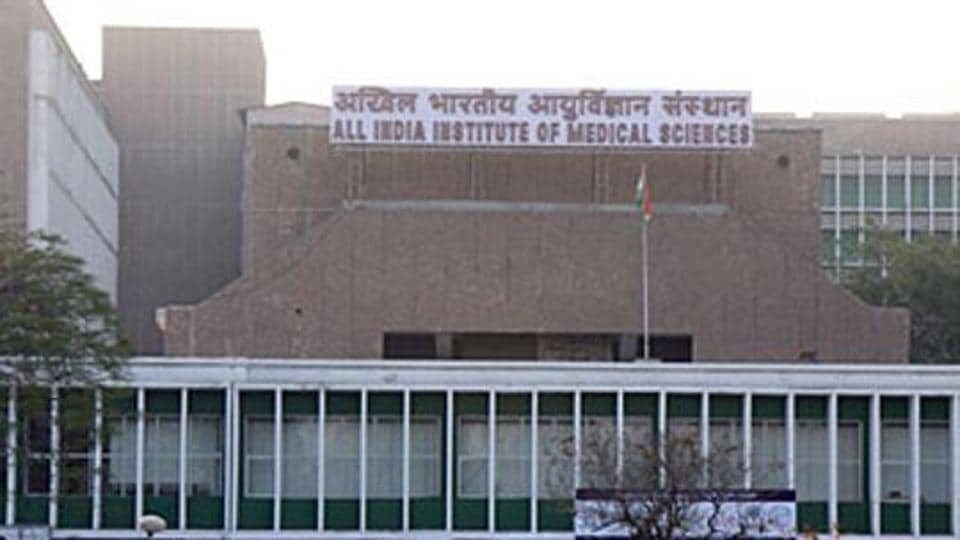
The application for clearance to get the helipad operational by the start of next year is ready and will be sent to the Directorate General of Civil Aviation (DGCA), the aviation regulator, within a month for clearance.
“The hospital is working on DGCA clearances for the helipad,” confirmed Dr Aarti Vij, chairperson, media and protocol division, AIIMS.
Once the helipad gets operational, critical patients will be airlifted from accident sites on highways and bordering states and hard-to-reach regions, and then, depending on the response, the services will be expanded to within the city.
Patients can also be quickly moved to AIIMS through the underground tunnel beneath Aurobindo Marg that connects AIIMS Trauma Centre to the main campus in East Ansari Nagar.
“DGCA in earlier inspections had some issues, but now the infrastructure is complete as per DGCA norms. Currently, the final leg of preparations is being taken care of to go to DGCA for approvals, which is identifying a nodal person with technical knowhow to facilitate patient transfers as per standard operating procedure.”
AIIMS Trauma Centre treats around 150-200 accident and injury cases in a day, of which 10% patients need immediate hospital admission.
Till now, the five to six patients who are annually airlifted to or from AIIMS for treatment – for instance, the Unnao rape survivor in July this year – land at Delhi airport, from where they are moved to the hospital in an ambulance.
Private hospitals such as Apollo and Medanta regularly airlift patients, and the cost is approximately ~1 lakh per flying hour.
“We bring around 50-55 patients in a month and for domestic patients it can cost anywhere between ~4 lakh to ~6 lakh,” said Dr Yatin Mehta, chairman, institute of critical care & anaesthesiology, Medanta.
Dr Anupam Sibal, group medical director, says, “We transfer about 100 patients a year, domestic and international both. It’s mostly the plane and fuel cost that patients have to bear.”
Completed in 2007, the original AIIMS Trauma Centre blueprint had plans for a helipad at the top of the Ward Tower building.
The process to get the helipad operational began in 2009, but there were several administrative hurdles.
In 2015, the site for the elevated helipad was moved to the nine-storey Vishram Sadan, a dorm for the patients and their families, after a DGCA site inspection report earlier had said that the helipad needed to be on top of the tallest building in the hospital.
“…The proposed site may be appropriate for construction of elevated heliport on the rooftop of AIIMS Trauma Centre for private use under day visual flight rules conditions with two approaches... The final approach and take-off path is feasible in east-west direction…,” the DGCA’s 2015 report read.
“The DGCA had highlighted the gaps for providing a clearance such as ‘submission of project report, submission of all NOCs, development of standard operating procedures for helicopter operations’ for the safe operations of helicopters,” said a senior DGCA official, who did not wish to be named.
A doctor at AIIMS, requesting anonymity, said, “The site was relocated to the newly constructed Vishram Sadan that also has a lift that is essential to transport patients to the hospital after landing.”
Airlifting patients to the hospital campus will help save time spent on the road from the airport to the hospital, which will help save lives.
“For an apex trauma centre, it is imperative to provide air ambulance services to treat patients within the ‘golden hour’, which is ideally within two hours of an injury. All developed countries have this facility, and when AIIMS Trauma Centre was being set up, the helipad facility was one of the important components,” said Dr MC Misra, former director of AIIMS.