E-Paper



Air India flight AI171 engines moved from CUTOFF to RUN, but…: What AAIB report said
AAIB report states that while both Boeing 787-8 engines were successfully commanded to restart, Engine 2—failed to recover “core speed deceleration.”

 Prefer HTon Google


The Aircraft Accident Investigation Bureau (AAIB) on Friday released its preliminary report on the Air India crash in Ahmedabad that killed 260 people, offering the first official reconstruction of the final seconds of the doomed Air India Flight 171 (AI171).
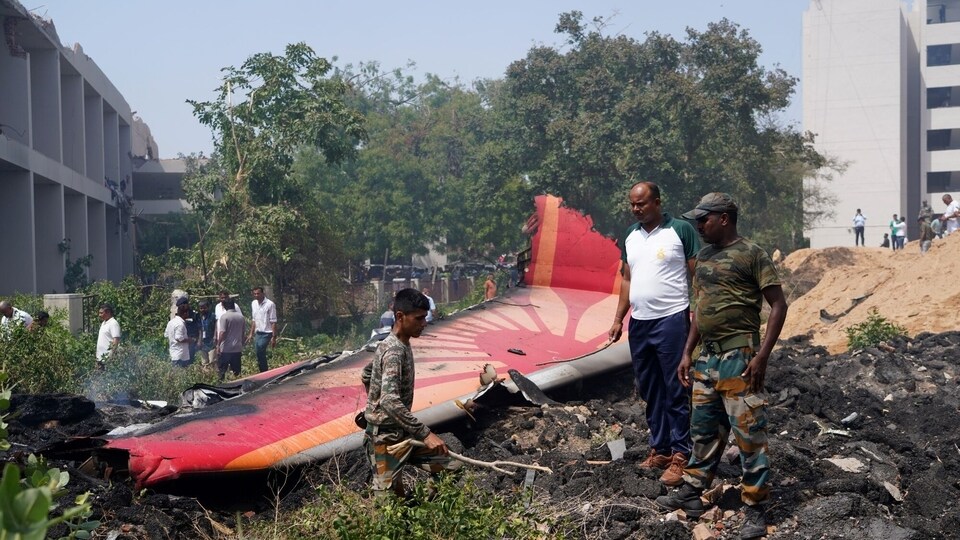
According to the AAIB preliminary report, while both Boeing 787-8 engines were successfully commanded to restart, one of them—Engine 2—failed to recover “core speed deceleration” and continued to lose thrust, ultimately contributing to the fatal Air India crash.
The 15-page report, published exactly one month after the June 12 flight crash, provides critical technical details surrounding India’s worst aviation disaster in decades. The Air India flight crashed shortly after takeoff from Ahmedabad airport.
Fuel cutoff initiated mid-flight
According to the AAIB report, the Boeing 787-8 reached a maximum indicated airspeed of 180 knots at 13:38:42 IST (08:08:42 UTC). Immediately after this, both engines' fuel cutoff switches moved from the ‘RUN’ position to ‘CUTOFF’, effectively stopping fuel supply to both engines and initiating a dangerous drop in thrust.
Also Read | Air India plane crash report: What happens when fuel switches flip from ‘run’ to ‘cutoff’ during takeoff
“The aircraft achieved the maximum recorded airspeed of 180 Knots IAS at about 08:08:42 UTC, and immediately thereafter, the Engine 1 and Engine 2 fuel cutoff switches transitioned from RUN to CUTOFF position one after another with a time gap of 01 sec,” the preliminary report states.
“The Engine N1 and N2 began to decrease from their take-off values as the fuel supply to the engines was cut off.”
Also Read | Air India crash probe report: 10 points on fuel cut, what pilots told each other
In a chilling exchange captured on the cockpit voice recorder, one pilot is heard asking, “Why did you cut off?” The other responds, “I did not do so.”
Both engines attempted relight
Within seconds, both engines were commanded back to 'RUN'. “As per the EAFR, the Engine 1 fuel cutoff switch transitioned from CUTOFF to RUN at about 08:08:52 UTC…Thereafter, at 08:08:56 UTC, the Engine 2 fuel cutoff switch transitions from CUTOFF to RUN,” AAIB report notes.
“The EGT was observed to be rising for both engines, indicating relight. Engine 1’s core deceleration stopped, reversed and started to progress to recovery," the preliminary report added.
Also Read | Air India flight 171 crash: What AAIB preliminary report reveals – and doesn’t
However, things did not pan out same for the second one, as the report says, “Engine 2 was able to relight but could not arrest core speed deceleration and re-introduced fuel repeatedly to increase core speed acceleration and recovery.”
Distress call and crash
At 08:09:05 UTC, moments after the engines failed to stabilise, one of the pilots issued a “MAYDAY” call to Air Traffic Control.
According to the AAIB: “The ATCO enquired about the call sign. ATCO did not get any response but observed the aircraft crashing outside the airport boundary and activated the emergency response.”
The EAFR recording ended at 08:09:11 UTC. Crash Fire Tenders left the airport at 08:14:44 UTC to begin firefighting and rescue operations. They were joined by the local administration’s fire and rescue services, but by then, the aircraft had already been engulfed in flames.
The preliminary report did not place blame on either Boeing or General Electric.