
 E-Paper



Allahabad HC order on Ayodhya ‘defies logic’, says Supreme Court
Ayodhya Land Dispute Case: Supreme Court held that “the high court was not seized of a suit for partition” to divide the land among the contesting parties.


Setting aside the 2010 Allahabad high court verdict that trifurcated the disputed site at Ayodhya among Muslims, Hindus and the Nirmohi Akhara, the Supreme Court said on Saturday said the judgment “defies logic and is contrary to settled principles of law.”
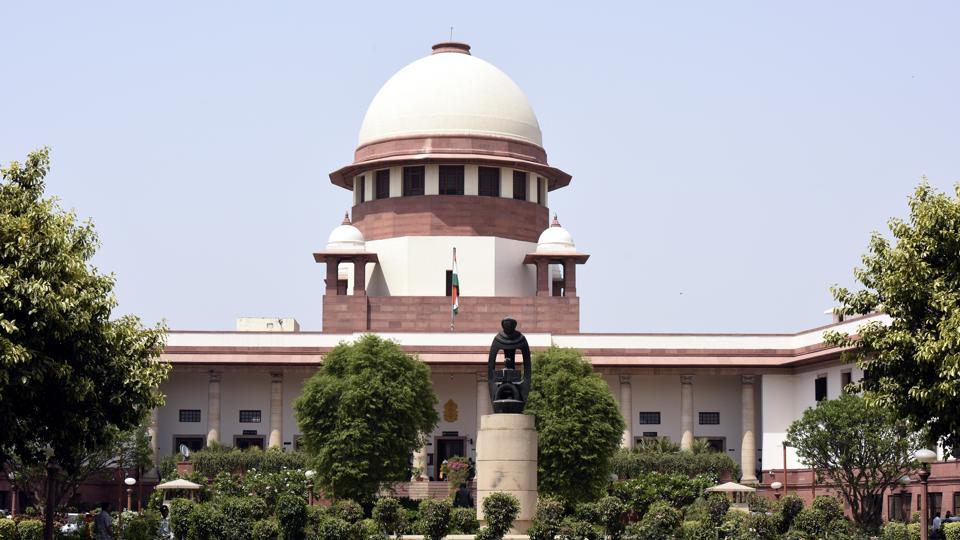
The apex court held that “the high court was not seized of a suit for partition” to divide the land among the contesting parties. “The high court was called upon to decide the question of title particularly in the suits, by the Sunni Wakf board and Ram Lalla Virajman. But the high court adopted a path which was not open to it,” the order said.
“While the high court came to a conclusion that Suit 3 (filed by Nirmohi Akhara) and Suit 4 (filed by Sunni Central Waqf Board) were barred by limitation, it proceeded to grant relief in Suit 5 to the plaintiffs in Suits 3 and 4. This defies logic and is contrary to settled principles of law.”
On September 30, 2010, the three-judge bench of the Allahabad high court comprising Justice SU Khan, Justice Sudhir Agarwal and Justice DV Sharma delivered a judgment, which held ―all the three sets of parties – Muslims, Hindus and Nirmohi Akhara — as joint holders of the disputed premises and allotted a one third share to each of them.
The Supreme Court has also assailed the 2010 judgment finding that the Hindus and Muslims were in joint possession of the disputed site.
The five-judge bench of the top court while moulding a final relief in favour of the Hindu parties has held that the evidence adduced by them stand on a better footing than that of Muslim parties to show that they were in continuous possession of the disputed site.


