
 E-Paper



Amid China’s high tariffs, India, Australia ramp up farm trade
griculture minister Narendra Singh Tomar and his Australian counterpart David Littleproud held a virtual meeting on June 1, an official said, in which key issues were thrashed out, according to India’s farm ministry


India and Australia are deepening trade ties by providing greater access to each other’s markets and technologies, as the two nations -- which have had disagreements in the past – look set to come closer in the backdrop of Australia’s escalating trade disruptions with China.
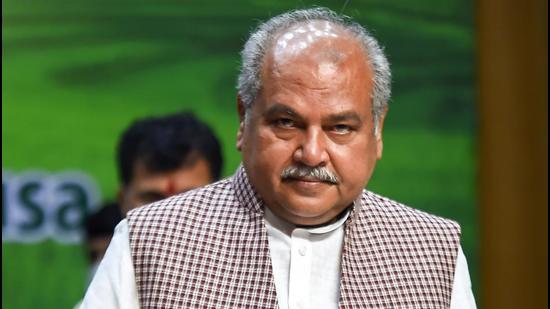
Agriculture minister Narendra Singh Tomar and his Australian counterpart David Littleproud held a virtual meeting on June 1, an official said, in which key issues were thrashed out, according to India’s farm ministry.
Australia has given market access for export of Indian pomegranates, while a joint plan will be worked out for access to Indian mangoes and pomegranates, officials said. The Australian minister also assured access to items, such as okra and pomegranate arils. Australia is seeking access to sell barley, a major produce of that country.
Also Read | Tenancy Act gets nod, to boost house renting
The new trade developments follow the Comprehensive Strategic Partnership announced by prime ministers of India and Australia during their summit on June 4, 2020.
Battered by China’s increasing of tariffs in recent times, Australia is looking at a wide range of trade agreements with India, analysts say.
China has targeted barley farmers in Australia with high tariffs, a trade war that has spilled on to other exports from Australia to China, including coal and wine.
India has imported very little of Australian barley since 2009, when it updated some of its phytosanitary requirements, which refer to measures to control plant diseases.
“India has prohibited weed seeds, including ryegrass and wild radish, which can be found in barley. This was a barrier,” said Abhishek Agarwala of Comtrade, a commodities trading firm. India is especially looking to Australia for better farm-to-fork supply-chain technologies, he said.
On March 5, The Australian, a newspaper, reported that India was “moving to fill the Chinese vacuum for resources and wine, as a free-trade agreement between Canberra and New Delhi gains momentum”.
India is also seeking greater access to Australian coal, rare earth minerals, copper, steel aluminium, cobalt and nickel. For agricultural partnership, the Indian side has made the National Institute of Agricultural Marketing as the nodal organisation. It is also pushing for Australian expertise in post-harvest management to strengthen rural grain storage and modernising supply chains.


