E-Paper



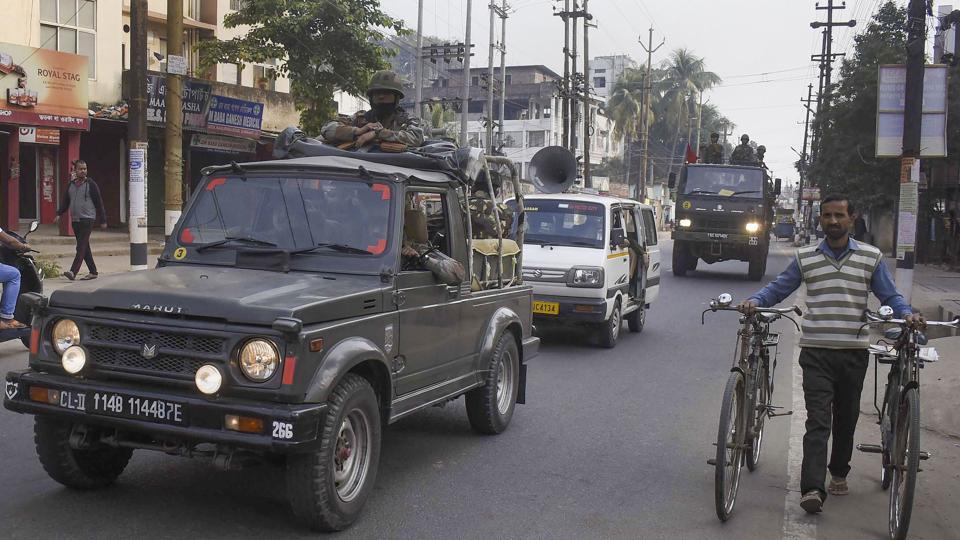
Amid ongoing Assam violence, Guwahati comes out of life under curfew
As soon as curfew was relaxed, people gathered outside grocery shops and at vegetable markets in Guwahati to buy essentials.

 Prefer HTon Google


Continuing their protest against the citizenship law, hundreds of people gathered at the Chandmari field in Guwahati on Friday morning to take part in a mass hunger strike against the new Act.
The 10-hour-hunger strike has been called by All Assam Students Union (AASU) as part of its protests against the law.
AASU has announced that it will file a PIL in Supreme Court challenging the law. “There is no way Assam or Assamese people will accept it. Besides peaceful protests we will continue legal battle against the law,” said AASU chief adviser Samujjal Bhattacharya.
Besides AASU, several other organisations in Assam including Assam Public Works, the original petitioner in Supreme Court for updating the National Register of Citizens in Assam, has also decided to file separate PILs in the top court.
Meanwhile, indefinite curfew which was imposed since Wenesday evening was relaxed for six hours in Guwahati and Dibrugarh on Friday morning from 7 am.
As soon as curfew was relaxed, people gathered outside grocery shops and at vegetable markets in Guwahati to buy essentials. There was also rush to withdraw money from ATMs, buy medicines and procure fuel.
Mobile internet and broadband services continues to remain affected. The suspension of mobile internet services was extended for another 48 hours on Thursday.
On Thursday evening, three people were killed and eight others sustained injuries in police firing in Guwahati, a principal city of Assam. The state has been witnessing protests since the central government brought a bill to fast-track citizenship to persecuted minorities coming to India from three neighbouring countries - Pakistan, Bangladesh and Afghanistan. The government argues that it is India’s duty to give these minoritie a dignified life, there are fears in the Northeast of migrant influx and destruction of their identity.
Chief Minister Sarbananda Sonowal has urged people to maintain peace and asserted that the central government was committed to implementing Clause 6 of the Assam Accord to protect the state’s cultural and linguistic identity.
Prime Minister Narendra Modi too has appealed for calm and sought to assuage the concerns of protesters, insisting his government was committed to safeguarding their rights. “The central government and I are totally committed to constitutionally safeguard the political, linguistic, cultural, and land rights of the Assamese people as per the spirit of Clause 6,” the Prime Minister said, referring to a provision of the Assam Accord, which was struck 34 years ago, after a six-year-long anti-immigrant agitation led by the AASU.
Officials said 20 to 30 people have been hurt in the demonstrations in recent days, with vehicles torched and police firing tear gas and charging the crowds with wooded staffs.