E-Paper



Another attempt to cap Assam gas well blowout fails
Since the Baghjan well is located close to Dibru Saikhowa National Park (DSNP) and the ecologically-sensitive Maguri Motapung Wetland, there were fears of environmental damage to the area due to the blowout and fire.

 Prefer HTon Google


Another attempt to cap the blowout of an Oil India Limited (OIL) natural gas well, which has been on fire since June 9 in Upper Assam’s Tinsukia district, failed on Monday due to technical glitches.
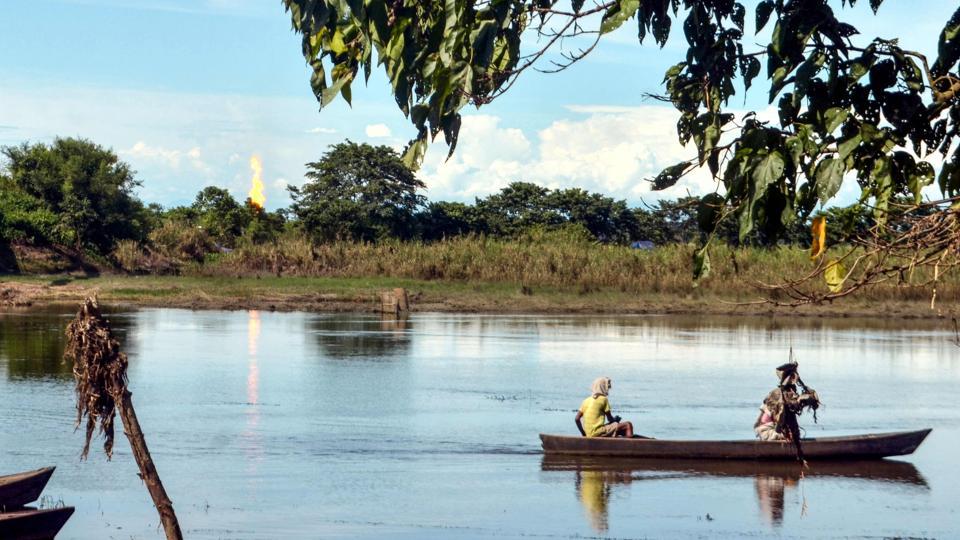
“The blowout preventer (BOP) stack was successfully placed over the wellhead. While BOP stack alignment job was underway to insert the studs, one of the two bull lines connected to the Athey Wagon, which was lifting the BOP stack, came out from the socket due to the impact of excessive heat,” said an OIL statement.
“From the safety point of view and stability required for alignment of the BOP stack on the wellhead, experts decided to safely remove the BOP stack from the wellhead. Operations will resume after carrying out necessary rectification jobs,” it added.
The BOP is a specialised valve --- a device used to seal control and monitor oil and natural gas wells to prevent blowouts, or the uncontrolled release of gas or oil from a well. They are usually installed in stacks of other valves.
An Athey Wagon is a device used to place the BOP stack, which weighs around three tonnes. It consists of a track-mounted boom lift with a hook on one end that is used to place the BOP stack on the wellhead.
On July 31, experts were attempting to place the BOP stack on the wellhead when the Athey Wagon “toppled over” leading to the suspension of work on capping the blowout.
The gas well had a blowout on May 27, when workover operation, or maintenance work, to locate a new gas reservoir was underway. While efforts to cap the blow out were underway, the well suddenly caught fire on June 9 and two firefighters were killed in the blaze that is yet to be doused.
Installation of the BOP is the penultimate task needed to complete the operation. Once the BOP is installed, the process of “killing the well” starts immediately.
According to OIL officials, that is done by injecting a “kill fluid”, a sludge-like specially prepared mud, into the well slowly to push the gas from the well back to the reservoir. The process takes around two-three days, as the fluid needs to fill the entire length of the 3.5-kilometre deep well.
Initially, OIL had said that the well would be plugged in a month. Later, the deadline was extended to July 7. But floods, technical glitches, and burn injury of three foreign experts while attempting to douse the fire have led to several delays.
Since the Baghjan well is located close to Dibru Saikhowa National Park (DSNP) and the ecologically-sensitive Maguri Motapung Wetland, there were fears of environmental damage to the area due to the blowout and fire.
Several studies by different agencies are underway to measure the extent of the damage.
In June, the National Green Tribunal (NGT) had ordered the formation of an expert committee to probe the blowout and subsequent fire and assess the damage caused to human life, wildlife, and the environment because of the industrial disaster.