
 E-Paper



Another Bengal worker alleges torture amid drive against undocumented Bangladeshis
The allegation comes against the backdrop of the return of a large number of migrant workers from the Bharatiya Janata Party (BJP)-ruled states amid a drive to identify Bangladeshis

 Prefer HTon Google


Another migrant worker from Goalpokhar in West Bengal’s North Dinajpur has alleged that police in Haryana’s Panipat tortured and fractured his legs to pressure him to say he was an undocumented Bangladeshi immigrant because he spoke Bengali.
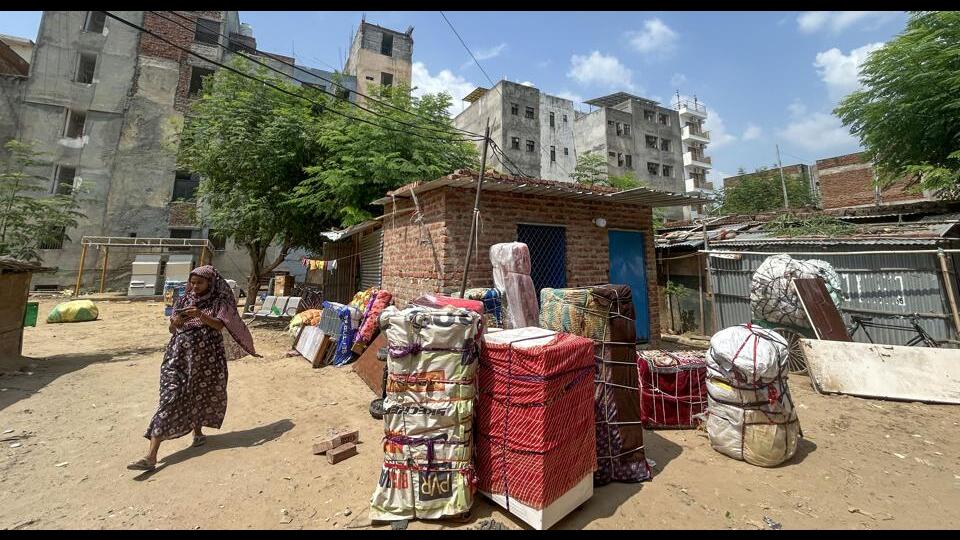
The allegation comes against the backdrop of the return of a large number of migrant workers from the Bharatiya Janata Party (BJP)-ruled states amid a drive to identify Bangladeshis.
Mohammad Kabir, the second Goalpokhar native to allege torture in Panipat since July 30, said he was detained on July 29. “I told them I am from West Bengal and showed my Aadhar card, but they refused to listen,” he told the local media in North Dinajpur. “The torture continued for four days before they released me. My legs are fractured. I used to work at a carpet factory.” He said the Panipat Police detained three more migrant workers.
On July 30, Junaid Alam from Goalpokhar alleged that his left leg was fractured when the Panipat Police beat him up with batons.
West Bengal minister Ghulam Rabbani, the ruling Trinamool Congress (TMC) legislator from Goalpokhar, visited Alam’s home and said the migrant worker would file a complaint against the Haryana Police. “There will be an investigation.”
Chief minister Mamata Banerjee last month alleged that Delhi Police tortured a toddler and his mother, Sanjanu Parveen, from West Bengal’s Malda district on July 26 amid the campaign against alleged undocumented immigrants. The BJP lodged a police complaint against her in the national capital three days later, claiming the video she posted on social media to back her allegation was fake.
Bengal minister Firhad Hakim presented Parveen before the media in Kolkata on July 30. Two days earlier deputy police commissioner (East Delhi) Abhishek Dhania countered the allegation, calling the charges “fabricated” and “politically motivated.” Parveen stuck to her allegation and filed a complaint against the Delhi Police in Kolkata.
On Monday, 60 migrant workers returned to West Bengal’s South Dinajpur from Delhi, 1,500 km away, in a chartered bus. One of them told the local media that Delhi Police personnel were demanding ₹5-7 lakh from the detained migrant workers for their release. The TMC circulated a video in which this migrant worker is heard making the allegation. HT could not independently verify the authenticity of the allegation.
“60 Bengali migrant workers from Dakshin [South] Dinajpur returned from Delhi after being subjected to brutal torture, simply for speaking in Bangla. They were beaten, abused, and extorted by @DelhiPolice, which allegedly demanded bribes of ₹5–7 lakh for their release. These are Indian citizens, targeted solely for their language and identity,” said the TMC as it posted the video on X.
The TMC called it a hate-driven crackdown on the Bengali identity, enabled and emboldened by the anti-Bengali BJP regime. “Under [Union home minister] @AmitShah’s watch, Delhi Police has turned into a tool of linguistic apartheid, criminalising Bangla, vilifying Bengalis, and extorting helpless workers. We are enraged. We will not let this pass.”
A letter from Delhi’s Lodhi Colony police station seeking help to translate some documents in “Bangladeshi language” to Hindi and English surfaced on Sunday, fuelling the row.
TMC leader Abhishek Banerjee said this was not a mere clerical error. “It is yet another CALCULATED ATTEMPT by the BJP to defame Bengal, undermine our cultural identity and equate West Bengal with Bangladesh for narrow political propaganda,” Banerjee wrote on X.
Bengal BJP president Samik Bhattacharya said no police in any state are harassing genuine Indian nationals. “The drive is against illegal migrants. TMC is trying to float a false narrative.”


