E-Paper



Covid-19: Antibodies may not stop transmission in children
Some children may have the potential to transmit the coronavirus disease, or Covid-19, even if they have measurable antibodies in their system, said a new study that indicated immune response, by itself, may be inadequate to protect children from the pandemic.

 Prefer HTon Google


Some children may have the potential to transmit the coronavirus disease, or Covid-19, even if they have measurable antibodies in their system, said a new study that indicated immune response, by itself, may be inadequate to protect children from the pandemic.
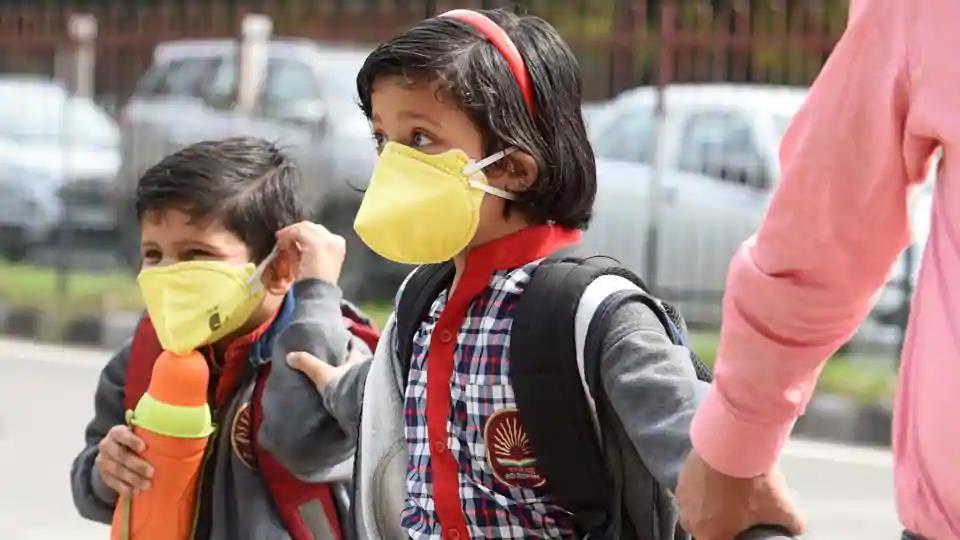
The study, conducted by doctors at the Children’s National Hospital in Washington DC and published in The Journal of Paediatrics on Thursday, analysed 6,369 children tested for Sars-CoV-2, the virus that causes Covid-19, and 215 children who underwent antibody testing between March 13 and June 21. Out of this, 33 showed the presence of both virus and antibodies at the same time.
“With most viruses, when you start to detect antibodies, you won’t detect the virus anymore. But with Covid-19, we’re seeing both,” said Burak Bahar, lead author of the study. “This means children still have the potential to transmit the virus even if antibodies are detected.”
She cautioned that the mode of transmission of a virus, which exists in the presence of antibodies, remained unknown. A clutch of recent studies have indicated that antibodies may last in a patient’s system for between three and six months, although no conclusive evidence has emerged.
The researchers underlined that a lot was still unknown about the disease – especially at a time when many countries have pushed to open primary schools and kindergartens despite health experts cautioning that children were particularly susceptive to contracting the disease and transmitting it to family members and others.
“Wearing face coverings, social distancing and personal hygiene are effective ways to decrease spread of this disease; however, these practices might be challenging in schools and similar environments that care for children. Antibody response, at its own, is not recommended to clear children from precautions,” Bahar told HT.
Data of Covid-19 fatalities in India published in HT earlier this week showed that children were the least vulnerable group. But a number of other studies – notably, one last week in JAMA Paediatrics – have concluded that children can shed the virus even if they are asymptomatic or for long after their symptoms have cleared.
Researchers from the Children’s National Hospital found patients between 6 and 15 took longer to clear the virus (median time of 32 days) compared to patients between 16 and 22 (median time of 18 days). In the study, women in the 6-15 group took longer to clear the virus (44 days) than males (25.5 days for males). “The takeaway here is that we can’t let our guard down just because a child has antibodies or is no longer showing symptoms,” said Bahar.