
 E-Paper



Anti-Maoist ops, anti-poaching drives help restore central India tiger corridor
The corridor links Tadoba-Andhari Tiger Reserve, the Indravati Tiger Reserve, the Udanti Sitanadi Tiger Reserve, and the Sunabeda Wildlife Sanctuary

 Prefer HTon Google


Anti-Maoist operations, intensified anti-poaching and anti-encroachment drives have helped restore the tiger corridor connecting reserves in Chhattisgarh, Maharashtra, and Odisha, officials said.
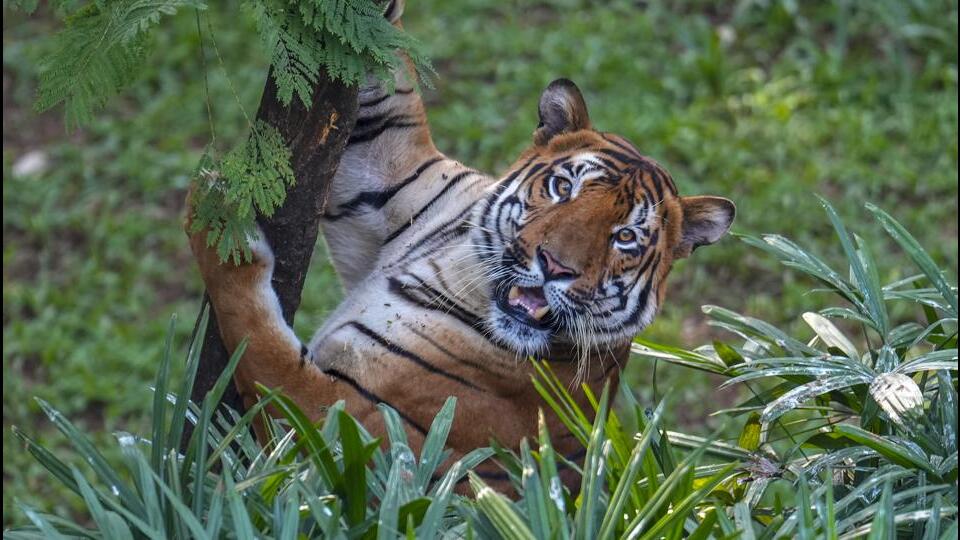
The corridor links Maharashtra’s Tadoba-Andhari Tiger Reserve, the Indravati Tiger Reserve in Chhattisgarh, the Udanti Sitanadi Tiger Reserve, and the Sunabeda Wildlife Sanctuary (Odisha).
Officials said joint anti-poaching operations were carried out in Gadchiroli, Bijapur, and Gondia districts with the Maharashtra forest department and the Wildlife Crime Control Bureau’s support.
Over 500 poachers and smugglers have been detained, and nearly 750 hectares of encroached forest land have been cleared in Udanti Sitanadi Tiger Reserve over the last three years.
“In 2010, Chhattisgarh had 46 tigers. Many of them moved from Maharashtra and Madhya Pradesh through functional corridors. After that, tiger movement declined,” said Udanti Sitanadi National Park director Varun Jain. He said renewed enforcement has created a deterrent across the corridor.
Udanti Sitanadi Tiger Reserve conducted over 40 anti-poaching operations in Chhattisgarh and in Odisha.
In October 2022, an analysis of camera traps in Udanti Sitanadi found that a tiger, which was in Telangana in 2018, was later photographed in Debrigarh Wildlife Sanctuary in 2023. Another tiger photographed in Udanti Sitanadi in May 2025 was camera-trapped in Barnawapara Wildlife Sanctuary (Chhattisgarh), with stripe patterns confirming its identity. Over the past nine months, three tigers have been recorded moving through the Udanti Sitanadi.
Officials attributed this to rising tiger populations in neighbouring Madhya Pradesh (785) and Maharashtra (444). The increase led to the dispersal of male tigers in search of new territories.
Jain said all the tigers recorded in Udanti Sitanadi are transient males. “Females generally disperse within 100 to 200 kilometres. Males can travel up to 1,500 kilometres,” Jain said. “The nearest tiger reserves with breeding populations are nearly 400 kilometres away. There is no resident source population in Udanti Sitanadi.” He said the absence of a tigress has limited the reserve’s ability to retain dispersing males.
A proposal to translocate two tigresses from Madhya Pradesh is under consideration and awaits approval from the National Tiger Conservation Authority. “The authority has asked us to conduct prey base estimation before any translocation,” Jain said. He added that the post-release strategy aims to ensure zero human-tiger conflict for the first five years after introduction.
The reserve has nearly 100 villages, making conflict mitigation a challenge. “It will not be easy, but we have managed elephant movement effectively in recent years and are hopeful,” said Jain.
Officials said the restored connectivity is also significant for the conservation of wild buffalo and elephants. Elephant presence has been recorded in Pakhanjur in Kanker along the Maharashtra border and in Sarona from the Udanti Sitanadi side. Plans are underway to improve habitat connectivity to link the wild buffalo population of Indravati’s Pamed area with that of Udanti Sitanadi.
Officials said improved protection has led to increased sightings of species such as the Malabar pied hornbill, Indian giant squirrel, and flying squirrel.
-kW0H-U20214218012MgB-250x250%40HT-Web.jpg)


