E-Paper



April GST collections hit all-time high of ₹1.68L-cr
For the first time since July 2017, when the new indirect tax regime started, revenue collections surpassed ₹1.5 lakh crore.

 Prefer HTon Google


Revenue collections from the Goods and Services Tax (GST) surpassed ₹1.5 lakh crore for the first time since the new indirect tax regime started in July 2017, with highest ever collections in April at about ₹1.68 lakh crore, mainly because of better compliance, rapid economic recovery and rising prices of consumables.
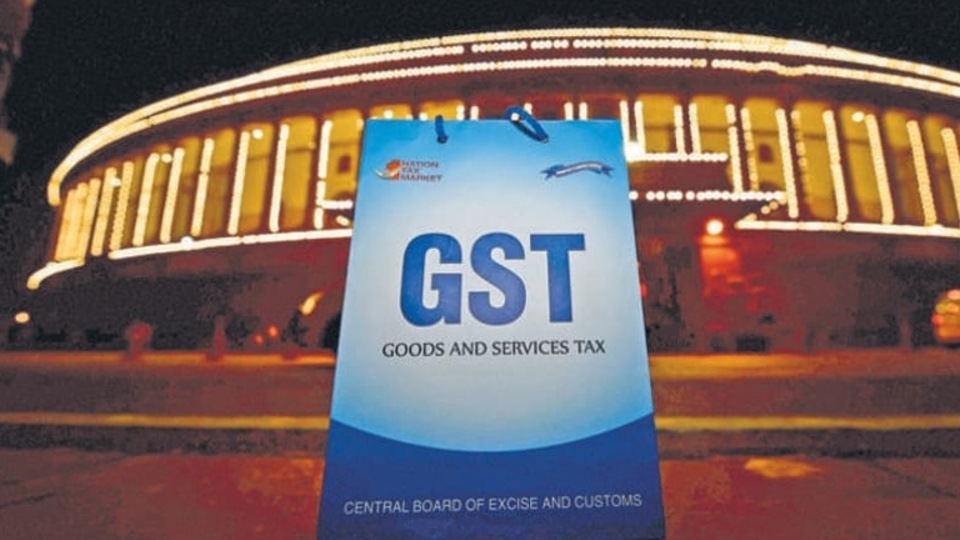
GST collections maintained a streak of record collections for the second time in a row and three times in 2021-22 ( ₹1.39 lakh crore in April 2021, ₹1.40 lakh crore in January and ₹1.42 lakh crore in March), with highest ever gross collections in April at ₹1,67,540 crore, nearly 18% more than the previous record of ₹1,42,095 crore in March, according to official data.

“This shows clear improvement in compliance behaviour, which has been a result of various measures taken by the tax administration to nudge taxpayers to file returns timely, to making compliance easier and smoother and strict enforcement action taken against errant taxpayers identified based on data analytics and artificial intelligence,” the finance ministry said in a statement on Sunday.
Higher GST collections between ₹1.4 lakh crore and ₹1.5 lakh crore are likely to continue for the rest of the current financial year to March 2023 because of stricter technology-based compliance and various reforms such as corrections in inverted duty structure on certain items such as footwear, experts said.
“While ₹1.4- ₹1.5 lakh crore is a new normal, inflation is also one of the factors that led to higher GST collections in April,” one of them working in a leading global consulting firm said, asking not to be named.
India’s retail inflation soared to 6.95% in March, the highest in 17 months, breaching the Reserve Bank of India’s 6% upper tolerance limit for the second successive month. Wholesale inflation also surged to a four-month high of 14.5% in March because of higher global crude oil and primary commodity prices.
GST collections in April reflect actual business transactions of March.
“One of the major reasons for higher GST collection is rising consumer demand, even in those sectors that were badly hit by Covid-19 pandemic, for example, hospitality and aviation,” said Abhishek A Rastogi, partner at law firm Khaitan & Co. “Naturally, rising demand will impact prices, and consequently GST collections, as tax rates are ad valorem (based on the value of a transaction).”
However, surging prices of certain commodities due to supply chain disruptions because of war in Ukraine is a global phenomenon and temporary, he said. “Besides, rising fuel rates, such as petrol and diesel, have no impact of the collections as they are outside the GST net,” Rastogi added.
The higher revenue generation indicates maturity of the new indirect tax regime that was launched in July 2017, and further growth could be seen after tax rate rationalisation takes place, said MS Mani, partner at Deloitte India, a consultancy.
The GST Council in September 2021 set up a group of ministers (GoM), headed by Karnataka chief minister Basavaraj Bommai, to examine the issue of correction of inverted duty structure for major sectors, rationalise tax rates and review exemptions to augment collections.
Mani also pointed at significant collections by many states on improved business activities. “The steep growth in the GST collections is based on all major states reporting increases ranging from 9% to 25%, GST return filing standing at 1.06 crore returns, e-way bill generation at 7.7 crores, accompanied by a deep focus on data analytics to curb evasion,” he said, adding that recent changes on permitting input tax credits only upon timely compliance by vendors also helped in improved collections.
GST collections in April also saw the highest ever tax collection in a single day on April 20, 2022, when ₹57,847 crore was paid through 9.58 lakh transactions, the finance ministry said. The highest single day payment on the same date last year was ₹48,000 crore through 7.22 lakh transactions.
April is also the 10th month running that GST revenues remained above ₹1 lakh crore. The record collection of ₹1,67,540 crore in April is 19.92% higher than ₹1,39,708 crore achieved in the same month a year ago, according to official data.
The gross revenue collected in April has ₹33,159 crore central GST (CGST) component, ₹41,793 crore state GST (SGST) and ₹81,939 crore integrated GST (IGST), which includes ₹36,705 crore collected on import of goods. Cess collections in the month was ₹10,649 crore, including ₹857 crore collected on import of goods.
The government has settled ₹33,423 crore to CGST and ₹26,962 crore to SGST from IGST. The total revenue of Centre and the states in April after regular settlement is ₹66,582 crore for CGST and ₹68,755 crore for the SGST, the finance ministry said.
Total number of e-way bills generated in March was 7.7 crore, 13% higher than 6.8 crore e-way bills generated in February, which reflects recovery of business activity at a faster pace, it said.