
 E-Paper



AQI soars, will Delhi turn to artificial rain? What happened to the cloud seeding trials
In late October, the Delhi government conducted two cloud seeding trials in collaboration with IIT Kanpur, to induce artificial rain.

 Prefer HTon Google


Delhi residents have been waking to a white smoggy morning for the last few days, caused by the hazardous cocktail of winter and high AQI. With the living conditions deteriorating, citizens are now wondering if the government will conduct artificial rain through cloud seeding.
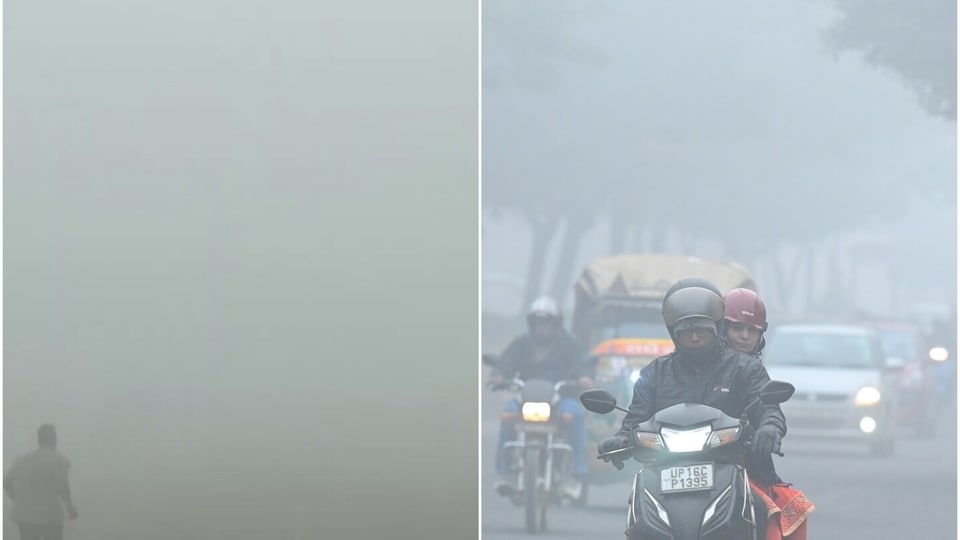
On Monday morning, Delhi’s Air Quality Index (AQI) stood at 452, according to the Central Pollution Control Board (CPCB), with several areas such as Anand Vihar, RK Puram, Dwarka and Wazirpur recording readings between 450 and 500.
Residents complained of breathlessness, low visibility and heightened accident risks as dense smog enveloped large parts of the city. Flights and trains were delayed or cancelled, and hospitals reported a surge in patients with respiratory problems.
Despite these conditions, cloud seeding, an artificial rain-making technique that was tried earlier this winter, may not be pursued again in the immediate term.
What happened to cloud seeding experiments?
In late October, the Delhi government conducted two cloud seeding trials in collaboration with IIT Kanpur, deploying a small aircraft to fire silver iodide flares over parts of Delhi and the National Capital Region. The exercise, which cost over ₹1 crore for two sorties, failed to produce rainfall.
A Delhi government report later noted that moisture levels at the time were only around 10–15 per cent, far below what is considered ideal for cloud seeding.
Although officials claimed some localised reduction in particulate matter, no rainfall was recorded, and subsequent trials were put on hold.
What scientists say on artificial rain experiment?
Scientific assessments have also questioned the viability of cloud seeding during Delhi’s winters. An IIT-Delhi study released days after the October trials concluded that the city’s winter atmosphere is climatologically unsuitable for consistent cloud seeding due to a lack of sufficient moisture.
The report said that even if artificial rain were successfully induced, it would offer only temporary relief lasting one to three days before pollution levels rebound.
The study further described cloud seeding as a “high-cost, tactical intervention” that does not address the underlying sources of pollution such as vehicle emissions, construction activity, industrial output and crop residue burning in neighbouring states.
Given the operational costs, scientific uncertainty and limited benefits, the report said cloud seeding cannot be recommended as a primary or strategic measure for Delhi's air pollution management.
Political row
The cloud seeding trials also sparked a political controversy, with the opposition Aam Aadmi Party questioning the BJP-led Delhi government’s decision to spend public money on an experiment that failed to deliver results.
The previous AAP government had floated similar plans in past winters but cited unfavourable meteorological conditions and lack of clearances for not proceeding.
What Delhi govt is doing to combat high AQI?
As Delhi continues to endure hazardous air conditions, with AQI readings above 450 for a second straight day, authorities have instead focused on emergency measures such as banning construction activity, restricting diesel generators, deploying water sprinklers and allowing schools and offices to function remotely.
Environmentalists, however, have warned that such steps offer only short-term relief and that long-term emission reduction remains the only durable solution to the capital’s chronic air pollution problem.


