
 E-Paper



Arthritis drug cuts death risk by half in severe Covid-19 patients: Study
Since the rheumatoid arthritis drug is immunosuppressive, doctors were concerned that it could lead to more secondary infections


The use of the immunosuppressive rheumatoid arthritis drug tocilizumab when given to only those with severe Covid-19 can halve the number of deaths, showed a subset analysis of the study that was published in Lancet Respiratory Medicine on Thursday. However, the drug did not result in any significant improvement in markers like the requirement for ventilation, organ failure, ICU stay, or deaths when data for all patients—moderate and severe—hospitalised was considered, found a randomised control trial held at 11 sites across India.
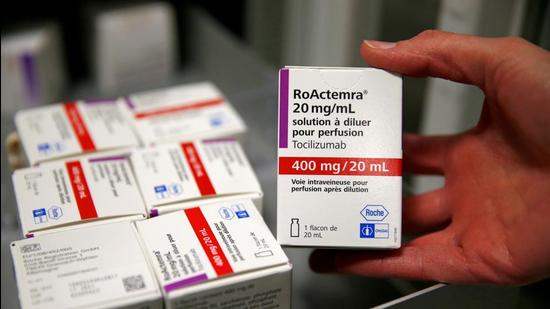
“Millions were wasted on the indiscriminate use of the drug as it was not clear at what stage of the disease it had to be administered. Now, we know that it can help only those who have either come in with severe disease or progress on to severe disease—patients who are on supplemental oxygen, non-invasive ventilation, invasive ventilation, or in the ICU without ventilation,” said Dr Arvinder Soin, national lead investigator for the COVINTOC trial.
Also Read | India’s Covid-19 tally rises after 18,599 fresh cases recorded in last 24 hours
The researchers have gone by the union health ministry’s definition of “severe disease”—a respiratory rate of more than 30 per minute (normal is 12 to 16 per minute), oxygen saturation of less than 90% (normal is 95 to 100%), or acute respiratory distress syndrome or septic shock.
The first eight to ten days of Covid-19 is the infectious phase when the replication of the virus leads to fever, pneumonia, breathing difficulty, and some gastric symptoms among others. After that, it is the immune response going in overdrive resulting in a cytokine storm—a condition where the body’s immune system attacks its organs and tissues—that leads to most Covid-19 deaths. The doctors had thought that an immunosuppressive drug such as tocilizumab could control this rogue immune response.
The study also showed 12% of patients had disease progression at day 28 in the tocilizumab group as compared to 18% in the standard care group. The number of adverse events—which could range from a simple fever to acute respiratory distress syndrome and death—was higher in the tocilizumab group. “However, the difference was not statistically significant. The rate of severe adverse events such as respiratory distress, cardiac events, and infections were also almost similar across the groups assuring us of the safety of the drug,” said Dr Soin.
Since the drug is immunosuppressive,doctors were concerned that it could lead to more secondary infections.
“This is the first peer-reviewed published study that has plugged the knowledge gap on when the drug should be administered. Incidentally, two yet-to-be published major studies—RECOVERY trial from the UK and REMAP-CAP—have revealed similar findings. This has prompted the UK to include the drug in their standard of care; in India it has been in use as an experimental therapy,” said Dr Soin.
The study was conducted between May and October 2020 with 180 trial participants randomly assigned to the groups given standard care along with tocilizumab. “We had to include drugs such as remdesivir and steroids in our standard care after the trial started as the government treatment protocol changed. However, the number of people who received such interventions is well matched across both the arms of our study and hence it is not a confounding factor,” he said.
Administration of off-label drugs (using a medicine for a condition it is not specified for), rapidly evolving understanding of the disease and treatment, and multiple trials competing for recruitment of participants were some of the challenges that the team highlight in the paper.


