E-Paper



Assam announces new rules for ferry services after boat accident on Brahmaputra
The regulations for new ferry services in Assam were drawn up at a review meeting held on Saturday evening by chief minister Himanta Biswa Sarma.


GUWAHATI:
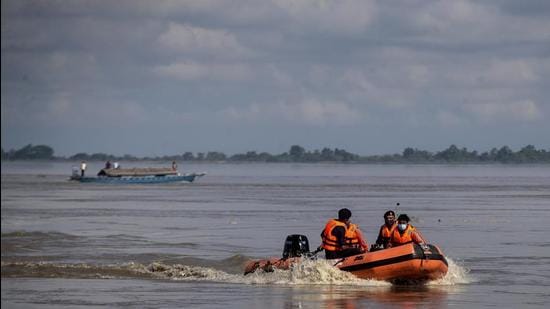
The Assam government on Sunday announced a new set of regulations for passenger vessels on the Brahmaputra and other rivers in the state in the wake of the accident on September 8 in which two people died and another went missing after two boats collided between Nimatighat (Jorhat) and Majuli and one of them went down.
The regulations were drawn up at a review meeting held on Saturday evening by chief minister Himanta Biswa Sarma in Guwahati. Overall, these aim to streamline the ferry services and make them safer, but for additional security, two magistrates — one each in Majuli and Jorhat — will have to be present during the arrival and departure of the ferries from now on.
According to a statement issued by the government, the ban on single-engine vessels, announced immediately after the accident, will stay. But those boats having ‘marine’ engines — two engines with reverse gear — will be allowed to ply. Boats having marine engines are safer because if one engine fails, the other kicks in. They also have outboard motors and are easier to manoeuvre in difficult conditions.
The regulations also said that six vessels operated by the inland water transport department will continue to ferry passengers between Majuli and Jorhat, and a dredging vessel will also be in operation in the dry season to keep the channel clear.
The government informed in the statement that all 19 private, single-engine vessels that ply between Majuli and Jorhat will be retrofitted with marine engines within six months, the cost of which will be borne by the government. Altogether the government will provide free marine engines to 850 private passenger vessels in the state under the Jibondinga Scheme, provided these clear the fitness survey. The scheme by the inland water transport department provides financial incentives to registered boat owners to provide safe, secure and sustainable ferry operations.
The new rules make it mandatory for all passengers to wear life jackets. There will also be at least two ramps or temporary jetties at each ‘ghat’ (port) of Majuli and Jorhat. Every passenger will be issued a ticket, and his/her name and contact details will be recorded in a separate register.
Basic amenities like toilets, drinking water, waiting area, etc., will be provided at each ghat, and safety audits on all vessels will be carried out regularly. Every vessel will need to have a first-aid box and a minimum of two anchors with flexible manila rope that will need replacement if they are more than 10% damaged. There should be one carbon dioxide and one foam-type fire extinguisher in the engine room.
Each vessel must have a signboard prominently displaying the load capacity of passengers, bicycle, motorcycle, car, truck, and other permissible items, etc. Overloading will not be allowed under any circumstances, the government decided in the meeting.
The vessels will also be inspected for overall fitness, availability of fire-fighting and lifesaving equipment, competence of crew members, etc. These certifications will be recorded in the surveyor declaration form before issuing certificates.
Among other measures for safety, a State Disaster Relief Force team will be stationed at Majuli at all times to respond to any emergency.
Meanwhile, the police have registered a criminal case in connection with the September 8 incident and arrested six officials of the inland water transport department and four others, including the owner and operators of the capsized private boat. An inquiry by an additional chief secretary has also been instituted.