E-Paper



Assam assembly passes cattle preservation legislation, opposition walks out
The legislation seeks to regulate transportation, slaughter and sale of cattle, beef and beef products in the state of Assam.


The Assam assembly on Friday passed legislation regulating transportation, slaughter and sale of cattle, beef and beef products in the state.
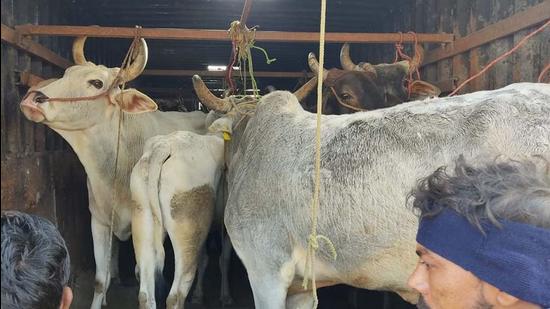
The Assam Cattle Preservation Bill, 2021 was passed on the last day of the budget session after a discussion lasting over two hours through a voice vote. The Bill was passed after opposition members, who had sought sending the Bill to a select committee, had staged a walkout from the House.
Opposition members had suggested 76 amendments to the Bill including removal of restrictions on inter-district transportation of cattle, relaxation of the ban on slaughter of cattle within a 5 km radius of temples, ‘satras’ (Vaishnavite monasteries) etc., and the strict penalties like eight year imprisonment and heavy fines for violations of the Bill.
They said that the state would lose a large amount in revenue as the cattle trade in Assam is worth ₹20,000 crores annually.
Chief Minister Himanta Biswa Sarma informed the House that buffaloes would be exempted from provisions of the Bill.
“Data shows that most cases of communal tension in Lower Assam in the past few years are related to beef. The provisions of the Bill will lead to communal harmony as it would allow those who consume beef to eat it with some restrictions and also respect the sentiments of non-beef eating communities like Hindus, Jains, Buddhists and Sikhs,” said Sarma.
“We don’t have any ill intention in introducing the Bill. And real Muslims who understand it would have no opposition to it. There’s no ban on eating beef, those who want can eat it 5 km away from temples and ‘satras’. Communal harmony can prevail only when Muslims respect sentiments of Hindus as much as Hindus respect the sentiments of Muslims,” he added.
Termed The Assam Cattle Preservation Bill, 2021, the legislation puts a ban on inter-state transport of cows through Assam in order to control their smuggling to neighbouring Bangladesh. The Bill bans transport of cattle from other states through Assam to places outside the state. It also stops transport of cattle from any place within Assam to places outside the state “where slaughter of cattle is not regulated by law”.
Transport of cattle from places outside Assam to any place within the state will also be banned by the legislation. Further, movement of cattle from one place within the state to another located in Assam will also be restricted. However, a competent authority may issue permit for transport of cattle for bona-fide agricultural or animal husbandry purposes.
The Bill bans sale of beef in areas which have predominant population of Hindus, Sikhs, Jains and other non-beef-eating communities or within a radius of 5 km of any temple, ‘satra’ (Vaishnavite monastery) “or other religious institutions belonging to Hindu religion”. Violations of the provisions of the Bill could lead to imprisonment for three to eight years and fine between ₹3 lakh and ₹5 lakh.
“The proposed Bill in its present form can lead to various problems for people associated with cattle trade, beef products and business in cattle skin etc. I propose that it should be sent to a select committee of assembly to get their views on its efficacy,” said Congress legislature party leader Debabrata Saikia.
“Instead of looking at this Bill from a religious perspective, one needs to view it from other angles. Unlike popularly believed, consumption of beef is not mandatory among Muslims and Christians. It is a food product like any other. We should see what impact socio-economic impact the Bill would have in Assam,” said All India United Democratic Front (AIUDF) MLA Aminul Islam.
“Only those animals and other species which are endangered or face threat of extinction, like rhinos in Assam, needs protection. Reply by government to my question in the ongoing assembly session has revealed that the cattle population in Assam has increased every year and as per a 2020 survey the state has over 10.9 million heads of cattle
Both Islam and Saikia argued that restrictions in the present Bill regarding slaughter and sale of cattle would impact those involved in cattle trade and owners of cattle would be forced to leave their old and diseased animals on the streets due to costs involved in their upkeep. This in turn could lead to traffic accidents and damage to crops.