E-Paper



Assam to move SC for Aadhaar cards to persons whose biometrics locked for NRC
Nearly 2.8 million people from Assam have not been able to get their Aadhaar cards as their biometrics was locked during the process of updating the National Register of Citizens (NRC).

 Prefer HTon Google


GUWAHATI: The Assam cabinet decided on Wednesday to approach the Supreme Court to ensure that those residents whose biometrics were locked during the process of updating the National Register of Citizens (NRC) are able to get Aadhaar cards.
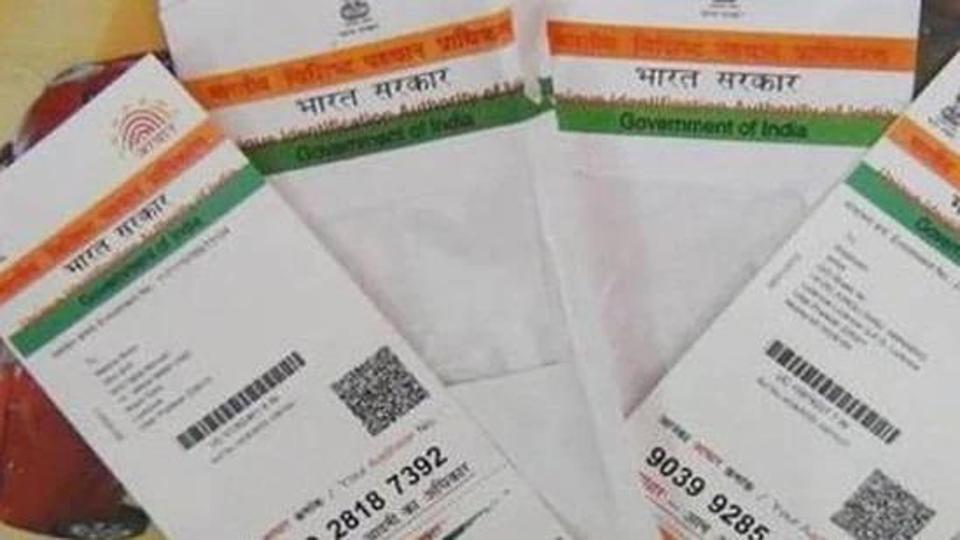
“State government approved filing of an interlocutory application in Supreme Court to ensure residents of Assam (both whose names are in NRC and those left out) are able to get their Aadhaar cards,” parliamentary affairs and information minister Pijush Hazarika said.
During the process of updating the NRC, the biometrics of nearly 2.8 million applicants, whose citizenship was under doubt, were collected and locked. As per present rules, Aadhaar cards can’t be issued to those whose biometrics has been locked.
The final NRC list released on August 31, 2019 excluded 1.9 million applicants whose biometrics were collected. At present, both these applicants as well as over 830,000 others whose names were included in the final NRC haven’t been able to get their Aadhaar cards as their biometrics are still locked.
The Supreme Court is at present hearing a public interest litigation (PIL) filed by Trinamool Congress (TMC) Rajya Sabha member Sushmita Dev seeking release of biometrics of those 830,000 applicants whose names have got included in the NRC.
“Nearly 2.8 million people from Assam have not been able to get their Aadhaar cards as their biometrics is locked. Due to this, these people are not able to avail benefits of many state as well as central government schemes. Since Aadhaar is not a citizenship document, we feel that these people need to get it, whether their names are in the NRC or not,” said Hazarika.
“Our government as well as many organisations in Assam have refused to accept the NRC list (due to alleged flaws in inclusion and exclusion of names). A meeting held with these groups unanimously agreed NRC shouldn’t determine who should get Aadhaar card or not. Hence, we decided to approach SC so that these people get Aadhaar and are able to get benefit of schemes,” he added.
The cabinet also decided to give a plot of 5 ‘bighas’ at Dimoria in Sonapur (on the outskirts of Guwahati) to Bhutan government to set up an office of the royal Bhutanese consulate general.
Another 77 ‘bighas’ of land will be given to Central Reserve Police Force (CRPF) in Chyagaon, located 45 km from Guwahati, to set up a new battalion. The cabinet approved 2% reservation in Grade I and Grade II state government jobs for ex-servicemen.
Approval was also given to a ₹4,360 crore project (to be funded by World Bank) to repair/build 1,085 bridges across the state in order to improve all-weather road connectivity in the state.