
 E-Paper



‘At short notice, Sheikh Hasina sought approval to come to India’: Jaishankar in Rajya Sabha
Jaishankar also said that the government is monitoring the situation with respect to the minorities in the neighbouring country

 Prefer HTon Google


External affairs minister Subrahmanyam Jaishankar on Tuesday said that India is in regular touch with the authorities in Bangladesh, which is in the grip of a political crisis after its prime minister Sheikh Hasina resigned and fled the country.
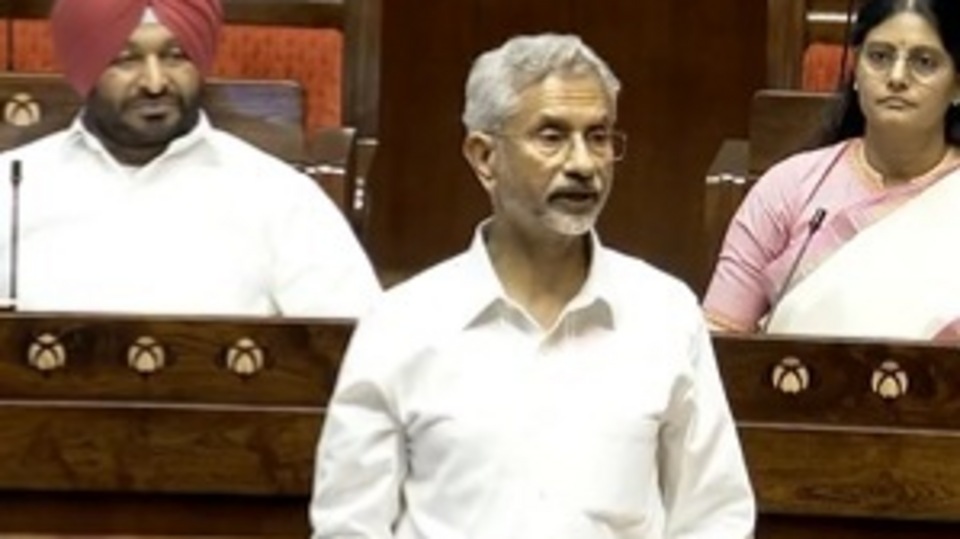
In his address to the Rajya Sabha, the minister said," In the last 24 hours, we have also been in regular touch with the authorities in Dhaka. This is the situation as of now. I seek the understanding and support of the House in regard to sensitive issues regarding an important neighbour on which there has always been a strong national consensus."
ALSO READ: India reaches out to Dhaka, wants military to restore peace and normalcy
Jaishankar also said that the government is monitoring the situation with respect to the minorities in the neighbouring country. According to local media reports, Hindu temples have been attacked and vandalised in the violence following Hasina's exit.
ALSO READ: Sheikh Hasina in shock, says S Jaishankar at all-party meeting
“ There are reports of initiatives by various groups and organizations to ensure their protection and well-being. We welcome that, but will naturally remain deeply concerned till law and order is visibly restored. Our border guarding forces have also been instructed to be exceptionally alert in view of this complex situation,” he said in his statement.
Bangladesh political crisis LIVE updates
On developments in Dhaka on Tuesday that led to Sheikh Hasina leaving the country and arriving in India, the minister said,"On 5th August, demonstrators converged in Dhaka despite the curfew. Our understanding is that after a meeting with leaders of the security establishment, Prime Minister Sheikh Hasina apparently made the decision to resign."
“At very short notice, she requested approval to come for the moment to India. We simultaneously received a request for flight clearance from the Bangladesh authorities. She arrived yesterday evening in Delhi,” Jaishankar added.
In his statement to the House, Jaishankar asserted that the government is in close and continuous touch with the Indian community in Bangladesh through diplomatic missions.
“ There are an estimated 19,000 Indian nationals there, of which about 9,000 are students. The bulk of students have already returned to India in the month of July on the advice of the High Commission.”
“In terms of our diplomatic presence, in addition to the High Commission in Dhaka, we have Assistant High Commissions in Chittagong, Rajshahi, Khulna and Sylhet. It is our expectation that the host government will provide the required security protection for these establishments. We look forward to their normal functioning once the situation stabilizes,” he added.


