
 E-Paper



Babies born in Bengal prisons: Women were pregnant when entered jails, SC told
While 11 of these women were deported back to Bangladesh, 12 others were either acquitted or released on bail, the data received from the ADG & IG stated

 Prefer HTon Google


In the last four years, 62 babies were born inside jails across West Bengal while 181 children are currently staying with their mothers in different prison facilities. To be sure, most of the women prisoners were already expecting when they were brought to the jails and in some other cases, they were released on parole or bail and came back expecting, the Supreme Court has been informed.
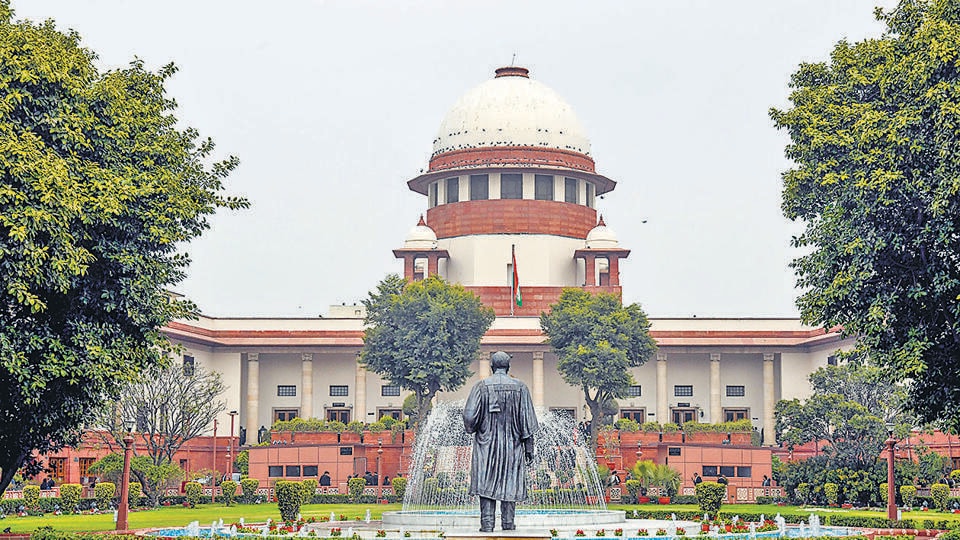
The data provided by the West Bengal government has been presented before the Supreme Court through senior advocate Gauarv Agrawal, who was last week asked by the court to enquire into the reports that women prisoners are getting pregnant inside jails of West Bengal and that 196 babies are currently staying in prison facilities. Agrawal has been helping out the court as an amicus curiae in a case relating to prison reforms.
In his application before the bench of justices Hima Kohli and Ahsanuddin Amanullah, Agrawal submitted the information received from the ADG & IG, Correctional Services of West Bengal, specifying that 62 babies were born inside the jails of the state between January 1, 2020, and December 31, 2023. Most of these women were admitted to the prison facilities with confirmed pregnancy while some others were detected pregnant during their first health screening. Some of these women were out on bail or parole and came back expecting, as per the information received from the senior official.
While 11 of these women were deported back to Bangladesh, 12 others were either acquitted or released on bail, the data received from the ADG & IG stated. According to the senior official, of the 181 children lodged in jails as of February 8, 153 were brought with their mothers when they entered the prisons.
The law provides that the children can stay in prison with their mothers till the age of six if they are primary caregivers. Those above the age of six are sent to institutions run by state women and child welfare departments if no one from the prisoner’s family is willing to take care of the child.
Agrawal’s application recorded the statistics provided by the ADG & IG while recommending a complete security audit of women jails and barracks in the country. The senior counsel made suggestions to appoint a senior-most woman judicial officer in each district to assess the available security measures in women’s jails, besides ensuring availability of sufficient women personnel for the security and welfare of women prisoners and their health checkups during jail admission, as well as at periodic intervals after that.
For the children living in the jails, the senior counsel suggested involving a woman member of the child welfare committee in each district to examine the availability of creches and schooling in prisons.
The bench is expected to take up Agrawal’s application on February 16. On February 9, the top court had intervened into the matter.
“Have you seen the report? It says women inmates are getting pregnant inside jails across the state of West Bengal? We hope this is not the situation in other states as well. Please, assist us,” it had told Agrawal on the day, referring to the related proceedings before the Calcutta high court a day ago.
On February 8, the Calcutta high court was informed by advocate Tapas Kumar Bhanja, who was appointed amicus curiae by the court in November 2017 in a case on conditions of prisons, that women inmates lodged in various prisons of West Bengal are getting pregnant while in custody.
Placing two notes before a division bench of high court chief justice TS Sivagnanam and justice Supratim Bhattacharya, Bhanja said: “It is interesting to note that women prisoners, while in custody, are getting pregnant. Subsequently babies are born in the prison. At present, 196 babies are staying in different prisons of West Bengal.” The amicus curiae suggested a prohibition on the entry of male employees of prisons into the enclosures of women prisoners. Bhanja’s note however did not specify as to how many such women prisoners were pregnant at the time of entry into prisons and if they were allowed interim bail or parole.
The Supreme Court bench of justices Kohli and Amanullah has been hearing a suo moto petition titled “inhuman conditions in prisons” wherein the court monitors various aspects of prison reforms, including the number of jails, sanctioned and actual capacity of prisoners, and pending proposals by the Centre and states to create more jails.
In its latest order, this bench called the issue of overcrowding of prisons “stark and worrying”, directing committees to be set up in each district within to prepare a roadmap on the number of jails needed to cater to prison population for the next 50 years. The order on January 30 in the 2013 case added that the committees, to be headed by district judges concerned, will also examine the needs of the respective districts and make proposals over and above those that have been laid down under the Model Prison Manual.



