
 E-Paper



Bangkok earthquake: Are you in Thailand? Here are dos and don’ts during quake. What embassy said about Indians
Bangkok earthquake: The Indian embassy in Thailand confirmed all staff are safe after a major earthquake impacted the region.

 Prefer HTon Google


Bangkok earthquake update: The Indian embassy in Thailand issued a statement on Friday, assuring that it was closely monitoring the situation after Myanmar was struck by its biggest earthquake in a century, shaking buildings and triggering evacuations in neighbouring Vietnam and Thailand, with at least one tower collapsing in Bangkok and reports of several casualties.
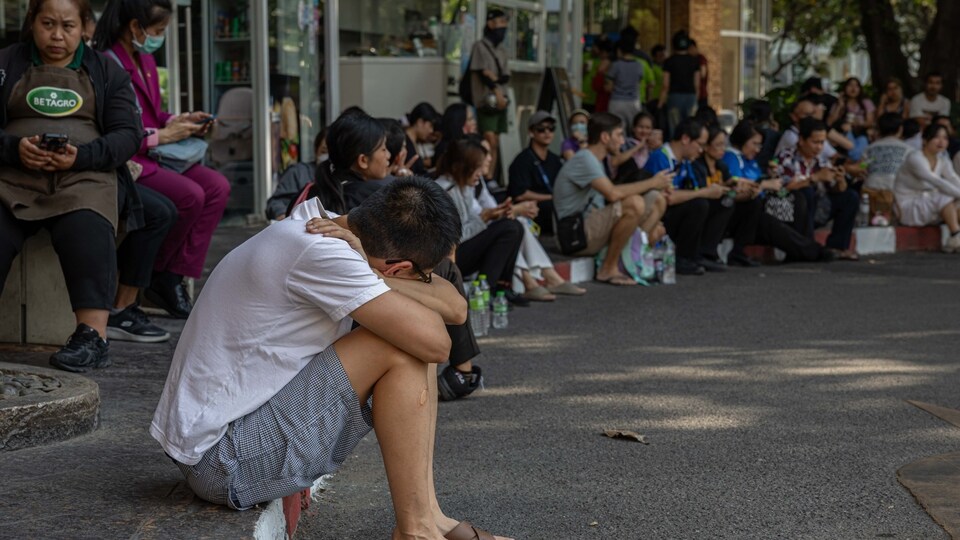
According to the embassy, no untoward incidents involving Indian citizens have been reported so far. The embassy is in close coordination with Thai authorities to ensure the safety and well-being of Indian nationals in Thailand.
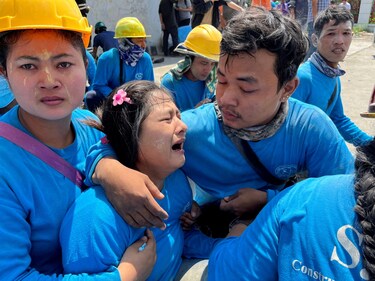
In case of any emergency, Indian nationals in Thailand are advised to contact the emergency number 66 618819218. This number is available 24/7 for assistance.
Also Read | Two earthquakes hit Myanmar, Thailand; tremors felt in Manipur, Meghalaya
The Indian Embassy in Bangkok and the Consulate in Chiang Mai have confirmed that all staff members are safe. The embassy was working closely with local authorities to monitor the situation and provide assistance if needed.
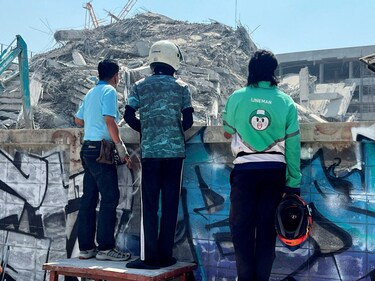
"After powerful earthquake tremors recorded in Bangkok and in other parts of Thailand, the Embassy is closely monitoring the situation in coordination with the Thai authorities. So far, no untoward incident involving any Indian citizen has been reported. In case of any emergency, Indian nationals in Thailand are advised to contact the emergency number 66 618819218. All members of the Indian Embassy in Bangkok and Consulate in Chiang Mai are safe," the Indian Embassy in Thailand said in a post on X.
Also Read | Myanmar-Thailand earthquake: India puts emergency response teams on standby
Bangkok earthquake | Here's what to do and not to do during a quake:
According to the National Disaster Management Authority (NDMA), one should stay as safe as possible during an earthquake.
- Be aware that some earthquakes are actually foreshocks, and a larger earthquake might occur. Minimise your movements to a few steps that reach a nearby safe place and stay indoors until the shaking has stopped and you are sure exiting is safe.
If indoors
- Drop to the ground; take cover by getting under a sturdy table or other piece of furniture; and hold on until the shaking stops. If there is no a table or desk near you, cover your face and head with your arms and crouch in an inside corner of the building.
- Protect yourself by staying under the lintel of an inner door, in the corner of a room, under a table or even under a bed.
- Stay away from glass, windows, outside doors and walls, and anything that could fall, (such as lighting fixtures or furniture).
- Stay in bed if you are there when the earthquake strikes. Hold on and protect your head with a pillow, unless you are under a heavy light fixture that could fall. In that case, move to the nearest safe place.
- Use a doorway for shelter only if it is in close proximity to you, and if you know it is a strongly supported, load-bearing doorway.
- Stay inside until the shaking stops, and it is safe to go outside. Research has shown that most injuries occur when people inside buildings attempt to move to a different location inside the building or try to leave.
- Be aware that the electricity may go out, or the sprinkler systems or fire alarms may turn on.
If outdoors
- Do not move from where you are. However, move away from buildings, trees, streetlights, and utility wires.
- If you are in an open space, stay there until the shaking stops. The greatest danger exists directly outside buildings; at exits; and alongside exterior walls. Most earthquake-related casualties result from collapsing walls, flying glass, and falling objects.
If in a moving vehicle
- Stop as quickly as safety permits and stay in the vehicle. Avoid stopping near or under buildings, trees, overpasses, and utility wires.
- Proceed cautiously once the earthquake has stopped. Avoid roads, bridges, or ramps that might have been damaged by the earthquake.
If trapped under debris
- Do not light a match.
- Do not move about or kick up dust.
- Cover your mouth with a handkerchief or clothing.
- Tap on a pipe or wall so rescuers can locate you. Use a whistle if one is available. Shout only as a last resort. Shouting can cause you to inhale dangerous amounts of dust.


