India on Thursday accused Pakistan of using a multilateral gathering to spread falsehoods and divert attention from its record of sponsoring terrorism after Pakistani foreign minister Ishaq Dar raised the Kashmir issue and suspension of the Indus Waters Treaty at an Asean-related meeting in the Philippines.
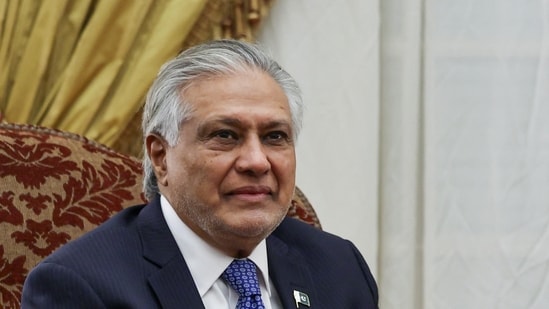
Dar, who is also Pakistan's deputy prime minister, sought global support to resolve conflicts in South Asia and said the suspension of the Indus Waters Treaty has to be handled through dialogue and adherence to international law while addressing the Asean Regional Forum (ARF) ministerial meeting in Manila. India was represented at the meet by external affairs minister S Jaishankar.
External affairs ministry spokesperson Randhir Jaiswal said that India “categorically rejects the baseless and unwarranted comments” by Dar.
“It is no surprise that a multilateral forum has once again been cynically exploited by Pakistan to amplify falsehoods, peddle state-sponsored disinformation, and divert attention from its own well-documented record of sponsoring cross-border terrorism,” Jaiswal said in a statement.
Also Read: Call out Pakistan’s bluff on Indus treaty
{{/usCountry}}Also Read: Call out Pakistan’s bluff on Indus treaty
{{/usCountry}}The Union Territories of Jammu and Kashmir and Ladakh “have been, are and will always” be integral and inalienable parts of India, and Pakistan has no locus standi to comment on these issues, he said.
Jaiswal said India's position on the Indus Waters Treaty is consistent – the pact “stands in abeyance in response to Pakistan's continued sponsorship of cross-border terrorism, including the dastardly Pahalgam attack”. The treaty will be held in abeyance “until Pakistan credibly and irrevocably abjures its support for cross-border terrorism”.
India strongly condemns Pakistan’s practice of propagating “officially sponsored disinformation, often dressed in religious terminology such as the use of terms like 'Fitna al-Hindustan'”, Jaiswal said, referring to a term often used by Pakistani officials to describe terror groups they claim are backed by New Delhi.
“This is a futile attempt by the Pakistani establishment to deflect attention from its own internal crises and its well-proven role as a safe haven for global terrorist networks,” Jaiswal said. Instead of pointing fingers at neighbours and misusing international platforms, Pakistan should dismantle the infrastructure of terrorism on its soil and put its own house in order, he said.
During his speech at the ARF meeting, Dar said the Kashmir issue is “at the heart of regional instability” in South Asia and sought a peaceful settlement in line with the UN Charter, Security Council resolutions and aspirations of the Kashmiri people.
He criticised India’s decision to suspend the Indus Waters Treaty, the 1960 agreement that has governed the sharing of cross-border rivers. India suspended the treaty in the terror attack in Pahalgam in April 2025 that was carried out by a proxy of Pakistan-based Lashkar-e-Taiba.
“We also remain deeply concerned by India’s illegal unilateral decision to place the Indus Waters Treaty in abeyance, seeking to weaponise water resources in violation of its international obligations,” Dar said.
Jaishankar emphasised a “zero tolerance” approach towards terrorism at the ARF meeting and said there should be no doubt that “acts of terrorism will have consequences”.