
 E-Paper



BCI lays out plan in Supreme Court to revamp legal education
Based on scores obtained by young lawyers in an online legal aptitude test, they could be placed under lawyers designated as senior advocates or those with 25 years of standing at the Bar, the affidavit, filed on April 11, has revealed.


Senior lawyers may soon have to give space to at least five young lawyers in their chambers, according to an affidavit filed by the Bar Council of India (BCI) in the Supreme Court on a raft of proposed reforms in the country’s legal education.
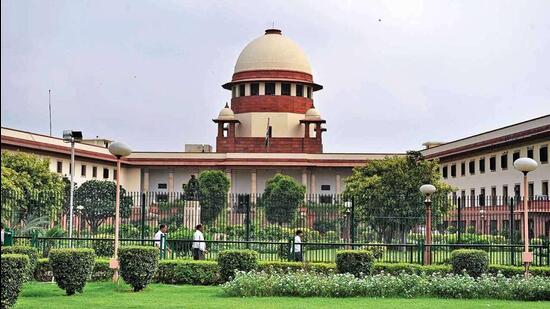
Based on scores obtained by young lawyers in an online legal aptitude test, they could be placed under lawyers designated as senior advocates or those with 25 years of standing at the Bar, the affidavit, filed on April 11, has revealed.
The BCI was responding to a flurry of questions from the court on March 15 when the bench implored the regulatory body to bring in a slew of reforms -- starting from the standards being followed by law colleges to placement of young law graduates.
Another significant change that BCI contemplates, relates to introducing a state-level entrance test for admission in law colleges instead of letting universities and colleges conduct their exams separately.
“The appellant is constituting a high-powered committee to check the legal and constitutional validity of compulsory chamber placement with senior advocates or advocates having years of standing at the Bar for young law graduates or to a fair system for juniors to find placement in chambers. Upon reaching the conclusion on how to implement this issue, each such advocate shall be requested to engage at least 5 such juniors in their chambers,” stated the affidavit, filed before a bench led by justice Sanjay Kishan Kaul.
The affidavit, filed through advocate Durga Dutt on behalf of BCI, added that the council is also planning to frame a rule wherein online objective tests will have to be undertaken by fresh law graduates and the results of the online tests shall be valid for a period of six months.
“On the basis of the results of these tests, meritorious junior law graduates, who have freshly obtained enrolment, shall get placement under senior Advocates or advocates having 25 years of standing at the Bar. Other junior Advocates shall also get placement under advocates having 15 to 20 years of experience. The Bar Council of India shall also request all such advocates throughout the length and breadth of the country to co-operate and contribute in this regard,” it said.
Assisted by senior counsel and amicus curiae KV Viswanathan, the bench, on March 15, was emphatic that the standards of legal education would not improve until BCI tightens the yardstick in examinations, maintains stringent control at the entry level and ensures constant monitoring of law colleges to ascertain a particular standard of education.
The poser from the bench came as it heard an appeal by the BCI against an order of the Gujarat high court, which allowed a woman to enroll as an advocate without quitting her job through an order in November 2020. BCI argued that the decision would open the floodgates for such requests, although the rules specifically state that nobody can enroll as an advocate while being gainfully employed in another job.
According to BCI statistics, there are around 1,500 law colleges across the country, with private colleges making up for 75%. There are 1.7 million registered lawyers in the country and 80,000 to 100,000 new advocates get enrolled annually, as per BCI data.
In in April 11 affidavit, the BCI started by saying that the suggestion from the court regarding allowing even those gainfully employed in some other professions to sit for the Bar exam is currently under deliberation of a high-level committee, which comprises of some former Supreme court and high court judges and several senior lawyers.
About evolving a fair system for juniors to find placement in chambers, the affidavit underlined that a panel has been constituted to scrutinise the possibility of making a rule obligating senior lawyers to accommodate fresh law graduates in their chambers.
BCI, on the issue of admissions to law colleges, pointed out that while the entrance exams are presently conducted by the concerned University, “it is proposed that the legal education committee of BCI and advisory board would consider introducing a state level entrance test for admission in law colleges in its next meeting.” The advisory board comprises the Chief Justice of India and nine other judges of the Supreme Court, apart from Union law minister, vice-chancellors of various universities, senior lawyers, academicians, social activists and parliamentarians.
Addressing the court’s concerns over mushrooming law colleges and lowering of standards, BCI stated that it has earmarked about 500 institutions throughout the country which are sub-standard. “A team, led by some former judges/senior advocates and noted academicians plans to conduct surprise visits of such institutions. If any institution is found to be below standard, having neither sufficient faculties, nor infrastructure, then the legal education committee shall take immediate step to close such Institutions,” maintained the affidavit.
At the same time, BCI emphasised that law colleges can be set up as well as be shut only by universities and state governments concerned, and therefore, the regulatory body plans to withdraw the approval granted for running courses of legal education to such university.
The affidavit further complained about the indifference of universities and state governments towards improving the infrastructure of government-run law colleges. “About 90% of the government-run colleges have an acute dearth of infrastructure and faculty (many unfilled vacancies for last 15-20 years). In spite of repeated requests/warnings, state governments/universities are not serious in this regard,” it added.
“Some government universities have been recklessly granting affiliation to law colleges. Often state governments are granting NOC (No Objection Certificates) without examining/verifying the infrastructure. These are the hurdles in improving the standard of legal education and this ultimately affects the standard of the legal profession too,” complained BCI.
In order to discourage mushrooming of law colleges, BCI said, it imposed a three-year moratorium on opening new law colleges in August 2019, resolving it will stress upon improving standards of existing law colleges. However, the Punjab and Haryana high court held the moratorium to unconstitutional for violating the right to practice any profession or to carry on any occupation, trade or business under Article 19(10(g). Following the court order, BCI came out with a press release in June 2021 to clarify that moratorium is no longer in existence.
The top court is expected to take up BCI’s response on April 19.


