
 E-Paper



Behind the Indo-China border de-escalation
While India will continue to put pressure on China to ensure that the PLA withdraws to its April positions, the country’s national security planners say that the disengagement process will take time.

 Prefer HTon Google


At 8.45am on Sunday, army chief General Manoj Mukund Naravane called up defence minister Rajnath Singh to inform him that the Chinese People’s Liberation Army (PLA) was moving out troops from the Y-junction of Galwan Valley, towards its base camp in the rear.
The same evening, between 5pm and 6pm, National Security Adviser (NSA) Ajit Doval, also the Special Representative (SR) on the Boundary Dialogue between the two countries, had a candid conversation with Chinese SR Wang Yi (also the country’s foreign minister). Coming out of more than two weeks of quarantine and indisposition during which he monitored the LAC developments from home, NSA Doval stressed the need to restore patrolling rights of the Indian Army on these four points in order to bring peace and tranquillity along the 1597km long Line of Actual Control (LAC) in east Ladakh.
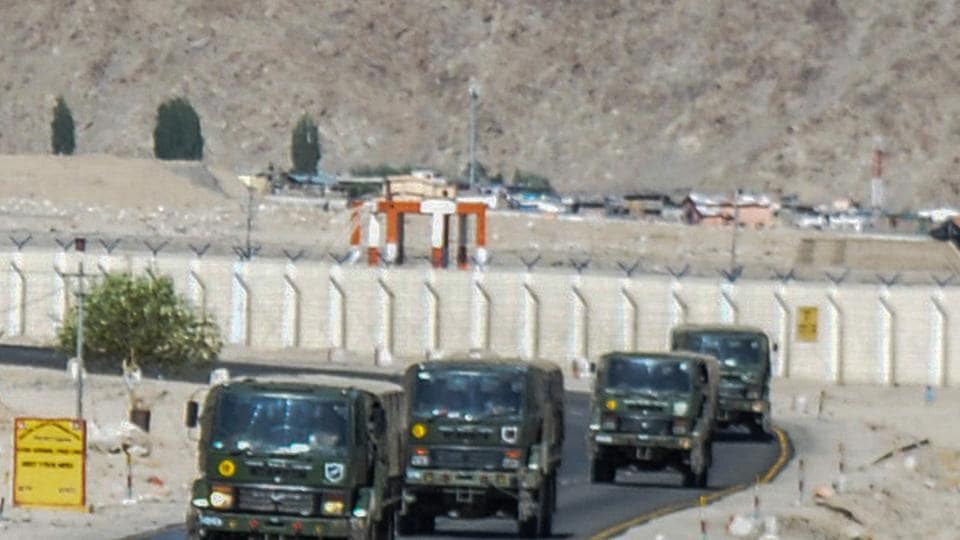
People aware of the matter said that, by Monday evening, the Chinese started moving back at the four contested stand-off points between the two countries — Galwan, Gogra, Hot Springs and Pangong Tso. The PLA and the Indian Army had withdrawn to their respective base camps in the Galwan sector; initial troop withdrawal had begun in Gogra (patrolling point 15) and Hot Springs (patrolling point 17); and the PLA was in the process of dismantling some structures on Finger 4. People aware of the developments said that till such time as the withdrawal is complete, there will be no let up from the Indian forces, which will continue to be deployed, as an “accident” cannot be ruled out.
Also read: India-China ties in complex situation, says Beijing after Doval-Wang icebreaker
While these are the first steps taken towards disengagement on the LAC leading to de-escalation, Doval and Wang agreed that both sides will have patrolling rights on the contested points, but will avoid any friction or clash in the future. While the joint secretary-level Working Mechanism for Consultation and Coordination (WMCC) on border issues will meet soon to implement these decisions on the ground, the two SRs are scheduled to hold talks three weeks later, by which time the withdrawal process should have been completed, the people cited above said.
The development is a culmination of series of meetings between military commanders and diplomatic officials that began after the PLA took an aggressive posture on the LAC in May. India’s response was handed by NSA Doval under guidance from Prime Minister Narendra Modi and in close coordination with Rajnath Singh, home minister Amit Shah and external affairs minister S Jaishankar, who stood in for an indisposed Doval to talk to SR Wang Yi on June 17 after the Indian Army and the PLA clashed at patrolling point 14 in the Galwan sector.
The people said it two had a tough conversation, with both sides accusing the other of initiating the border skirmish in which 20 Indian Army soldiers and an unspecified number of Chinese soldiers were killed.
While India will continue to put pressure on China to ensure that the PLA withdraws to its April positions, the country’s national security planners say that the disengagement process will take time, with each point being negotiated by the military commanders on the ground with diplomatic support. While the PLA were at a disadvantage in Galwan, Gogra and Hot Springs in terms of military positions, the situation at Pangong Tso is in favour of the Chinese, as they have built a road up to Finger 4.
Also read| No unilateral change to status quo, agree India-China: 10 points
Ultimately, said analysts, it is restoration of Indian patrolling rights on the north banks of Pangong Tso which will determine the success of the Doval-Wang parleys.
Although Raisina Hill is relieved at the reduction of tension at the border, it is still foxed at the reasons for the Chinese PLA to initiate military aggression on the LAC at the cost of a nuanced and complex relationship between the two countries achieved with 30 years of careful nurturing. “ Even if we say that PLA was showcasing the power differential between China and India, it does not make any sense strategically as the move to acquire few kilometres of territory not only riled up all India including Opposition parties but also severely hit the economic ties (between the countries),” said a senior government official who asked not to be named.
The only explanation to the PLA aggression, according to a member of China Study Group, a government body, is that Beijing expected New Delhi to capitulate much the way some ASEAN nations have when it comes to China’s aggression in the South China Sea.
While India has noted the US Navy counter to Chinese Navy’s exercises in the South China Sea, senior officials are at pains to clarify that this has no links to Ladakh withdrawal. “ For the past two months, we were prepared for the worst in Ladakh as PM Modi had decided that India will not back down from any aggression on the borders and surrendering of any territory was unacceptable,” said a senior Cabinet Minister who spoke on condition of anonymity.


