
 E-Paper



Bengal train accident: Line not covered by Kavach safety system
Kavach is a central government programme aimed at securing India’s ageing 68,000km-long railway network.

 Prefer HTon Google


The railway line that passes through Jalpaiguri in West Bengal is not yet covered under the Centre’s “Kavach” train collision prevention system, which may have helped prevent the accident that killed nine people and injured 41 , confirmed senior officials.
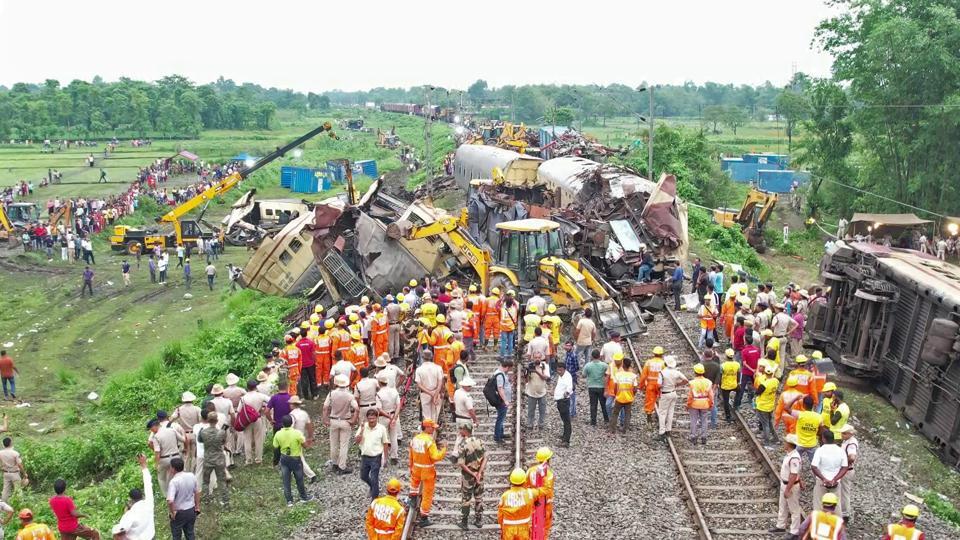
“We were in the process of installing the system on the line,” said railway board chairperson Jaya Varma Sinha.
The Kavach system, launched in 2020, works on an elaborate communication system that bounces off radio and GPS signals between trains, tracks and signals to prevent trains colliding during adverse conditions. On lines equipped with this technology, the system will automatically apply a train’s brakes – even if the driver doesn’t – if a driver jumps a signal or another train is within touching distance on the same line.
Also Read | What is Kavach, anti-collision system missing from Kanchanjunga Express route?
“Its presence could have potentially saved the eight people who died in the collision,” said a former member (traffic), asking not to be named.
Around 8.55am on Monday, a freight train barrelled into the back of the Kanchanjunga Express, heading towards Kolkata, on the same line, near New Jalpaiguri in West Bengal. Railway officials, who asked not to be named. However, a snag hobbled the signalling system between the Ranipatra railway station and Chattar Hat junction, and all trains travelling on the section were allowed to skip the signals, subject to some clauses.
The standard protocol, known as a TA/912, stipulates that pilots must drive at speeds below 15km/hr if conditions are clear, and below 10km/hr if it is raining (as it was on Monday morning). Another clause says all train drivers passing through the section must wait before every signal for a minute during day time and for two minutes during nights.
“The goods train driver was operating at a much higher than the prescribed speed limit leading to the accident,” said an official who asked not to be named.
Kavach is a central government programme aimed at securing India’s ageing 68,000km-long railway network. However, only 1,500km have been equipped with the Kavach system since it was first rolled out, said a railway official who asked not to be named.
“The railways plans to deploy the safety system on the Delhi-Guwahati route. West Bengal falls within the 3,000km of tracks set to be protected by Kavach this year,” said Sinha, adding that suppliers have to ramp up the implementation of the safety system to ensure Kavach touches every part of the country.
The first field trials of Kavach on passenger trains started in February 2016; it was adopted as a national automatic train protection system in July 2020. “The Indian Railways will install Kavach in 3,000 rail km this year and in 2025,” Sinha said.
“Recently, safety trials for Kavach were successfully conducted on the Mathura- Palwal route,” an official close to the development said.


