
 E-Paper



What is Kavach, anti-collision system missing from Kanchanjunga Express route?
At least 15 people died and dozens were left injured after a goods train collided with the Kanchanjunga Express, headed to Kolkata.

 Prefer HTon Google


At least 15 people died and over 50 were left injured after a goods train rammed into the Kanchanjunga Express train which was headed to West Bengal's Kolkata. This once again brought attention to the Kavach anti-collision system, set to be installed across all the rail routes across the country.
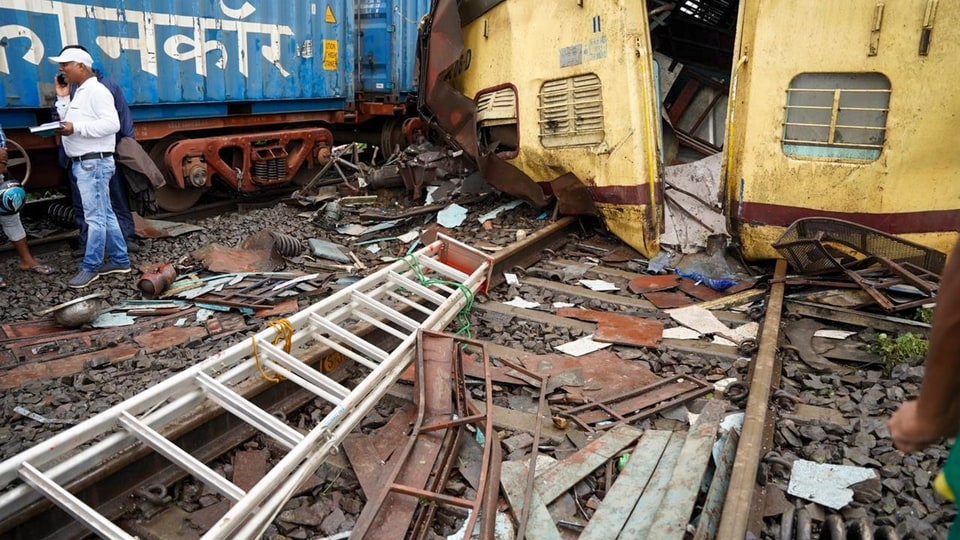
Kavach, which is a made-in-India system for trains specifically designed to prevent collisions, is not yet installed on the train tracks in Darjeeling, where the Kanchanjunga Express train accident happened.
The Indian rail network is over one lakh kilometers long, and the anti-collision system is only implemented on around 1,500 km stretch of railway tracks.
What is the Kavach system?
The anti-collision Kavach system is an automatic train protection (ATP) system, which was developed in India by the Research Design and Standards Organisation (RSCO) and other Indian firms. Its primary feature is controlling the speed of the train if the driver fails to apply brakes on time.
The Kavach system assists locomotive drivers in identifying danger signals on the tracks, and also helps them run the trains in low-visibility areas. The system mainly works with the help of RFID (Radio Frequency Identification) tags placed on the tracks and station yards, which can locate trains and their directions.
When the Kavach system is activated on a certain route, all the trains within 5 km are halted to let the train on the adjacent track pass safely. It also helps loco pilots read the danger signals with more accuracy, using the On Board Display of Signal Aspect (OBDSA).
Indian Railways issued tenders for 10,000 km installation of the Kavach system. Till now, it has been deployed for 139 locomotives on the South Central Railway. It is not yet available on the Guwahati route. The total expenditure on the development of Kavach stands at ₹16.88 crore.
Three rear coaches of the stationary Sealdah-bound Kanchanjunga Express derailed on Monday morning as a goods train collided with it in Darjeeling district. Officials said that the death toll could rise, as multiple agencies of the state and Centre were simultaneously working on war footing along with locals to rescue passengers who could still be trapped inside.


