
 E-Paper





Follow the latest breaking news, major developments and agenda-setting stories from India and around the world with the newsdesk at Hindustan Times. Operating round the clock, the desk brings together experienced editors, reporters and correspondents to deliver fast, accurate and contextual reporting across subjects that influence public policy, governance, business, society and international affairs. The HT News Desk covers politics, elections, government policies, the economy, business and markets, science and technology, the environment, law and order, infrastructure, education, climate issues and geopolitics, while closely tracking developments across states, institutions and global capitals. The team also leads coverage of major breaking news events, policy announcements, court proceedings, natural disasters, public emergencies and significant international developments. Reports published by the newsdesk are based on information gathered from reporters on the ground, official statements, government agencies, court records, regulatory filings, recognised institutions and other authoritative sources. Stories undergo editorial scrutiny and verification processes to ensure accuracy, fairness and relevance, and are updated as events evolve and additional information becomes available. Whether covering a key political decision in New Delhi, an economic policy shift affecting millions, a landmark court ruling or a major global event, the HT News Desk aims to provide readers with reliable, fact-based journalism that delivers not only the latest developments but also the context and analysis needed to understand their wider implications.
Better infra may boost cycle use post-Covid, projects study
Cities such as Berlin, Milan, London, Rome and Paris have created pop-up bike lanes during the pandemic, either by painting the lane or by placing bollards along the length of the roads to encourage people to use bicycles.


Dependence on public buses and private vehicles for short trips (6km or less) can be reduced by up to 40% if adequate cycling infrastructure is provided in Delhi within the next three years, according to a study by the Central Road Research Institute (CSIR-CRRI).
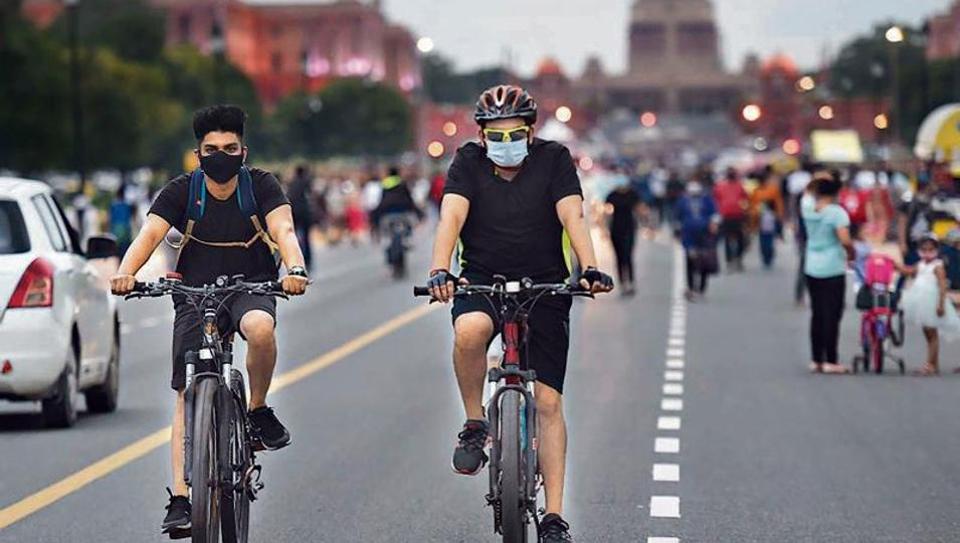
It can also help reduce vehicular congestion and pollution, the four-month-long study says, using projections on commuting patterns and use of different modes of transport after comparing data from before and after the lockdown.
The study was conducted April onwards.

The study used secondary data from different sources to project at least 15% increase in the cycling trips from pre-Covid months. It says that vehicular traffic on city roads is gradually increasing ever since the Centre announced the gradual relaxation in the restrictions imposed to contain the spread of the coronavirus disease under the Unlock guidelines. Before the traffic volume hits the pre-Covid level, the government should scale-up infrastructure to encourage non-motorised vehicles for shorter commutes, the study advocates.
The research body said six kilometres is a “cycleable distance”, and efforts should be made to convert short trips by cars and other motorised modes of transport into cycling trips.
Mukti Advani, principal scientist of the transportation planning division at CSIR-CRRI, said it is the ideal time to push for cycling because traffic is lower than usual, with a substantial percentage of people still working from home.
“We should make the most of this time when the traffic on road is far less as compared to before Covid. Currently, a large percentage of the working population is at home. If we can provide the cycling infrastructure now, it will help people gradually get used to it. By second or the third year when the workforce will be back in full strength, cycling, especially for short distances, would have become normal,” said Advani, who conducted the study.
As per the study, it is estimated that there could be a 21% reduction in the use of two-wheelers, 14% in cars and 11% of Metro and 40% of buses. “This will help in a big way to bring down traffic on roads and in turn reduce pollution due to vehicles,” she added.
Cities such as Berlin, Milan, London, Rome and Paris have created pop-up bike lanes during the pandemic, either by painting the lane or by placing bollards along the length of the roads to encourage people to use bicycles.
Transport experts said not much has to be done in Delhi to ensure a “decent network” for cycling.
Anuj Malhotra, knowledge partner to the high-powered committee under the Union ministry of home affairs, said this can be easily done by completing the missing cycling links in existing infrastructure. Nearly 40km of cycling infrastructure around games venues was constructed during the Commonwealth Games in 2010, but it was all disconnected.
“Protected tracks are needed only on those roads where vehicular traffic speed or traffic volume is high. Prioritising Metro access and to schools is a start. There are several stretches in Delhi which have cycling tracks. The first thing we should do is to connect these tracks and provide proper signages,” said Malhotra.
Malhotra’s firm, Centre for Green Mobilities, has done two studies---one in Dwarka and the other around Metro stations -- in Delhi to assess the demand for cycling and how the infrastructure can be provided.
“It is easy to cycle for 9-10 minutes, which covers a distance of three kilometres. If infrastructure in the area of three-kilometre radius around Metro stations is improved, then nearly 80% of Delhi’s will have access to Metro on a cycle. In the Dwarka survey, we found that a majority of trips were educational and to work. A majority of the trips were within five kilometre distance, which is covered within 20 minutes,” he said.
Transport expert Anumita Roychowdhury, executive director at the Centre for Science and Environment (CSE), said that as per data from Census 2011, nearly 48% of the daily trips in Delhi are made within a five-kilometre range.
She said these trips can easily be converted into walking or cycling trips by creating safe infrastructure with temporary arrangements. “Cycling is a good option for people who have to travel short distances. It will also take the load off the public transport system. While providing infrastructure, we should ensure that the roads, including the ones in residential colonies, form a network so that people can use it,” said Roychowdhury.
With a larger number of people taking to cycling across the world, Amit Bhatt, director transport, WRI India, said, “These pop-up bike lanes can be easily created. We, too, have been creating these dedicated pathways for years during monsoon for the Kanwar pilgrims. All we have to do is to make it a permanent feature on our roads.”


