
 E-Paper



China-backed Shia-Sunni detente, AUKUS will impact India's Indo-Pacific strategy
The China-backed Saudi Arabia-Iran detente and its expanding strategic levers in Islamic World with ports in Iran, Oman, UAE, Pakistan and Sri Lanka is designed to choke India in its own Indian Ocean backyard with New Delhi facing a possible action from Beijing over its close relations with its QUAD partners, two of which are in the AUKUS alliance, on its northern land frontiers.

 Prefer HTon Google


New Delhi: In a span of three days this month, two seemingly mutually exclusive announcements with global impact took place that have strategic significance for India and its future relationship with China.
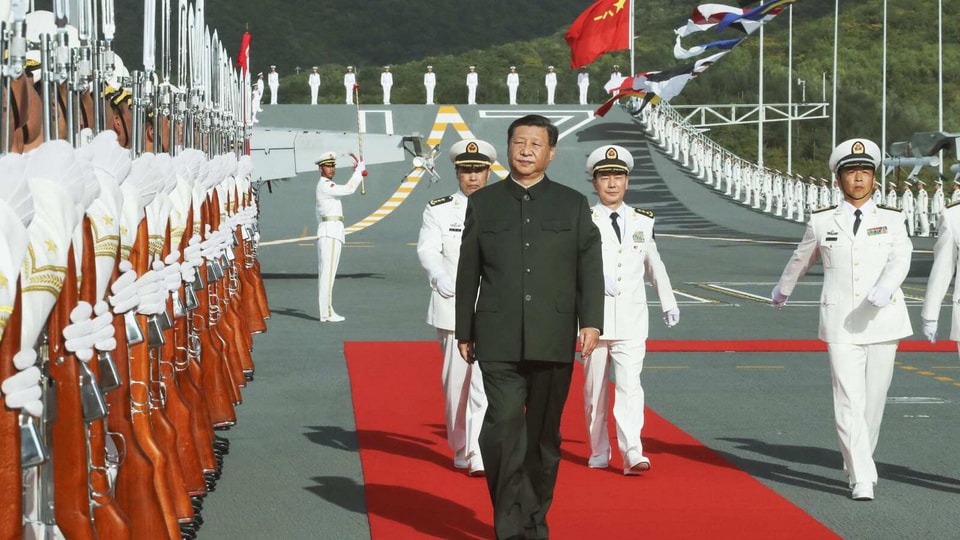
On March 10, China brokered a détente between Sunni Saudi Arabia and Shia Iran which has serious ramifications on who will control the levers of the Islamic World.
On March 13, the US, the UK, and Australia announced the AUKUS deal aimed at countering the rapidly expanding Chinese military challenge in the Indo-Pacific with US made Virginia class nuclear powered conventionally armed submarines or SSNs that have the Chinese mainland in their crosshairs while staying outside the range of Beijing’s “ship killer” and “Guam killer” intermediate range ballistic missiles. As per the AUKUS pact, US Virginia class and UK Astute class SSNs will patrol the western coast of Australia to keep the PLA Navy and its expansive plans in Solomon Islands at bay.
India lies at the intersection of these two seemingly diverse events with serious military implications as it is at the center of the Indo-Pacific. The origin of the China brokered Saudi Arabia and Iran détente goes back to Chinese President Xi Jinping’s visit to Riyadh in December 2022 when he met leaders of 21 Arab League countries , with the support of Saudi Crown Prince Mohammed bin Salman. Among those who attended the China-Arab summit were the Presidents of Egypt, Tunisia, Djibouti, Comoros and Mauritania, the Prime Ministers of Iraq, Morocco, Algeria, and Lebanon, the Kings of Jordan and Bahrain, the ruler of Fujairah, UAE, the Emir of Qatar, the crown prince of Kuwait, the Secretary General of Arab League and heads of international organizations.
While Iran was not represented, the foundations for Saudi-Iran détente was laid during that visit and bore fruition within three months as Beijing has ties with all the players of the Islamic World including Turkey, Saudi Arabia, Iran and the Central Asian Republics, and, of course, its client state Pakistan. With China already having a naval base in Djibouti on the East African seaboard, a military post in Tajikistan, and financial or strategic interests in Hambantota port in Sri Lanka, Gwadar port in Pakistan Chah Bahar port in Iran, Khalifa port in UAE, and Duqm port in Oman, Beijing’s strategic footprint will grow in the Indian Ocean much to the chagrin of India. The rapidly expanding Chinese Navy with three aircraft carriers will try and dominate the Indian Ocean with the help of the Sunni and Shia shoulders of Islam and in many ways control the levers of the Islamic World and its hydrocarbon power. Though the previous UPA regime thought little of a Chinese string of pearls strategy that could choke India, the fact is that if this transpires, China will have the capacity to constrict and restrict India in its own region. It is only logical that India with its powerful navy will expand its footprint to Southeast Asia and South China Sea to counter the Chinese challenge while keeping its traditional ties with Saudi Arabia, Iran and UAE intact.
Although the AUKUS alliance will not have a negative bearing on India, New Delhi’s association with QUAD powers and naval exercises under the rubric of Malabar (to be held off the coast of Sydney this August) will make the Chinese response towards India more pointed. Both China and its ally Russia have criticized both the QUAD and AUKUS alliances given that their cities on the eastern seaboard from Shanghai and Vladivostok could be the target of submarine launched ballistic missiles from AUKUS submarines located safely beyond the first island chain east of the two countries.
Even though India practices strategic autonomy, its association with QUAD and AUKUS will invite stares from both China and Russia. While Russia may not act against India due to past and present ties, China may use QUAD as an excuse to mount pressure on India all along the Line of Actual Control and on the US and Japan by precipitating a Taiwan crisis. The upside of AUKUS is that China will be deterred by powerful navies in the Indo-Pacific and also be forced to treat India at par unless it wants New Delhi to permanently shift to the other side with an actionable QUAD on the ground rather than just a talk shop.
With China militarily growing in cyber- and sea- domains, India will have to closely monitor Beijing under President Xi as the latter historically or in the present times has not yielded an inch. Prime Minister Narendra Modi will have to not only be prepared for hybrid war but also have to chose friends carefully for coming challenges.


