
 E-Paper



Bharat Ratna for MS Swaminathan: The pioneer of India’s Green Revolution
Before Bharat Ratna, Swaminathan had received India’s second highest civilian honour, the Padma Vibhushan, and the World Food Prize

 Prefer HTon Google


Mankombu Sambasivan Swaminathan, popularly known as MS Swaminathan, the pioneer of India’s Green Revolution, was awarded Bharat Ratna on Friday along with two former prime ministers, PV Narsimha Rao and Chaudhary Charan Singh.
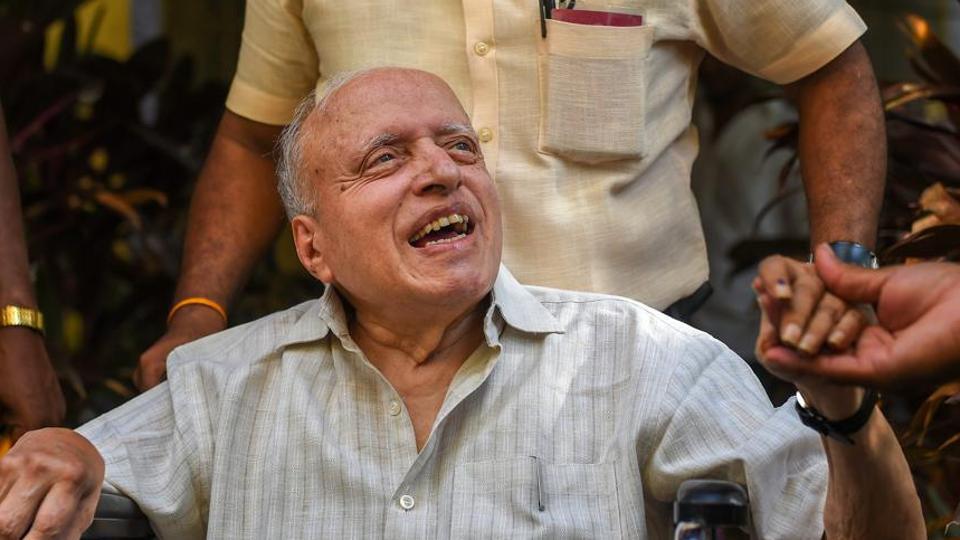
Swaminathan, who started as a young scientist at the Indian Agricultural Research Institute (IARI) in 1959, collaborated with American agricultural scientist Norman Borlaug to customise high yielding Mexican wheat variety for Indian conditions and launched them in Punjab and Haryana at the time India was reeling under food crisis.
In March 1963, Swaminathan and Borlaug visited fields in norther India during rabi (winter crop season) and tested the soil and new semi-dwarf variety with help of local scientists and farmer bodies.
He got ample support from then union agriculture minister, C Subramanian, and experts of the Planning Commission, which proposed a wide network of irrigation projects to augment British era canals to grow the water intensive crop, and supply of subsidised fertilisers.
At the same time, another breakthrough came when Swaminathan got hold of a fertiliser-responding high-yielding of variety of Indica rice from Philippines-based International Rice Research Institute and improvised it to suit Indian conditions, which made India a large cereal producer capable of exporting its surpluses.
In the next few years, the farmer adopted the new varieties and by early 1970s, the food production in Punjab and Haryana almost increased by 50%, Swaminathan, who died last year at an age of 98, said in his memoir.
With a rise in food production, the demand for machinery increased leading to the government setting up of Hindustan Machine Tools.
As farmer incomes improved, the overall economy also started showing up.
“The first signs of real economic growth became visible because of Green revolution in the late 1970s. For the first time, India’s agriculture production growth rate touched 4%,” said former chief statistician of India, Pranob Sen.
With passage of time, Swaminathan’s green revolution model were replicated in several states such as Maharashtra, Gujarat, Karnataka and Tamil Nadu, with huge public investments in irrigation and fertilisers leading to India becoming food surplus by turn of the last century, having a buffer stock for supply of grains under the public distribution system (PDS).
Also Read: At the heart of Swaminathan’s work, dignity of labour, and life, to India’s farmers
However, in the later part of his life, his foundation highlighted the adverse environmental impact of the green revolution polluting ground water, and extensively spoke about climate resilient food crop varieties.
He founded the Swaminathan Foundation in 1988 in Chennai, which researched climate resilient crops with IARI, and some of them were also introduced in Punjab and Haryana. However, takers for these varieties were less.
Rising from the ranks of India’s IARI, Swaminathan, a plant geneticist by training, served as a secretary to the Union department of agricultural research (1972-1979), headed top state-run farm institutions thorughout his career, and was also nominated to the Rajya Sabha (2007-2013).
Time magazine named him one of the 20 most influential people of the 20th century.
He graduated from Tamil Nadu Agricultural University and earned his PhD from Cambridge University in 1952.
He then travelled to the US on the liner Queen Elizabeth for post-doctoral studies in Wisconsin.
Before Bharat Ratna, Swaminathan had received India’s second highest civilian honour, the Padma Vibhushan, and the World Food Prize.


