
 E-Paper



Bihar polls declared amid scrutiny over ECI’s credibility, voter data
Bihar assembly elections set for Nov 6 & 11; counting on Nov 14. Concerns over electoral roll revisions and voter suppression claims addressed by EC.

 Prefer HTon Google


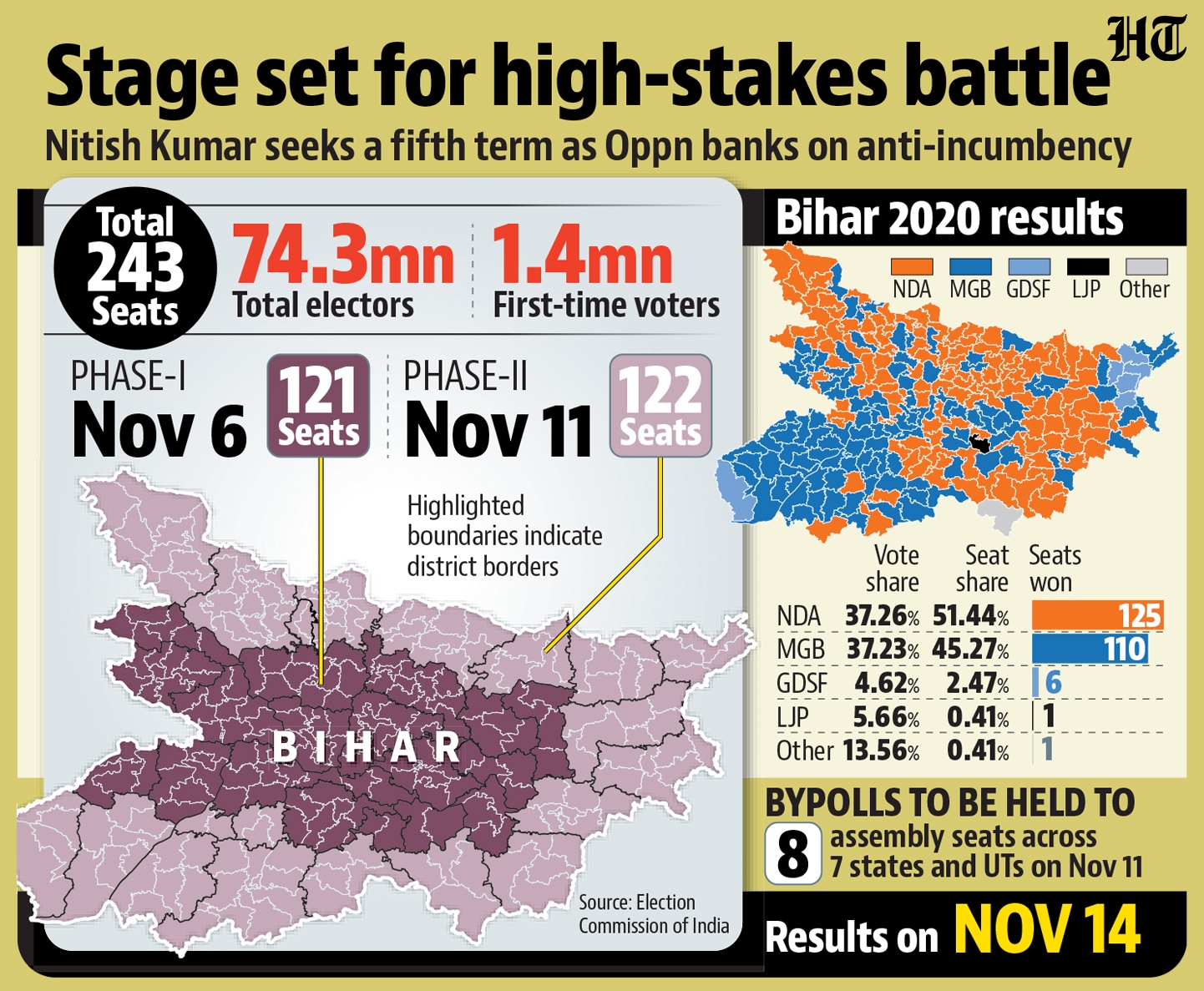
The Election Commission of India on Monday announced that the Bihar assembly elections will be held in two phases , November 6 and November 11, with counting on November 14. This will be the first major election under Chief Election Commissioner Gyanesh Kumar, and it comes amid scrutiny over the Commission’s credibility and handling of voter data.
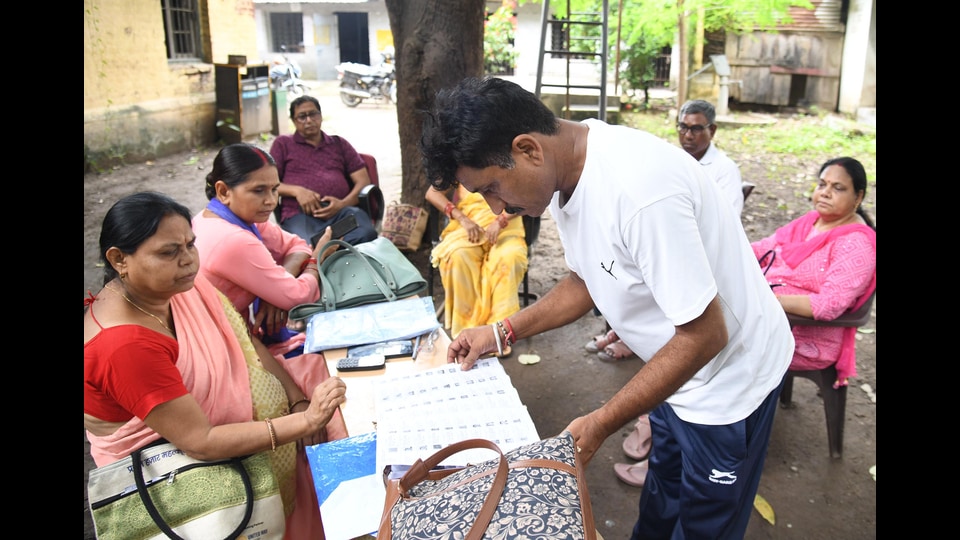
Bihar’s Special Intensive Revision (SIR) of electoral rolls, the first in over two decades, has resulted in approximately 6.9 million deletions from the draft rolls. Political parties have expressed concern that some genuine voters may have been affected, particularly women, migrant workers, and minority communities.
Kumar defended the SIR as necessary. “The revision was done in a transparent manner. The deletions are mainly due to deaths, duplicate entries, permanent migration, or unverified citizenship,” he said, adding, “All data has been shared with political parties, and claims and objections can be raised till 10 days before the filing of nominations.”
On the question of illegal or foreign nationals, Kumar said, “The data is available with district magistrates, who have made it available to political parties at the district level.” He did not respond to questions about the sharp dip in women voters in the final electoral roll.
Kumar also addressed the use of Aadhaar in the process. “The Supreme Court directed the inclusion of Aadhaar as one of the twelve documents for identification. Section 9 of the Aadhaar Act states that Aadhaar is neither proof of citizenship nor domicile,” he said. “Aadhaar is only proof of identity. Article 326 of the Constitution requires voters to be citizens, 18 years or older, and residents of the polling area. We have fully abided by the Supreme Court directions.”
The opposition has accused the EC of voter suppression and “vote chori” (vote theft) , but Kumar rejected these claims. “We do not respond to political rhetoric. We are a democracy, and this space is maintained for that purpose,” he said.
In two press conferences in New Delhi, one on August 7 and another on September 18, Congress leader and leader of the opposition in the Lok Sabha, Rahul Gandhi claimed that some individuals appeared to have registered to vote in multiple constituencies, that some addresses were home to hundreds of voters, and that there were attempts to remotely delete the names of some voters from the rolls. The Opposition has also sought to highlight the additions in the Maharashtra electoral roll between 2024’s national election and the assembly election that followed a few months later, alleging that the increase was disproportionate and were reflected in the results. The Opposition alliance won 30 of the 48 Lok Sabha seats in the state but was trounced in the assembly election. The Election Commission has dismissed all allegations.
Tensions escalated after the EC on August 7 asked Congress leader Rahul Gandhi to submit a sworn affidavit substantiating his “vote chori” remarks or issue a public apology. Kumar said on August 17, “Unsubstantiated political remarks cannot be treated as legitimate complaints under the law. False claims damage voter confidence and are actionable.” Opposition leaders have argued there is no precedent for such a demand and countered that the EC should guarantee the accuracy of its voter lists.
The Commission also addressed concerns over electronic voting machines (EVMs) and CCTV footage. “EVMs are standalone, non-networked machines and cannot be tampered with. Randomisation and VVPAT verification are conducted in the presence of all party representatives,” Kumar said. On CCTV recordings, he added, “These are retained according to law and cannot be shared publicly, as doing so would compromise ballot secrecy and voter privacy.” His comments on CCTV recordings come in the context of EC communicating to state chief electoral officers that CCTV footage can be destroyed 45 days after an election if there is no petition challenging the result.
Kumar said that videos from polling booths would continue to be shared with courts if asked, and that Anganwadi workers would verify the identity of women wearing burqas at polling stations.
EC has also announced 17 operational measures for the Bihar polls, including webcasting at all booths, colour photographs of candidates on EVMs, mobile phone deposit counters, and increased remuneration for booth-level and counting staff. Kumar urged political parties to appoint booth agents, participate in EVM randomisation, and monitor strong rooms.
The Supreme Court is hearing petitions related to the SIR and the 2023 law that changed the process for appointing election commissioners. EC has told the court that it continues to function independently and within constitutional provisions.


