E-Paper



BJD’s support to Waqf Bill in Rajya Sabha sparks discord in the party
Some of the lawmakers of Biju Janata Dal (BJD) defied the party’s initial opposition and choose to support the ruling National Democratic Alliance (NDA) during the voting

 Prefer HTon Google


Bhubaneswar: The contentious Waqf (Amendment) Bill, 2025, which was passed in the Rajya Sabha on Thursday following a face-off between the government and the Opposition, appears to have divided the Biju Janata Dal (BJD), with some of its lawmakers defying the party’s initial opposition and choosing to support the ruling National Democratic Alliance (NDA) during the voting.
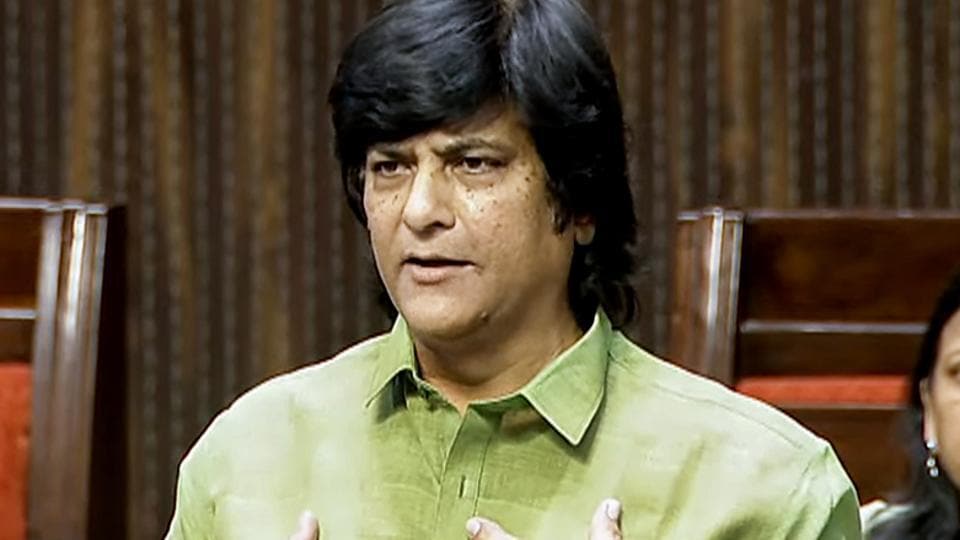
As many as 128 lawmakers voted in favour of the bill, which provides for sweeping changes in regulating and managing Islamic charitable endowments, and 95 against it in the Rajya Sabh.
The current strength of the Rajya Sabha is 236, with the NDA holding 117 seats, just 2 short of the majority mark of 119. However, the ruling coalition’s strength rises to 125 with the inclusion of two nominated members and six independents. The Bill secured 128 votes, 3 more than the NDA’s strength, as at least one of the seven BJD lawmakers, Sasmit Patra, confirmed voting in favour. BJD lawmaker Debasish Samantray, however, skipped the vote.
While BJD lawmaker Muzibulla Khan vocally opposed the Bill during the debate, raising concerns from the Muslim community over the inclusion of non-Muslims in Waqf Boards, the absence of a party whip suggests that other lawmakers diverged from this position.
Also Read: What is Waqf: Explained in 4 simple points
The final vote count indicates that at least a few, if not most, BJD lawmakers aligned with the NDA.
A waqf is a Muslim religious endowment, usually in the form of landed property, made for charity and community welfare. The waqf draft bill was introduced last year and amended after JPC recommendations proposed changes.
The amended bill provides for scrapping the waqf by user provision under which a property is acknowledged as a waqf because it has been used for religious activities for some time despite there being no official declaration or registration as a waqf. It permits women, members of the Shia sect and government officials to be members of waqf bodies, and gives overriding power to senior officials to determine if a government property belongs to a waqf. The bill allows only a person “showing or demonstrating that he is practising Islam for at least five years” to donate properties to waqf. It stipulates that women and other rightful heirs cannot be denied their inheritance due to the creation of a waqf.
The Bill was passed by the Lok Sabha on April 3. Now it awaits the assent of the President of India to became a law.
“We deeply respect the diverse sentiments expressed by different sections of the Minority communities regarding the Waqf (Amendment) Bill, 2024. Our Party, having taken these views into careful consideration, has entrusted our members in the Rajya Sabha with the responsibility of exercising their conscience in the best interest of justice, harmony and the rights of all communities, should the Bill come up for voting. There was no Party Whip,” Patra said, adding that he is “yet to discuss it with the MPs so far. I have supported the bill.”
Lawmaker Samantray skipped voting as he was “dissatisfied” with party direction to “vote as per conscience”. “We had earlier decided to oppose the Bill and Naveen Patnaik during Iftaar party on Saturday had said so. On Thursday afternoon suddenly we were told to vote as per conscience. I chose to skip voting as I did not like it,” he added.
Also read: Watershed moment, says Modi as Rajya Sabha passes Waqf bill
The development came as a huge surprise as BJD had signalled strong opposition to the Bill, reflecting concerns from minority communities.
BJD chief Naveen Patnaik had expressed concern in September 2024, regarding a “sense of insecurity” among minorities, aligning with the party’s historical secular stance and its outreach to Odisha’s Muslim community. This position was reiterated in November 2024, when the BJD protested the Bill’s introduction, arguing that the Muslim community—the primary stakeholder—had not been adequately consulted.
On Wednesday, the BJD said that lawmaker Khan would represent the Muslim community and present the party’s concerns regarding the Bill in the Rajya Sabha. Patra too reiterated that the party is not satisfied with the Bill and claimed that the Centre had amended certain points after a review by the Joint Parliamentary Committee (JPC).
The voting by some BJD lawmakers in favour of the Bill sparked a heated discussion at Sankha Bhawan, the BJD state headquarters in Bhubaneswar, on Friday morning. Senior MLA Badri Patra admitted that it had created an awkward situation for the party.
“Our party president had directed us to oppose the Bill. There could be some pressure. How this has happened, we are also surprised. We do not know who was behind it. Whatever information I have, the party president had clearly stated to oppose the Waqf Bill. Why any whip was not issued and other aspects need to be ascertained,” said Patra, after attending the meeting.
Senior BJD leader Sashi Bhusan Behera said, “There has been some confusion. Before every Parliamentary committee, a meeting is held; and, our party president had directed to oppose the Bill. We are also confused and hearing a lot of things. We can clearly clarify why this happened after discussion. The party is strong and the president is capable of clearing all confusion and dealing with the situation.”
Some BJD leaders said that the decision to avoid upsetting the BJP added to the list of allegations that the party is acting as the “B team” of the Bharatiya Janata Party (BJP). “We have supported the BJP in CAA, Jammu and Kashmir Reorganisation Bill and Delhi Services Bill. We did not learn anything all these years from our mistakes as BJP managed to defeat us in last Assembly polls. The party now stands at crossroads and faces an uncertain future,” a senior leader said, requesting anonymity.
“There has been a deal. Naveen Patnaik and VK Pandian duo came to Delhi and made the deal for the Waqf Bill. Earlier, BJD had taken a stand to oppose but why suddenly they changed their stand? Only Naveen Patnaik can address the confusion,” Odisha Pradesh Congress Committee (PCC) president Bhakta Charan Das said.
Political analysts said BJD’s decision not to issue a whip on its lawmakers may have been due to reluctance of Naveen Patnaik in having an outright confrontation with the BJP-led NDA. “The BJD was also torn between its concern for standing for minorities and its majority Hindu voters. It nevertheless underscores party’s strategic retreat from ideological rigidity,” political analyst SP Dash said.