
 E-Paper



‘Committee mein serious, street pe drama’: BJP vs Congress over Parl panel's UPI MDR discussion
Congress lawmakers contended the panel did not discuss a specific proposal to impose a Merchant Discount Rate charge on UPI transactions above ₹2,000.

 Prefer HTon Google


The Bharatiya Janata Party (BJP) on Thursday accused the Congress of making duplicitous statements on charges for Unified Payment Interface (UPI) transactions, pointing out the opposition party’s lawmakers are members of the standing committee on finance that had recommended exploring a viable revenue mechanism for UPI.
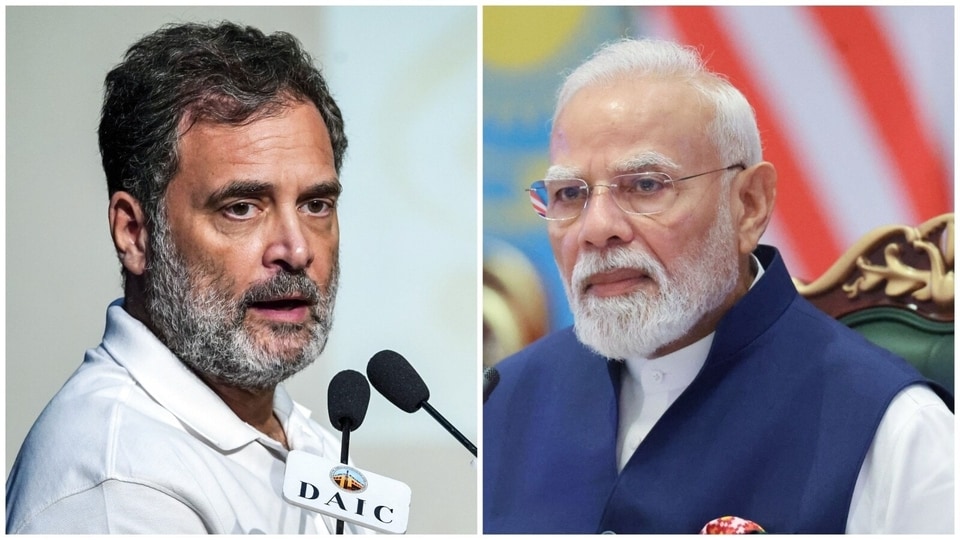
Congress lawmakers contended the panel did not discuss a specific proposal to impose a Merchant Discount Rate charge on Unified Payment Interface (UPI) transactions above ₹2,000 from October 15, as was announced by the government on Wednesday. The Congress said after the announcement that the move breaks the government’s promise of a free UPI system, while accusing it of “surrendering to American pressure”.
In a post on X, the BJP said the parliamentary panel had 13 Opposition MPs, including 6 Congress MPs: Gaurav Gogoi, K Gopinath, Kishori Lal, Manish Tewari, P Chidambaram and Pramod Tewari.
Also Read | 'This is false': Govt rejects 'foreign influence' charge in UPI merchant fee row
Deep Dive

“The other opposition members included MPs from SP, DMK, RSP, TMC, YSRCP and AAP,” it added.
“In the Parliamentary Committee, the same leaders said UPI needs a proper revenue model and can’t run forever on zero MDR. Outside, they scream ‘Modi surrendered to America’ and ‘anti-people betrayal.’ Same people. Same issue. Opposite scripts depending on the venue. Committee mein serious, street pe drama. Classic Congress double-act,” the BJP said.
Responding to the criticism, Manish Tewari said “no specific proposal qua the recent Merchant Discount Rate -MDR to be levied on UPI transactions from October 15 th 2026 was ever brought before the Parliamentary standing of Finance- rate, quantum, amount of fee to be charged, ceiling and exemption slabs etc.”
Also Read | Modi government’s loot has reached UPI, says Congress; BJP hits back
“To claim that a particular measure was supported by ‘certain members’ of the committee is an inaccurate and fallacious characterisation of the confidential proceedings of a Parliamentary Committee,” he added.
Gogoi said on X the committee on finance had not not discussed the UPI tax proposal that the Cntre announced. “The Department of Finance did not have any specific proposal on UPI tax when they met the members of the Finance Committee.”
He said questions were raised on the need for MDR but the representatives of the government did not have any “specific or satisfactory answers at that point”.
Congress general secretary Jairam Ramesh said the BJP’s claims were an attempt to divert attention from the backlash generated by the move.
The Parliament’s standing committee on finance had on two occasions—in March and August this year-- recommended exploring a viable revenue mechanism to make UPI sustainable in the long term.
Panel reports reviewed by HT shows that the Union finance ministry’s department of financial services (DFS) had told the committee in August that they are examining the feasibility of restoring MDR–it had been removed from UPI transactions about six years ago.
“Given the sustainability of the UPI ecosystem and the burden on the government exchequer, the Department is currently exploring two options: (i) Examining the feasibility of restoring MDR for certain high threshold transactions/ merchants; and (ii) a tiered incentive structure to phase-out the Government support in the next few years,” the ministry said.
Earlier, on February 18, the DFS told the MPs, “The sustained expansion of UPI requires a viable revenue mechanism to support these investments, especially to promote UPI in Tier 3-6 cities.” The investments relate to technical infrastructure, cyber security, risk management, awareness, customer support and compliance.
But the ministry predictably didn’t reveal the details of the plan as the government isn’t required to discuss all the details of its executive or administrative plans with the committees in advance.
The ministry’s key argument was that the government’s incentives could offset only a small part of the cost incurred by the industry.
The Union Budget 2026-27 allocated ₹2,000 crore for an incentive and subsidy scheme for UPI and RuPay debit cards to support digital payment infrastructure. The ministry said the budget provision was against “an estimated cost of ₹20,700 crore incurred by the industry (i.e., cost of ₹1.38 per transaction multiplied by total P2M transactions of 15,000 crore recorded last year).”
In its report presented in the Lok Sabha on March 12, this year, the parliamentary committee said while the “cashback components are necessary to democratize digital payments in untapped Tier 3-6 cities the Department of Financial Services must concurrently explore a self-reliant, tiered revenue model. The Committee would like to emphasize that establishing a viable revenue mechanism is critical to ensuring the UPI ecosystem achieves financial sustainability without perpetually straining the Government exchequer.” The panel took up the issue again in August while preparing the Action Taken Report and recommended that “the Department explore a self-reliant, tiered revenue mechanism to ensure financial sustainability without perpetually straining the exchequer.


