E-Paper



Booster dose not the focus of vaccination drive: Govt
A “booster dose” refers to an additional dose of the vaccine that is given to someone who has already built enough protection after being fully vaccinated.

 Prefer HTon Google


As discussion around the administration of booster shots of Covid-19 vaccines gathers momentum across the world, India on Thursday said that, as things stand, offering third doses of the vaccine was not the central focus of any government discussion on the country’s inoculation programme.
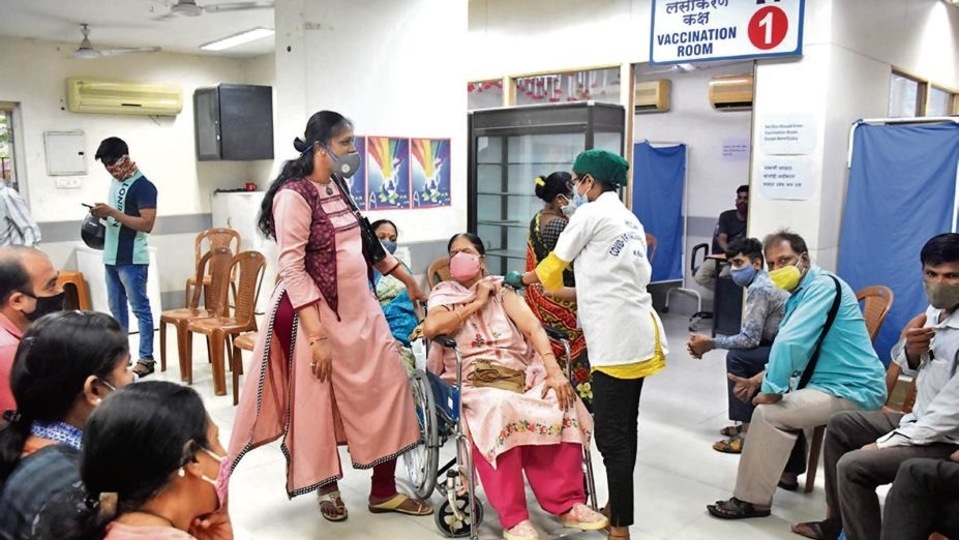
The priority, they said, was universal inoculation for the Indian population, which the government aims to achieve by the end of the year though it is running behind in terms of the daily jab rate despite an uptick in the past few weeks.
“[Administering] booster doses is not the central theme at the moment in the government’s scientific and public health care discussions... getting fully vaccinated with two doses remains the major priority,” said Dr Balram Bhargava, director general, Indian Council of Medical Research (ICMR), during the Union health ministry briefing on Covid-19 on Thursday.
A “booster dose” refers to an additional dose of the vaccine that is given to someone who has already built enough protection after being fully vaccinated. Since a majority of Covid-19 jabs are two-dose vaccines, booster dose in this context refers to a third shot. Health experts in countries such the US are currently engaged in a debate over whether booster doses are needed for healthy adults and whether they should be given out once the entire population is fully vaccinated. This is an important debate as it can mean that despite being fully vaccinated, rich countries may consume even more doses as several poorer nations of the world remain largely unvaccinated.
Experts agreed that it crucial for India to first fully vaccinate all eligible population before considering booster shots for those who have already received both doses. “What is important is to vaccinate all adults first as per plan. Booster doses can be thought about later. That is not our immediate requirement; however, it may be needed eventually,” said Dr GC Khilnani, former head, pulmonary and sleep medicine department, All India Institute of Medical Sciences, Delhi.
As for low antibody levels found in some people according to recent studies, Bharagava said that several agencies have recommended that antibody levels should not be the sole determinant of immunity against Covid-19. The study, published in the Research Square pre-print, of 614 fully vaccinated health workers in India found a significant drop in their Covid-fighting antibodies within four months of the first shot.
During the briefing, health officials also called a recent article by the New York Times on India’s Covid response a “provocative, attention-seeking” piece that came at a time when the country is doing well in handling the pandemic.
The NYT article said that ICMR tailored its findings to fit Prime Minister Narendra Modi’s optimistic narrative despite a looming crisis. “We greatly value journalistic and editorial freedom and at the same time we must also realise that all of us -- Union government as well as the state governments -- are fully emerged in fighting a pandemic and all our energies and time is devoted to that,” said Rajesh Bhushan, Union secretary for health and family welfare.
The ICMR chief added: “This is a provocative, attention seeking article published at a time when India is doing good and our vaccination is excellent and it is diverting attention.”
On the question of including children under the national Covid-19 immunisation programme, government officials said that the matter was still being deliberated upon.