
 E-Paper



BrahMos, Malacca, Astra: PM Modi's Indonesia visit set to deliver big strategic wins
Among the biggest outcomes expected from Prime Minister Narendra Modi's visit is an agreement to jointly develop Indonesia's Sabang port.

 Prefer HTon Google


Prime Minister Narendra Modi's visit to Indonesia is expected to deliver a series of strategic outcomes that could significantly strengthen India's defence capabilities, maritime presence and access to critical minerals, while also boosting New Delhi's role as a trusted security and technology partner in the Indo-Pacific.
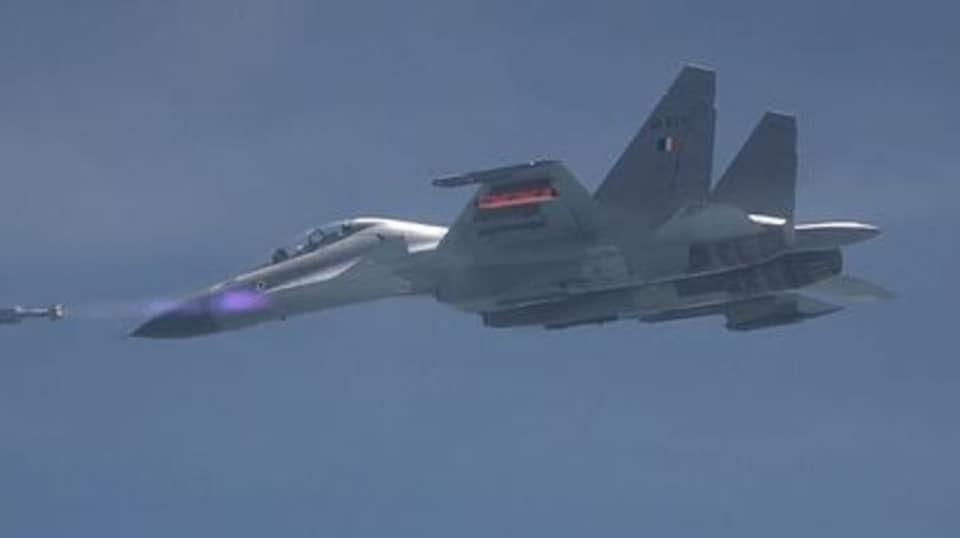
From Indonesia's decision to procure India's indigenous Astra air-to-air missiles and expand its BrahMos missile inventory to a joint plan to develop the strategically located Sabang port near the Strait of Malacca, the visit is expected to mark one of the most consequential phases in bilateral ties.
Sabang port project to deepen India's strategic footprint
Among the biggest outcomes expected from Prime Minister Narendra Modi's visit is an agreement to jointly develop Indonesia's Sabang port, a project with significant strategic implications for India.
The Strait of Malacca is the world's busiest maritime chokepoint, carrying around 22% of global trade and nearly 29% of seaborne oil. It connects the Indian Ocean with the Pacific Ocean through the South China Sea, providing the shortest maritime route between the energy-rich Middle East and Asia's manufacturing hubs.
The joint development is expected to strengthen India's maritime presence in the eastern Indian Ocean, improve logistics cooperation with Indonesia and bolster New Delhi's strategic position in the Indo-Pacific amid growing competition in the region.
Also Read: PM Modi receives grand welcome in Indonesia, talks on defence, food security and more on cards
Indonesia to expand BrahMos missile inventory
India and Indonesia are also expected to deepen defence ties through an expansion of Jakarta's BrahMos missile inventory.
According to sources, Indonesia is looking at procuring one additional BrahMos battery initially, with the possibility of increasing the order to three batteries over time. India will support Indonesia in deploying the additional systems.
The move underscores growing confidence in India's defence manufacturing capabilities and further establishes New Delhi as a key supplier of advanced military platforms in the Indo-Pacific.
Indonesia to import India's Astra missiles
Another major defence outcome expected from the visit is Indonesia's decision to import India's indigenous Astra Beyond Visual Range Air-to-Air Missile (BVRAAM).
The development comes after India's air combat capabilities drew international attention during Operation Sindoor, reinforcing confidence in indigenous defence systems.
Indonesia operates Su-30 fighter aircraft, allowing seamless integration of the Astra missile, which has a strike range exceeding 100 km. Developed by the Defence Research and Development Organisation (DRDO), the missile recently completed successful flight trials with an indigenous Radio Frequency seeker, demonstrating pinpoint accuracy.
The export marks another milestone in India's ambition to emerge as a global defence exporter.
India to invest in Indonesia's critical minerals sector
The two countries are also expected to strengthen cooperation on critical minerals, with India planning investments in manufacturing facilities for steel, nickel and rare earth permanent magnets in Indonesia.
The partnership aims to secure resilient supply chains for sectors such as electric vehicles, clean energy, electronics and defence manufacturing, while reducing India's dependence on vulnerable global sources.
India to help Indonesia develop indigenous EVMs
In another notable outcome, India will support Indonesia in developing electronic voting machines tailored to the country's requirements.
The initiative is seen as a significant endorsement of India's election management model and its expertise in conducting elections at an unparalleled scale using EVM technology.


