
 E-Paper



Cabinet clears ₹10.7k-crore equity infusion for FCI
The state-owned FCI, through which 70% of food subsidies is routed, buys millions of tonnes of farm produce from farmers at federally fixed minimum support prices (MSP), a process known as procurement.


The Union Cabinet on Wednesday approved an equity of ₹10,700 crore for the Food Corporation of India (FCI), the government’s main grain-handling arm, a move that will help to lower the public-sector entity’s dependence on large debts to fund its nationwide food-distribution programme.
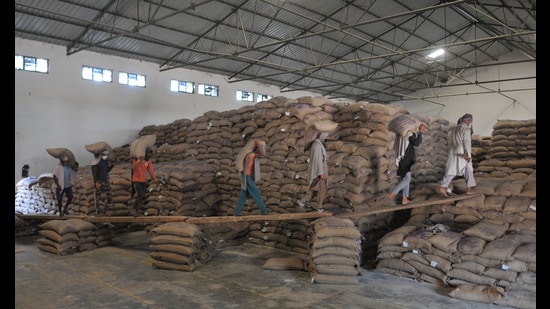
The state-owned FCI, through which 70% of food subsidies is routed, buys millions of tonnes of farm produce from farmers at federally fixed minimum support prices (MSP), a process known as procurement. It distributes grains to nearly 800 million beneficiaries free of cost under the National Food Security Act 2013.
“This infusion (of equity) will help to lower the interest burden and will ultimately reduce the subsidy of the Government of India,” Union minister of information and broadcasting Ashwini Vaishnaw said.
This is the second approval of equity for FCI, which in this case is the value of a company that can be offset against debt. Earlier this year, the Union government had sharply increased the availability of funds for the corporation by announcing a similar equity of ₹21,000 crore, a financial push to minimise FCI’s borrowings and interest payouts, and help it undertake a planned modernisation drive.
To manage gaps in funding, FCI often resorts to various borrowing options, such as cash credit, short-term loans, and ways and means. The equities are aimed at also reducing FCI’s “economic cost”. Economic cost refers to expenses undertaken to purchase, store and distribute free food grains by FCI.
After a clean-up of the books of FCI by the Union government, which paid off its ballooning debt of ₹3.39 lakh crore in 2020-21, the agency had to resort to off-budget borrowing again, not an ideal thing, experts say.
Off-budget funding refers to the practice of financing an expenditure that is not fully accounted for in budgetary allocations. It often helps the government to lower the fiscal deficit, the difference between what it earns and spends.
A large fiscal deficit influences sovereign credit-worthiness ratings assigned by global ratings agencies. A lower rating increases the government’s borrowing costs. The equities to FCI are aimed to adequately capitalise the enterprise to eliminate such borrowing needs.
The Centre’s fresh equity will come by way of converting “ways and means” advance given to the corporation, an official said.


