E-Paper



Can’t summon lawyers for legal advice: SC
The court made strong observations during a hearing involving a Gujarat-based lawyer who was summoned by the police merely for securing bail for his client in a loan dispute case

 Prefer HTon Google


Direct summons by investigating agencies or the police to lawyers for advising their clients can “shatter the core of legal independence” and constitute a “serious interference with the administration of justice”, the Supreme Court said on Wednesday, as it initiated suo motu proceedings to address the issue and formulate safeguards to protect the legal profession.
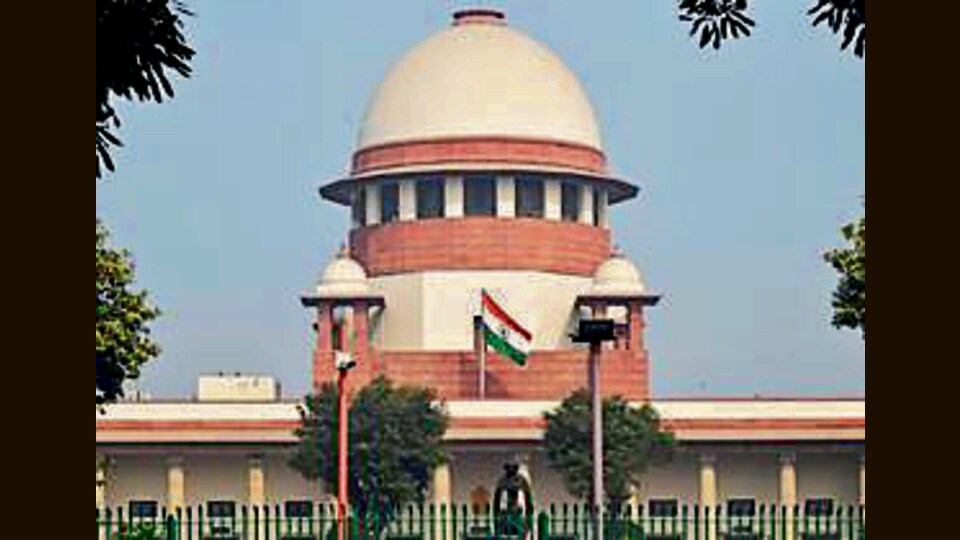
“The legal profession is an integral component of the process of administration of justice. Counsels who are engaged in their legal practice have certain rights and privileges guaranteed because of the fact that they are legal professionals, and also due to statutory provisions. Permitting investigating agencies or police to directly summon defence counsel or advocates who advise parties in a given case would seriously undermine the autonomy of the legal profession and would even constitute a direct threat to the independence of the administration of justice,” said a bench of justices KV Viswanathan and N Kotiswar Singh.
The development comes just days after the Enforcement Directorate (ED) issued, and subsequently withdrew, summons to two senior Supreme Court advocates, triggering widespread outrage over the perceived breach of lawyer-client privilege and professional independence.
The court made strong observations during a hearing involving a Gujarat-based lawyer who was summoned by the police merely for securing bail for his client in a loan dispute case. The police summons, issued under Section 179 of the Bharatiya Nagarik Suraksha Sanhita (BNSS) by the SC/ST Cell in Ahmedabad, was upheld by the Gujarat high court, prompting the top court to stay the order and protect the lawyer from further coercive action.
“Summoning lawyers for advising clients can shatter the core of legal independence,” maintained the bench, adding that such practices, if allowed to persist, would have a chilling effect on legal professionals and impair the justice delivery system. “This is not just about one lawyer. It is about protecting the spine of the legal system,” it emphasised.
Justice Viswanathan remarked that it was essential to address this issue comprehensively, not just as a one-off incident, but to safeguard the legal profession and preserve the integrity of the justice system.
“Lawyers must be able to advise and represent clients without fear of being summoned or harassed. We are dealing with the very heart of judicial independence and the administration of justice,” the court said.
It went on to frame two critical questions -- one, can the police summon a lawyer who has only advised a party in a case; and two, if there is more than advisory involvement, should judicial oversight be a precondition.
To ensure a comprehensive and principled resolution, the court sought assistance from the attorney general, solicitor general, chairman of the Bar Council of India (BCI), and presidents of the Supreme Court Bar Association (SCBA) and the Supreme Court Advocates-on-Record Association (SCAORA). The matter has also been referred to Chief Justice of India Bhushan R Gavai for appropriate orders on further listing.
“It is a matter which directly impinges the administration of justice,” the court noted.
The top court’s intervention comes just days after ED withdrew its summons to senior advocate Pratap Venugopal in a separate case. The move followed an urgent representation by SCAORA to the CJI on June 20, flagging the ED’s summons as a grave infringement on the independence of the legal profession and the sanctity of lawyer-client privilege.
Venugopal, who was summoned to appear before ED on June 24 under Section 50 of the Prevention of Money Laundering Act (PMLA), 2002, received a text message from the agency on the afternoon of June 20, informing him that the notice “stands withdrawn with immediate effect.”
The summons pertained to ED’s probe into the allotment of Employee Stock Option Plans (ESOPs) by Care Health Insurance to Rashmi Saluja, former chairperson of Religare Enterprises. Venugopal, in this instance, was the advocate-on-record for a legal opinion rendered by senior counsel Arvind Datar. ED had also summoned Datar earlier, but withdrew that notice too amid widespread criticism from the legal fraternity.
In its letter to the CJI, SCAORA president Vipin Nair described the summons as “a deeply disquieting development” and warned that coercive measures against lawyers for professional legal opinions strike at the core of the rule of law and the constitutionally protected sphere of legal advice.
“The role of an advocate in offering legal advice is both privileged and protected. Interference by investigative agencies, particularly in respect of opinions rendered in a professional capacity—strikes at the core of the rule of law,” the letter stated, urging the CJI to frame clear guidelines.
The concern was echoed across the legal community. The Delhi High Court Bar Association passed a resolution on June 17 condemning ED’s actions as a direct threat to the constitutional right to legal representation and fair trial. The Gujarat High Court Advocates Association also held an emergency meeting, with its president Brijesh Trivedi calling for urgent amendments to the Indian Evidence Act and the Bharatiya Sakshya Adhiniyam, 2023 to safeguard lawyer-client privilege.
In a press statement issued on the evening of June 20, ED clarified that the summons had been issued in Venugopal’s capacity as an independent director of Care Health Insurance Ltd (CHIL), not as a legal counsel, and said any further information would be sought through email.
Crucially, ED also issued a circular directing all its field offices not to issue summons to advocates in violation of Section 132 of the Bharatiya Sakshya Adhiniyam, 2023. It mandated that in exceptional cases where the proviso to Section 132 may apply, prior approval from the ED director would be necessary before issuing such summons.