E-Paper



Carbon emissions set to return to pre-Covid levels: Global Carbon Project report
Globally, CO2 emissions dropped by 5.4% in 2020 due to lockdowns induced by the Covid-19 pandemic, but the new report projected an increase of 4.9% this year (4.1% to 5.7%) to 36.4 billion tonnes in total.

 Prefer HTon Google


Global carbon emissions in 2021 are set to rebound to pre-Covid levels, according to the projections of the Global Carbon Project report, which was released during the Glasgow Climate Change Conference (COP 26). The report also warned that the global CO2 (carbon dioxide) emissions are likely to rise steeply during the coming year, instead of declining immediately, and so efforts must be made to keep global warming to under 1.5 degree Celsius over the pre-industrial levels.
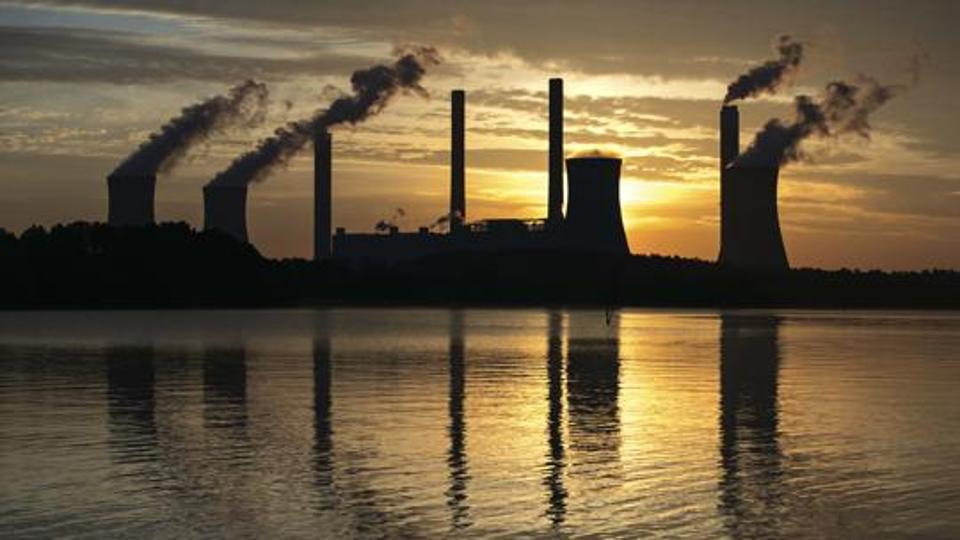
Globally, CO2 emissions dropped by 5.4% in 2020 due to lockdowns induced by the Covid-19 pandemic, but the new report projected an increase of 4.9% this year (4.1% to 5.7%) to 36.4 billion tonnes in total. The report was prepared by a research team of University of Exeter, University of East Anglia (UEA), Center for International Climate Research (CICERO) and Stanford University.
Researchers said a further rise in emissions in 2022 is also likely if road transport and aviation return to pre-pandemic levels and coal use is stable. “The rapid rebound in emissions as economies recover from the pandemic reinforces the need for immediate global action on climate change,” said Professor Pierre Friedlingstein, of Exeter’s Global Systems Institute, who led the study.
Prof Corinne Le Quéré, Royal Society Research Professor at UEA’s School of Environmental Sciences, contributed to this year’s analysis. She said: “It will take some time to see the full effect of the Covid-related disruptions on global CO2 emissions. A lot of progress has been made in decarbonising global energy since the Paris Agreement was adopted in 2015, plus renewables is the only energy source that continued to grow during the pandemic. New investments and strong climate policy now need to support the green economy much more systematically and push fossil fuels out of the equation.”
The report has projected that China’s emissions are likely to rise 4% compared to 2020, reaching 5.5% above 2019, and will represent 31% of global emissions. India’s emissions are projected to rise 12.6% compared to 2020, reaching 4.4% above 2019, representing 7% of global emissions. USA’ emissions are projected to rise 7.6% compared to 2020, reaching 3.7% below 2019, representing 14% of global emissions. EU27’s emissions are projected to rise 7.6% compared to 2020, reaching 4.2% below 2019 representing 7% of global emissions.
The analysis doesn’t include international transport, particularly aviation. To have a 50% chance of limiting global warming to 1.5°C, 1.7°C and 2°C, the researchers estimate the remaining “carbon budget” has now shrunk to 420 billion tonnes, 770 billion tonnes and 1,270 billion tonnes, respectively — equivalent to 11, 20 and 32 years from the beginning of 2022.
“Reaching net zero CO2 emissions by 2050 entails cutting global CO2 emissions by about 1.4 billion tonnes each year on average. Emissions fell by 1.9 billion tonnes in 2020 – so, to achieve net zero by 2050, we must cut emissions every year by an amount comparable to that seen during Covid. This highlights the scale of the action that is now required, and hence the importance of the COP26 discussions,” Friedlingstein said in a statement on Wednesday.
IPCC’s report ‘The Physical Science Basis’ released in August suggests that to even attempt keeping global warming under 1.5 degree C, global carbon dioxide (CO2) emissions will have to decline by about 45% from 2010 levels by 2030, reaching net zero by around 2050. United Nations’ updated nationally determined contribution (NDC) synthesis report, released on October 25, confirmed that for all available NDCs of 192 Parties taken together, there is likely to be a 16% increase in global GHG emissions in 2030 compared to 2010. Such an increase, unless changed quickly, is likely to lead to a temperature rise of about 2.7 degree Celsius by the end of the century.