
 E-Paper



Caste and Covid-19, the two reasons for Vijay Rupani’s ouster
A senior party leader based in Delhi said the change should not be attributed to Rupani’s performance but is part of the BJP’s policy of fostering newer leadership. A change of face a little over a year ahead of the elections is expected to blunt anti-incumbency in the state. The term of the 182 member assembly ends in February 2023.

 Prefer HTon Google


Gujarat on Saturday joined the list of states where the Bharatiya Janata Party leadership at the Centre opted to change the state leadership ahead of the assembly elections. After Karnataka where Chief Minister BS Yediyurappa was replaced by Basavaraj Bommai ahead of the 2023 elections and Uttarakhand where the incumbent Trivendra Singh Rawat was first replaced by Tirath Singh and later by Pushkar Dhami, Gujarat CM Vijay Rupani on Saturday announced his resignation. Both Gujarat and Uttarakhand will pick new assemblies in 2022.
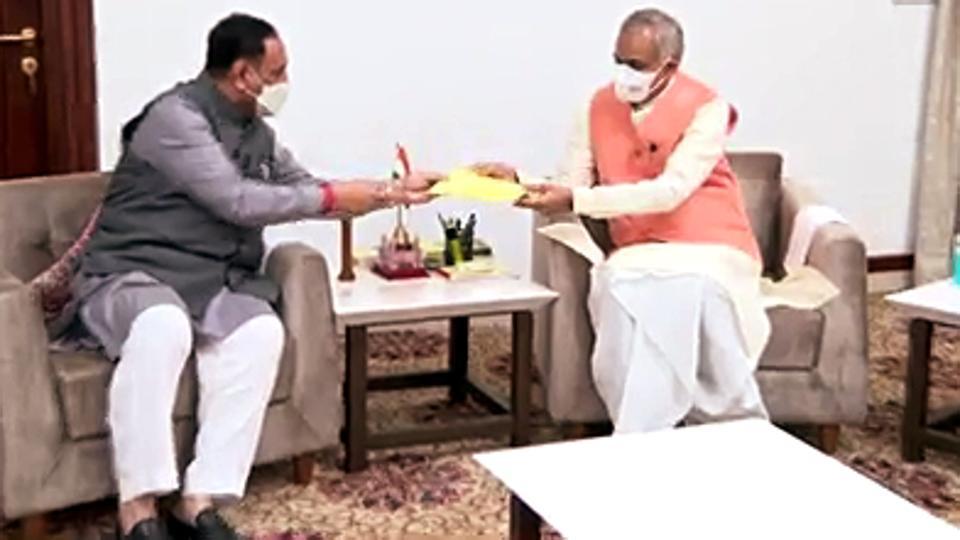
Among the reasons cited by party leaders for the 65-years old Rupani’s replacement are his response to Covid-19 and his caste. The Jain CM’s performance in facing the challenges posed by the Covid-19 pandemic and failing to build cohesive political support for the BJP which still faces challenges from the Patidars, a community with immense political power that can swing electoral outcome, were stated as key determinants in the decision.
A change of face a little over a year ahead of the elections is expected to blunt anti-incumbency in the state. The term of the 182 member assembly ends in February 2023.
A senior party leader based in Delhi said the change should not be attributed to Rupani’s performance but is part of the BJP’s policy of fostering newer leadership. “The BJP believes in leadership development process whereby newer people are given a chance to be in charge. In Gujarat that is what has happened… it’s a generational change. New leaders will take over the charge with enthusiasm,” said the functionary.
However, a section of party leaders also said the resignation is an indication that the central command is not inclined to go to polls with incumbent leaders in states where public perception is not in their favour.
“Even though the chief minister carried forward the development agenda that was set by Prime Minister Modi when he was the chief minister of the state there were many issues that could be attributed to for this change. The first and foremost being the state’s response to the Covid-19 challenge,” said a second leader. He went on to add “…Since he also did not meet the criterion that was arrived at after doing the electoral calculations the party decided that he should be replaced and a newer person given charge till elections.”
The central leadership that included general secretary (organisation) BL Santhosh and Union minister and state in-charge Bhupendra Yadav held a series of meetings with the state party leaders in the past few months to get an insight into the public sentiment against the CM.
In April this year, the High Court of Gujarat took a serious view of the state‘s preparedness for the pandemic and said the manner in which the government had dealt with the challenge was “not satisfactory and not transparent”.
There was uproar over the lack of oxygen supply in hospitals that led to deaths, hospital beds were also in short supply.
Rupani, a non Patidar leader had replaced Anandiben Patel in 2016 in the aftermath of the agitation by the politically powerful Patidar community that was rallying for being brought under the ambit of the castes based on quotas. He was sworn in for a second term after the party won the 2017 assembly elections even though there were reservations among the state leaders on his elevation.
The party has been concerned over the state unit leaders losing hold over the electorate. In 2017 when the party returned to power it won just 99 of the 182 seats down from the previous election’s 115. Later, the Aam Aadmi Party‘s performance in the Surat municipal Corporation rang alarm bells again. The party has officially dismissed the AAP‘s emergence in the state, but it is aware of the simmering discontent among the Patidars over the delay in taking back cases that were filed against those booked in the 2015 agitation, said a third leader.
This is not the first time that Rupani‘s credentials as a leader have been called into question. After the 2017 election a section in the party was not inclined to support his candidacy as chief minister and had preferred Nitin Patel for the top job. “The two names that were proposed in 2017 were Nitin Patel a powerful leader of the Kadva Patels, and the Leuva Patel leader Jitu Vaghani who also has clout among the Patidars but was later made the party chief. The choice of a non Patidar CM was seen as an unorthodox move, but had support from the PM and Amit Shah and he was the RSS’s pick as well,” said the third leader.
Political commentator Ghanshaym Shah said there was pressure from the party cadre and the Patidar community to change the Chief Minister. “The party cadre had relayed to the central leadership the need to have the Patidars on their side so the change can be attributed to this pressure,” he said.
On the speculation that the party could favour moving the assembly elections to the first half of 2022 to coincide with five other states including Uttar Pradesh; a senior election commission official said, elections can be held ahead of scheduled only if the term of assembly is set to expire in the next six months. In this case, since elections are 15 months away, polls ahead of schedule will only be possible if the state assembly is dissolved.


