
 E-Paper



CBI skipped initial enquiry. It doesn’t vitiate FIR, rules SC in corruption case
The Supreme Court ruled that the accused cannot demand that CBI hold a preliminary enquiry as a matter of right but underlined that this shouldn’t be seen as taking away “the value of conducting a preliminary enquiry in an appropriate case”.


NEW DELHI: A First Information Report (FIR) registered by the Central Bureau of Investigation in a corruption case without holding a preliminary enquiry does not vitiate the case against the accused, the Supreme Court held on Friday and set aside the Telangana high court’s February 2000 verdict quashing the FIR against Andhra Pradesh education minister A Suresh, and his wife, an income tax commissioner, over a disproportionate assets case registered against her in 2017.
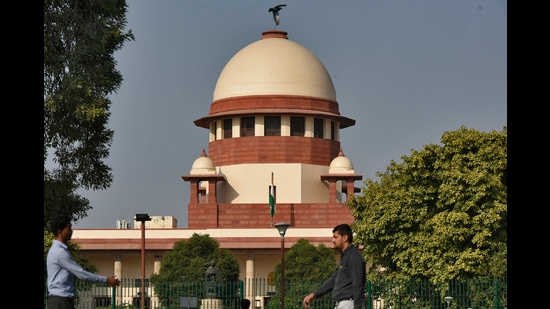
“If CBI chooses not to hold a preliminary enquiry, the accused cannot demand it as a matter of right,” the bench of justices Dhananjaya Y Chandrachud, Vikram Nath and BV Nagarathna ruled, upholding the agency’s appeal against the high court judgment.
The court examined the provisions of the Code of Criminal Procedure (CrPC), Prevention of Corruption (PC) Act and the CBI Manual and held that institution of a preliminary enquiry is not made mandatory before the registration of an FIR.
To be sure, the PC Act was amended in 2018. One of the changes brought about by this amendment was that it barred a police officer from conducting any enquiry or inquiry or investigation into any offence alleged to have been committed by a public servant without the government’s sanction if the alleged offence is relatable to any recommendation made or decision taken by such public servant in discharge of his official functions or duties. It is not clear how these changes will impact a procedure to be adopted by CBI in a disproportionate assets case.
In this case, CBI argued that it did not feel the need to hold a preliminary inquiry (PE) referred to in CBI Manual because the material against the I-T commissioner TH Vijaylakshmi was collected during its investigation into another case where she was one of the accused. During the earlier investigation, CBI conducted searches at four places belonging to her during which documents were seized. She was later examined and on basis of such information and documents, the FIR was registered.
“We hold that in case the information received by CBI, through a complaint or a “source information” discloses the commission of a cognizable offence, it can directly register a regular case instead of conducting a preliminary enquiry, where the officer is satisfied that the information discloses the commission of a cognizable offence,” the three-judge bench said.
However, the bench left the choice open to CBI whether it decides to file a regular case or preliminary enquiry. “We hold that since the institution of a preliminary enquiry in cases of corruption is not made mandatory before the registration of an FIR under the CrPC, PC Act or even the CBI Manual, for this court to issue a direction to that effect will be tantamount to stepping into the legislative domain.”
CBI alleged that TH Vijayalakshmi, the MLA’s wife who was a central government officer, was found to possess disproportionate assets to the tune of over ₹1.1 crore which was 22.86% of the income earned during the check period between 1 April 2010 to 29 February 2016. The high court examined the FIR and the material and concluded that the allegations were not made out and set aside the FIR and proceedings under it on several grounds, one of which being no preliminary enquiry preceding lodging of FIR.
Additional Solicitor General (ASG) Aishwarya Bhati, appearing for CBI, argued that CBI Manual does not make it mandatory to conduct a preliminary enquiry before the registration of the FIR. She stated that a PE cannot be made mandatory for all cases of corruption and is only conducted when the information received is not sufficient to register a regular case. The court reserved its orders on September 22.
The agency also said if the accused is confronted with the evidence before the registration of an FIR by filing a PE, there would be a risk of tampering with or destruction of evidence.
The case against the legislator, A Suresh, who is the education minister in the YSR Congress government in Andhra Pradesh, was alleged to be that of being an abettor under Section 109 of Indian Penal Code (IPC). He argued that CBI registered the case against him without taking the Speaker’s sanction, alleging that the entire case was part of a conspiracy hatched by his political rivals.
The court noted that registration of a regular case can have disastrous consequences for the career of an officer, if the allegations ultimately turn out to be false. “In a preliminary enquiry, CBI is allowed access to documentary records and to speak to persons just as they would in an investigation, which entails that information gathered can be used at the investigation stage as well. Hence, conducting a preliminary enquiry would not take away from the ultimate goal of prosecuting accused persons in a timely manner.”
However, the court clarified that it was for CBI to choose not to hold a preliminary enquiry, underlining its order should not be seen as taking away “the value of conducting a preliminary enquiry in an appropriate case”.


