
 E-Paper



Centre defends law on triple talaq in SC, says practice ‘fatal’ to institution of marriage
The Centre told Supreme Court that Parliament passed the law to protect married Muslim women from being divorced through triple talaq.

 Prefer HTon Google


The Centre has defended its 2019 law against triple talaq by telling the Supreme Court that the practice is “fatal” to the institution of marriage.
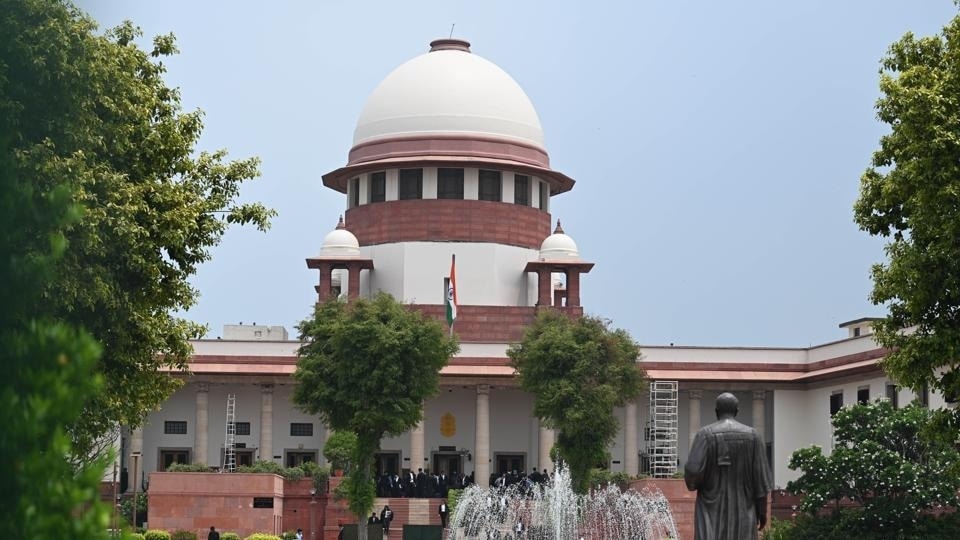
In an affidavit filed in response to petitions challenging the law, the Centre has said that despite the Supreme Court setting aside the practice in 2017, it has “not worked as a sufficient deterrent in bringing down the number of divorces by this practice” among community members.
The government also said that Parliament passed the law to protect married Muslim women from being divorced through triple talaq.
“The impugned Act helps in ensuring the larger constitutional goals of gender justice and gender equality of married Muslim women and helps subserve their fundamental rights of non-discrimination and empowerment,” the Centre said in its affidavit.
Two Muslim organisations, Jamiat Ulama-I-Hind and Samastha Kerala Jamiathul Ulema have asked the court to declare the law “unconstitutional.”
Jamiat argued in its petition that criminalising a specific mode of divorce for one religion while leaving marriage and divorce in other religions under civil law creates discrimination, which violates Article 15.
On August 22, 2017, the Supreme Court declared instant triple talaq (talaq-e-biddah) unconstitutional. On August 23, 2019, the Court agreed to review the validity of the Muslim Women (Protection of Rights on Marriage) Act, 2019. Violation of the law entails imprisonment of up to three years.
The BJP-led NDA government at the Centre had passed the triple talaq bill in the Upper House with 99 votes in favor and 84 against on July 30, 2019. The scrapping of the practice was a key promise of the BJP.
After struggling to pass the legislation in the Rajya Sabha due to insufficient numbers, the government led by Prime Minister Narendra Modi had issued several Ordinances.
Under the law, a Muslim woman who has been subjected to triple talaq is entitled to seek a subsistence allowance from her husband for herself and her dependent children. Additionally, she can seek custody of her minor children.
With PTI inputs


