
 E-Paper



Centre extends tenure of Bombay HC judge by just 1 year, overruling collegium
Overruling the recommendation made by the Supreme Court collegium to extend the woman judge’s tenure by two years, the government modified the proposal and instead gave her an extension of just one year as an additional judge.


The central government on Friday extended by one year the tenure of justice Pushpa Ganediwala of the Nagpur bench of the Bombay high court in view of her controversial rulings on sexual assault on children under the Protection of Children from Sexual Offences Act (POCSO).
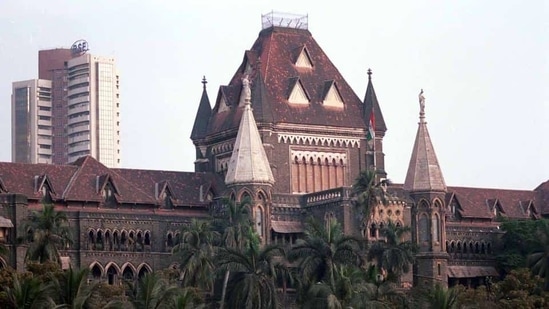
Overruling the recommendation made by the Supreme Court collegium to extend the woman judge’s tenure by two years, the government modified the proposal and instead gave her an extension of just one year as an additional judge.
The SC collegium, which had asked for giving justice Ganediwala a further term of two years, comprised chief justice of India SA Bobde, justices NV Ramana and Rohinton F Nariman.
Justice Ganediwala’s extension was notified by the Union law ministry on Friday evening after a hurried exercise of getting approval from the Prime Minister’s Office and then the President’s secretariat during the day.
Since the judge’s tenure as an additional judge was ending on Saturday, it was incumbent to notify her extension by the end of Friday so as to maintain continuity of her judgeship and not affect her seniority, people familiar with the development told HT.
But former chief justice of India (CJI) RM Lodha was critical of the move by the government to take a unilateral decision, overriding the mandate of the CJI and the collegium regarding justice Ganediwala’s extension.
“It is not just a norm but rulings of the constitution benches that the collegium, which is headed by the chief justice of India, has primacy in matters of appointment of judges, transfer, posting, etc. And the government is bound by it,” justice Lodha told HT.
If the political executive, the former CJI said, has a view different from the collegium, the proper course is to send such a recommendation back to the collegium with the reasons, asking for a review.
“But to modify or segregate or tinker with the collegium’s decision without referring it back to the collegium is not proper. Such actions affect the primacy of the collegium. It is now for the collegium in the Supreme Court to take up this matter with the government,” added justice Lodha.
During his tenure as the CJI, justice Lodha had in July 2014 publicly criticised the NDA government for its “unilateral” move to segregate former solicitor general Gopal Subramanium from the panel of four names recommended for appointment as Supreme Court judges by the collegium.
He had also expressed his disapproval in a letter to Union law minister Ravi Shankar Prasad, and said the government should not adopt such “unilateral segregation” in the future.
Justice Ganediwala will now function as an additional judge for one year, and then a decision will be taken whether her tenure will be extended by another year as an additional judge or should she be made a permanent judge.
Under constitutional provisions, an additional judge can be appointed for a maximum period of two years unlike permanent judges, who are appointed till the age of 62. Further, an additional judge can either be made permanent following a recommendation by the collegium to the central government, or the tenure can be extended for up to two years, pending review of the judge’s performance.
Justice Ganediwala has courted controversy after a series of her judgments on the interpretation of the POCSO Act came under criticism. In a January 19 ruling, she held that groping a minor without removing her clothes was not a case of sexual assault but only of molestation, since there was no “skin to skin” contact. This judgment was stayed by a Supreme Court bench, led by the CJI on January 27. In another judgment on January 15, the judge ruled that holding the hands of a minor and unzipping one’s trousers in front of her does not amount to “sexual assault”.
The SC collegium had on January 20 recommended that justice Ganediwala be made a permanent judge, only to withdraw its proposal within a week. In a revised proposal, the collegium said her tenure should be extended by two years but the government did not accept it and modified the tenure.


