
 E-Paper



Centre may sharpen focus on health, trade in budget
The policymakers are keeping an eye on the Covid-related developments in China and assessing its impact on global supply chains, including imports of Chinese raw materials and intermediaries for domestic manufacturers.


New Delhi The rise in Covid-19 cases in China may see some contingency measures in the Union Budget mainly covering two aspects – health and trade – with fund allocations and policy directives to minimise the impact on the people and the economy, two officials said, adding that India is better placed globally due to its effective vaccination drive.
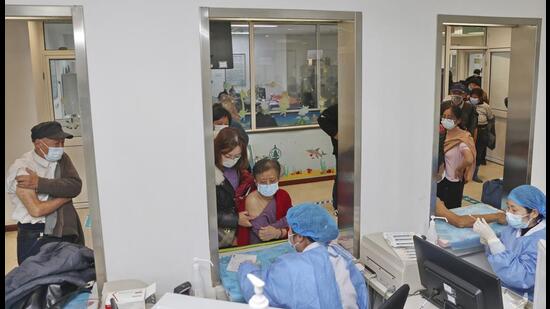
The policymakers are keeping an eye on the Covid-related developments in China and assessing its impact on global supply chains, including imports of Chinese raw materials and intermediaries for domestic manufacturers. India is not completely isolated from global developments, but the Budget may nudge domestic industry to reduce its dependence China, they said, asking not to be named.
China is currently witnessing the world’s biggest surge in coronavirus infections after it lifted Covid-related restrictions. India, which is concerned about the spike in Covid-19 cases and possible emergence of its new variants due to it, held a meeting chaired by Prime Minister Narendra Modi on December 22.
The government is also concerned about its massive trade deficit with China, which crossed $51.5 billion in first seven months of the current financial year (April-October 2022). This is substantially higher than trade deficit of $48.65 in all of 2019-20, a pre-Covid year, one of the officials said. According to official data, India’s trade deficit with China was $44.03 billion and $73.31 billion in 2020-12 and 2021-22 fiscal years, respectively.
“Keeping this in mind, the Budget may focus on health infrastructure, R&D [research and development], and health care education and training. Besides, it may give further push to Atmanirbhar Bharat Abhiyaan (Self-reliant India initiative) to reduce import dependency though incentives and duty calibrations,” a second official said.
This is an interconnected world and India cannot isolate itself from other global economies, but it certainly has abilities to emerge as an alternative to China for countries for assures supplies of goods and services, he said. “The goal of the Budget is to ‘make in India, make for the world’,” he added.
Officials and experts don’t see any immediate threat to India because of surging Covid cases in China and some other countries. “I don’t see that India is at risk as the country has adopted a calibrated strategy to tackle the new variants of Covid. As the country has vaccinated fully with two doses and a booster dose is also underway, the risks of severe impact are meagre,” said Saket Dalmia, president of PHD Chamber of Commerce and Industry (PHDCCI).
He, however, said that the Budget must take measures to further strengthen the country – both the people and the economy. “To mitigate the impact of the new variant, the government must continue its prime focus on enhanced allocations for health sector, particularly for the deployment of para medical staff and oxygen equipment at all hospitals and health centres,” he said.
However, there is a need to calibrate a strategy for the migrant workers, so that they are able to remain at their workplaces for the smoother run of trade and industry, he added.
Yogesh Kulkarni, associate dean of the Shobhaben Pratapbhai Patel School of Pharmacy & Technology Management at the Narsee Monjee Institute of Management Studies, said: “It is important to allocate sufficient budget to basic infrastructure for health care needs such as medicines, medical oxygen, hospitals and health care staff… This increase in budget may take care of the resurgence of Covid 19, if it happens.”
“The Budget can mitigate potential risks by having mobile diagnostic vans which should enable inexpensive check-ups which can be done in each colony, taluk, or district,” said Ajay Poddar, chairman and co-founder of Syenergy Environics Ltd. The company provides technological solutions to mitigate health-related risks at the workplace. Focus on wellness should be given in the budget by nudging firms to make it part of their Sustainable Development Goals (SDG), he added.


