
 E-Paper



Centre needn’t consult judiciary on introducing Hindi, languages in courts: Panel
The Parliamentary Committee on Personnel, Law and Justice, in its report tabled in both the Houses earlier this month, said Article 348 of the Constitution is clear on the matter.


The Centre need not consult the judiciary on introducing Hindi and regional languages in higher courts, a parliamentary panel has said despite the Supreme Court’s objection to the move that could trigger a controversy.
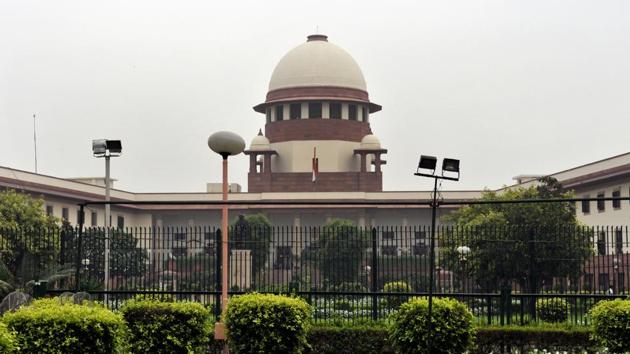
The Parliamentary Committee on Personnel, Law and Justice, in its report tabled in both the Houses earlier this month, said Article 348 of the Constitution is clear on the matter.
“The consultation process with judiciary is not required as the Constitutional provisions are amply clear on the use of Scheduled Languages in the High Courts and accordingly, the use of Scheduled Languages should be decided as per mandate of Article 348,” the panel said.
The recommendation goes against a 51-year-old convention adopted by the Centre through a cabinet decision that says the Chief Justice of India must be consulted on the matter.
Proceedings are held in all 24 high courts across the country and the Supreme Court in English.
An SC bench headed by former CJI TS Thakur had in April 2016 thrown out a petition by lawyer Shiv Sagar Tiwari seeking amendment of the Constitution to make Hindi the official language of SC and HCs, saying it was “frivolous” and dubbed it “an abuse of the process of law”.
In rejecting the PIL, the SC observed that the petitioner had failed to appreciate the scope of Articles 343 and 348.
The 18th Law Commission of India, in its 216th report on “Non-Feasibility of Introduction of Hindi as Compulsory Language in the Supreme Court of India”, had recommended that the higher judiciary should not be subjected to any persuasive change.
The panel opposed “thrusting a language on any section of people against their will” and spoke of how it would affect the work of judges who are right now freely transferred to any part of the country.
Centre had relied on the law panel’s report to oppose Tiwari’s plea in 2015.
It had received proposals for use of Bengali, Tamil, Gujarati, Hindi and Kannada in the High Courts of Calcutta, Madras, Gujarat, Chhattisgarh and Karnataka from the state governments, which it referred to the SC. On October 11, 2012, a full bench of the SC rejected the proposals.
The parliamentary panel in its recommendations has also asked the Union Cabinet to re-examine the 1965 convention of consulting the CJI and take an early decision.
Also Read: No concept of National Song in Constitution, says SC


