
 E-Paper



Centre notifies new rules for unified command of tri-services amid tensions with Pakistan
The rules under the Inter-Services Organisations (Command, Control & Discipline) Act 2023 are said to have taken effect from May 27.


The central government has notified new rules under the Inter-Services Organisations (Command, Control & Discipline) Act 2023 to ensure unified command across the three defence services - the Army, Navy, and Air Force.
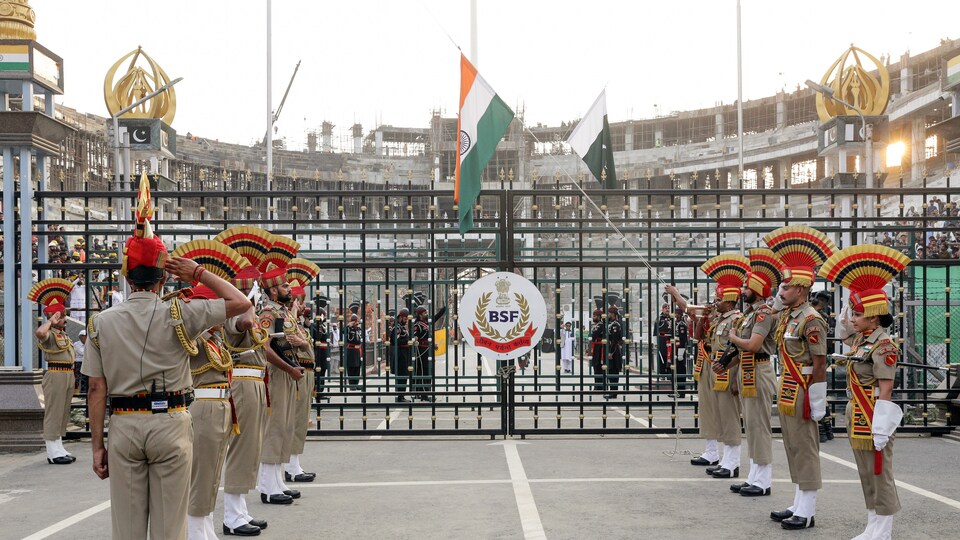
The rules, which aim to “strengthen effective command, control, and efficient functioning of the Inter-Services Organisations (ISOs)”, came into effect from May 27, the Defence ministry said.
This move from the Centre comes in the backdrop of the recent tensions with Pakistan, following the April 22 Pahalgam terror attack and Operation Sindoor.
The rules will be applicable to all personnel subject to the Army Act, 1950, the Navy Act, 1957, and the Air Force Act, 1955, when serving in any of the ISOs.
As per the Gazette Notification, the Bill was passed by both Houses of Parliament during the Monsoon Session of 2023. President Droupadi Murmu gave her assent to the bill on August 15, 2023, following which, the Act came into force with effect from May 10, 2024.
As per the notification, "the Commander-in-Chief of a Joint Services Command, Officer-in Command of Inter-services establishment and Commanding Officer of Inter-services unit shall exercise all disciplinary and administrative powers over personnel under any of the Service Acts, posted or attached to the Inter-services Organisation, in accordance with the Service Acts, rules or regulations, applicable to such person."
The notification of these rules makes the Act fully operational. This will strengthen the ISOs' chiefs and enable quick disposal of proceedings, and help avoid duplication.
India-Pakistan tensions
Terrorists carried out one of the deadliest attacks on civilians in Baisaran near Jammu and Kashmir's Pahalgam on April 22, killing 26 persons, mostly tourists. The terror attack triggered massive rage across the nation.
A day later, the Indian government ordered punitive actions against Pakistan, including the suspension of the Indus Waters Treaty, reduction of staff strength in Pakistan high commission in Delhi, and cancellation of visa issued to all Pakistani nationals.
Two weeks after the attack, on May 7, the Indian armed forces carried out targeted strikes on nine terrorist infrastructure located in Pakistan and Pakistan-occupied Kashmir under ‘Operation Sindoor’. These terror camps were linked to outfits such as Jaish-e-Mohammed, Lashkar-e-Taiba, etc.
The centre had said that in this operation, more than 100 terrorists were killed.
Following the operation, Pakistan attempted to launch a retaliatory action against India, with cross-border shelling, drones and unarmed aerial vehicles over Jammu and Kashmir, and border regions. However, these attempts were thwarted by the Indian forces and air defence systems.
After four days of intense cross-border fighting, India and Pakistan on May 10 reached a ceasefire understanding, agreeing to stop all military actions against each other on land, sea, and air. The ceasefire continues to hold as of today.
Meanwhile, continuous diplomatic actions between India and Pakistan have been ongoing, with both neighbours declaring diplomats persona non grata in their respective territory.


