Sign in

Centre, SC may lock horns over making Aadhaar mandatory for govt schemes

Detractors say the government move violates the apex court’s orders that Aadhaar should be a “voluntary” requirement for citizens to derive welfare benefits.

Updated on: Mar 5, 2017, 01:46:23 IST
Hindustan Times, New Delhi | By , New Delhi
Share
Share via
  • facebook
  • twitter
  • linkedin
  • whatsapp
Copy link
  • copy link

The central government’s decision to make enrolment in the biometric-based Aadhaar programme mandatory for availment of all government schemes from the next financial year has put it on a collision course with the Supreme Court.

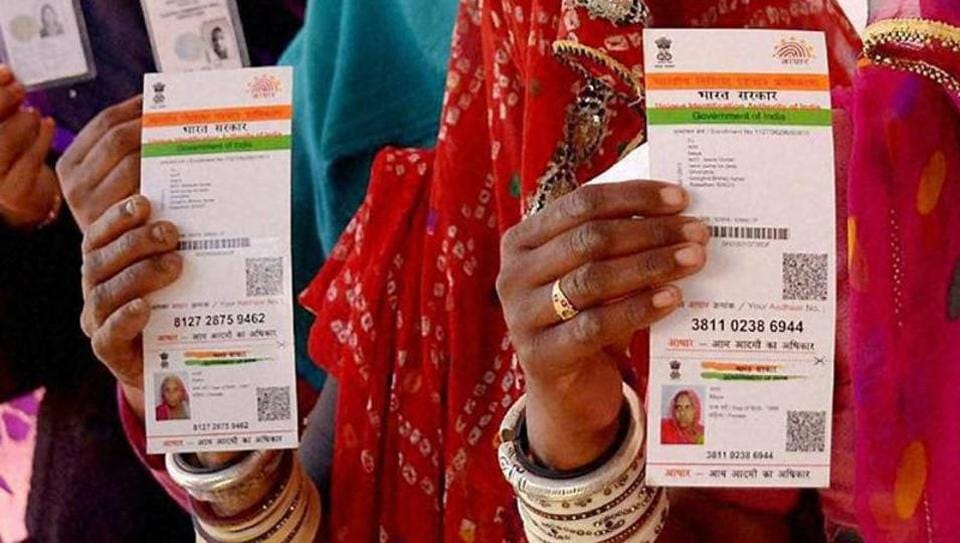
The government says over 1.13 billion people – or more than 90% of the eligible population – are registered under the Aadhaar programme. (PTI file photo)

The government’s move appears to be in contravention of the apex court’s orders that Aadhaar should be a “voluntary” requirement for citizens to derive welfare benefits. The judicial body had formed a constitution bench to examine its validity, and announced earlier this week that it would pronounce its judgment on the matter soon.

Although the government claimed that the Aadhaar law enacted in September 2016 gave it the authority to make the 12-digit unique number mandatory for administering schemes, it was told by the court a few days later to continue implementing the social security system as a “voluntary and not mandatory” measure.

“We make it clear that the Aadhaar card scheme is (to be implemented) purely on a voluntary basis, and not mandatory, until the matter is finally decided by the court one way or the other,” it had said in September 2016.

Now, the Centre has decided that Aadhaar would be made mandatory to establish “one’s identity” for availing benefits under government schemes from the financial year 2017-18. The benefits would be provided only after authentication of the claimant through sim-card based hand-held machines.

In the last few weeks, ministries have issued similarly worded notifications – making Aadhaar mandatory for almost everything from education scholarships to scheduled caste/tribe schemes and agricultural subsidies.

The government has already made Aadhaar mandatory for two of its biggest schemes: enrollment to MGNREGS and acquisition of subsidised ration under the public distribution system. Many states, especially those ruled by the BJP, provide benefits under these schemes only to those enrolled under the Unique Identification Authority of India.

“These notifications are in violation of the Supreme Court orders, which categorically state that Aadhaar remains voluntary,” said Reetika Khera, a development economist with the Indian Institute of Technology-Delhi. She accused the government of going back on its promise to keep the identification number optional for availing benefits.

An Information Technology ministry official said Aadhaar was initially kept voluntary because enrolment was very low. However, things have now changed with over 1.13 billion people – or more than 90% of the eligible population – being registered under the social security scheme.

“The remaining will be covered in the next three months, with the help of state governments,” he said.

The erstwhile UPA government had launched the Aadhaar programme, which involved issuing a unique identification number to every Indian, under the leadership of Infosys co-founder Nandan Nilekani. The NDA government decided to continue with it after Nilekani made a presentation in this regard before Prime Minister Narendra Modi in August 2014.

However, concerns were raised that the collection of biometric information from individuals could amount to the invasion of a citizen’s right to privacy.

  • Chetan Chauhan
    ABOUT THE AUTHOR
    Chetan Chauhan

    Chetan Chauhan is the National Affairs Editor looking into all aspects of news and features from across India. A Chevening scholar with over three decades of experience in reporting and news management, Chetan has extensively covered all important aspects of the social sector, political economy, environment and climate change nationally and internationally. He did a journalism course at the Reuters Institute of Journalism in Oxford and Digital Media training at Nanyang Technological University in Singapore. He started as a reporter with The Statesman in 1996 and joined the Hindustan Times in 2000 in the metro bureau covering environment, crime and Delhi politics. He covered hot local news, from the Jessica Lal murder case to the rebellion of Delhi Congress MLAs against then Chief Minister Sheila Dikshit, to the replacement of toxic vehicle fuel with cleaner compressed natural gas (CNG) in the national capital. Some of his stories on air pollution became part of the Supreme Court’s landmark MC Mehta versus Government of India case in the National Capital Region (NCR), forcing the government to take corrective measures. As part of the national political bureau since 2004, he covered important central sectors such as environment, education, social justice, labour, rural development, water resources, renewable energy, agriculture, broadcasting and the Planning Commission for more than a decade producing several exclusive and investigative breaking stories. His specialisation is the environment, having covered at least a dozen United Nations global conferences on climate change, biodiversity and wildlife including climate summits in Paris, Copenhagen and Bali. He also covered India’s two five-year plans ---11th and 12th and reported on drafting and execution of right based laws such as Right to Education, Right to Information and rural job guarantee law, MG-NREGA, now being introduced in new format as VG-RAM-G Act. He has in-depth knowledge of social sector issues. He was one of the first to report on tigers vanishing from Sariska and Panna wildlife reserves in 2004 and 2008, respectively, leading to the setting up of the National Tiger Conservation Authority (NTCA) and the introduction of stringent penal provisions for poaching. He has written extensively on the rising human-animal conflict in India and the degradation of India’s biodiversity hotspots because of mining and other activities. Since 2004, Chetan has covered Parliament comprehensively and participated in training on the nuanced coverage of Parliament proceedings. He has travelled extensively across India to cover national and provincial elections since 1998, especially in the Hindi heartland states, considered India’s road to power. He writes a regular column for Hindustan Times, Ecostani, on important national politics, economy, Himalayan ecology and environmental issues. His other responsibilities include providing inputs for edits and edit page articles for the publication, apart from managing news flow from across India.Read More

Get the latest India News, breaking headlines and real-time updates from across the country. Stay informed about politics, government policies, crime, weather and major national developments.