
 E-Paper



Centre set to take charge of irrigation projects in Telugu states
Similarly, another 70-odd projects on Godavari river including Kaleshwaram and Polavaram would be brought under the Godavari River Management Board (GRMB). Both the boards would be directly under the control of the Union ministry of Jal Shakti.


The stage is set for the takeover by the Centre of all the completed and ongoing major and medium irrigation projects on Krishna and Godavari rivers in Telangana and Andhra Pradesh with effect from October 14, when the gazette notifications issued by the Union ministry of Jal Shakti on July 15, come into force.
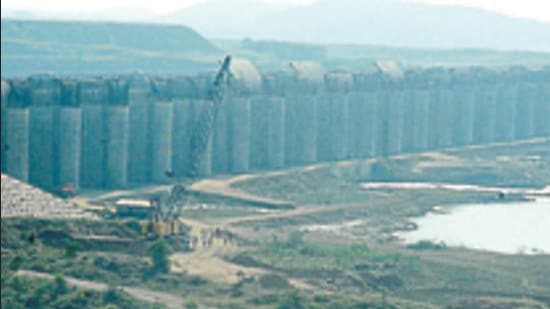
As per the gazette notification, the operation and maintenance of as many as 36 irrigation projects on Krishna river, including Srisailam, Nagarjunasagar and Pulichintala, along with their canals and irrigation systems, would come under the purview of the Krishna River Management Board (KRMB).
Similarly, another 70-odd projects on Godavari river including Kaleshwaram and Polavaram would be brought under the Godavari River Management Board (GRMB). Both the boards would be directly under the control of the Union ministry of Jal Shakti.
On Sunday, Union Jal Shakti secretary A K Das issued orders appointing two chief engineers each to KRMB and GRMB to oversee the functioning of these boards. M K Sinha and G K Agarwal, both chief engineers in the Central Water Commission, would look after the GRMB, while T K Sivarajan from Coimbatore and Anupam Prasad from Lucknow were appointed for KRMB.
The four CEs will look after the works of Boards for three months or till further orders, Das said.
The Jal Shakti ministry also held a meeting with J Chandrashekhar Iyer, chairman of GRMB and M P Singh of KRMB on Monday in New Delhi to discuss the modalities of the implementation of the gazette notifications on the operation and maintenance of the projects located on the two rivers in Andhra Pradesh and Telangana.
Why should there be Central control over irrigation projects?
In a bid to avoid river water disputes between the two Telugu states post bifurcation of the combined state, provisions were incorporated in the Andhra Pradesh Reorganization Act 2014 for the effective management of river waters by constituting river management boards for Godavari and Krishna rivers. An apex council headed by Union Jal Shakti Minister was constituted for the supervision of the functioning of these boards.
Though the boards were constituted in 2014 itself, their jurisdiction over the projects and functioning had not been finalised for a long time, as a result which both the Telugu states had been at loggerheads over drawing of river water every monsoon, especially in Krishna basin.
As per the Krishna tribunal award, out of 811 thousand million cubic feet (tmc ft) allotted to erstwhile combined state, Telangana was allocated 299 tmc ft of water and Andhra Pradesh 512 tmc ft. But both the states accused each other of drawing excess water than what was allocated, especially in Krishna river.
At last in October 2020, it was decided at the apex council meeting to notify the jurisdiction of the two boards and entrust the administration, regulation, maintenance and operation of the projects under the two rivers to these boards.
Accordingly, the Union ministry of Jal Shakti issued two separate gazette notifications on July 15, notifying the jurisdiction of KRMB and GRMB and entrusting them to take over the irrigation projects.
States oppose total control by Centre
However, both Andhra Pradesh and Telangana have their own reservations over the implementation of gazette notification. A senior official of the Andhra Pradesh irrigation department said on condition of anonymity that the state government was opposing bringing all the irrigation projects under the purview of the boards.
“We requested that only major projects on Krishna river like Nagarjunasagar and Srisailam be brought under the purview of KRMB since there is a dispute with Telangana over water releases every year. The other projects can remain under the control of the state government,” he said.
Telangana, too, has been opposing major projects like Kaleshwaram under the GRMB, because it was conceived much before the bifurcation of the combined state. Moreover, it would be difficult for the boards to run so many irrigation projects, since water releases should be done according to the requirement of the farmers in the command area.
“We have been asking the Centre to defer the implementation of the gazette notification but there is no positive response from it,” a Telangana irrigation official said.
As per the gazette notification, both the Telugu states would have to bear the expenditure on salaries and allowances of the personnel belonging to the Central Industrial Security Force (CISF), who would man the irrigation projects. Besides, the two states would also have to deposit ₹200 crore each for the operation of the two boards within the next two months.
It is learnt the two states have expressed their inability to deposit this money with the boards.


