
 E-Paper



Income tax benefits, capital gains tax hike, cheaper phones | Key Budget takeaways
The government increased the standard deduction from ₹50,000 to ₹75,000, providing tax relief to millions of taxpayers

 Prefer HTon Google


Finance minister Nirmala Sitharaman on Tuesday proposed the much-awaited change in the income tax slabs as she tabled the first Union Budget of the new Narendra Modi government.
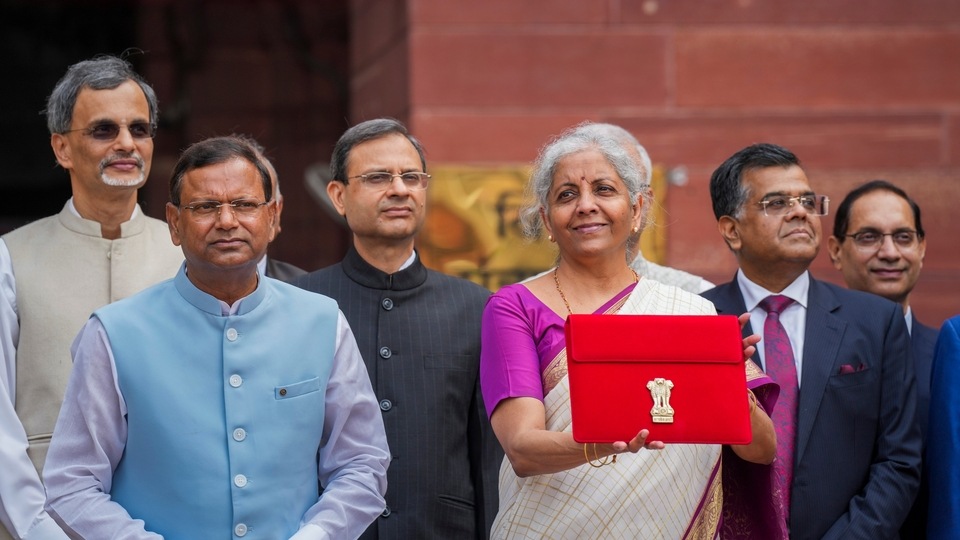
The government increased the standard deduction from ₹50,000 to ₹75,000, providing tax relief to millions of taxpayers who opted for the new tax regime. On the other hand, the government increased both short-term and long-term capital gains taxes. It also discontinued the indexation benefit for property sales.
The government raised the short-term capital gains tax (for less than a year) from 15 percent to 20 percent. The rate for those who hold their investments for longer than 12 months has risen from 10 percent to 12.5 percent.
Sitharaman said the main focus of the Budget was on employment, skilling, small businesses and the middle class.
She said the government proposed “incentives for companies to train staff”. It also promised cheaper loans for higher education. Corporate tax for foreign companies was cut to 35% from 40%.
Also read: Budget 2024: How the changes in new tax regime will benefit the salaried, explained
The finance minister announced a revised tax slab for the new tax regime. "Under the new tax regime, tax rate structure to be revised as follows - ₹0- ₹3 lakh -Nil; ₹3-7 lakh -5%; ₹7-10 lakh-10%; ₹10-12 lakh-15%; ₹12-15 lakh- 20% and above ₹15 lakh-30%," she announced.
She said salaried employees under the new tax regime would save up to ₹17,500 annually in taxes due to changes proposed in the Budget. She also announced that the deduction on family pension for pensioners would be enhanced from ₹15,000 to ₹25,000.
She said over four crore salaried taxpayers and pensioners would benefit from the changes.
Meanwhile, Sitharaman on Tuesday evening dismissed the Opposition's criticism that the Budget gave preferential treatment to states run by supporting parties, saying that those whose alliance got less than 230 seats have no right to question the Centre.
On the issue of ₹60,000 crore projects announced for Bihar and a pledge to get multilateral assistance for the state and Andhra Pradesh, she said, ₹1.5 lakh crore assistance has been promised for all states.
"The Indi alliance (Indian National Developmental Inclusive Alliance) together could not cross 230 seats while BJP alone has reached 240 and with the pre-election alliance, we have formed government comfortably under the leadership of Prime Minister Narendra Modi. This is historic," she said in a customary post-budget media briefing.
Here are the highlights of Nirmala Sitharaman's Budget:
- Three cancer drugs -- TrastuzumabDeruxtecan, Osimertinib and Durvalumab -- fully exempted from customs duty
- Customs duty on mobile phones, mobile Printed Circuit Board Assembly (PCBA) and mobile chargers was reduced to 15 percent.
- Customs duties on gold and silver were reduced to 6 percent and that on platinum to 6.4 per cent.
- Security Transactions Tax on futures and options of securities increased to 0.02 per cent and 0.1 per cent, respectively.
- Income received on the back of shares to be taxed in the hands of the recipient
- Angel tax for all classes of investors abolished to boost startups
- The corporate tax rate on foreign companies was reduced from 40 to 35 per cent.
- Vivad Se Vishwas Scheme, 2024 for resolution of income tax disputes pending in appeal
- Monetary limits for filing direct taxes, excise and service tax-related appeals in tax tribunals, high courts and Supreme Court increased to ₹60 lakh, ₹2 crore and ₹5 crore respectively.
- 20 percent tax on short-term gains on certain financial assets.
- 12.5 pc tax on long-term gains on all financial and non-financial assets.
- Long-term capital gains up to ₹1.25 lakh from listed equities are exempted.
- TDS rate on e-commerce operators reduced from one to 0.1 per cent.
- Delay for payment of TDS up to the due date of filing statement decriminalized.
- I-T assessment can be reopened beyond 3 years up to five years only if the escaped income is ₹50 lakh or more.
- In search cases, the time limit reduced from 10 to 6 years before the year of the search
- Government to complete comprehensive review of the Income-tax Act, 1961 in six months
- GST to be simplified and rationalised to expand to remaining sectors
- Fiscal deficit pegged at 4.9 per cent of GDP in FY25, to be cut further below 4.5 pc next year
- The budget outlines 9 priority areas, including manufacturing and services, and next-generation reforms, in pursuit of Viksit Bharat.
- The budget focuses on employment, skilling, MSME, and middle class, and allocates ₹1.52 lakh crore for agriculture and allied sectors.
- FY25 capex pegged at ₹11.11 lakh crore.
- ₹11,500 crore financial support to certain irrigation and flood mitigation projects in Bihar.
- ₹15,000 crore special financial support to Andhra Pradesh through multilateral development agencies.
With inputs from PTI, ANI


