E-Paper



Cheetah cub dies in MP, dehydration suspected
A cheetah cub has died at Kuno National Park in India, with officials suspecting dehydration and weakness. The death is within expected mortality rates for cheetah cubs.

 Prefer HTon Google


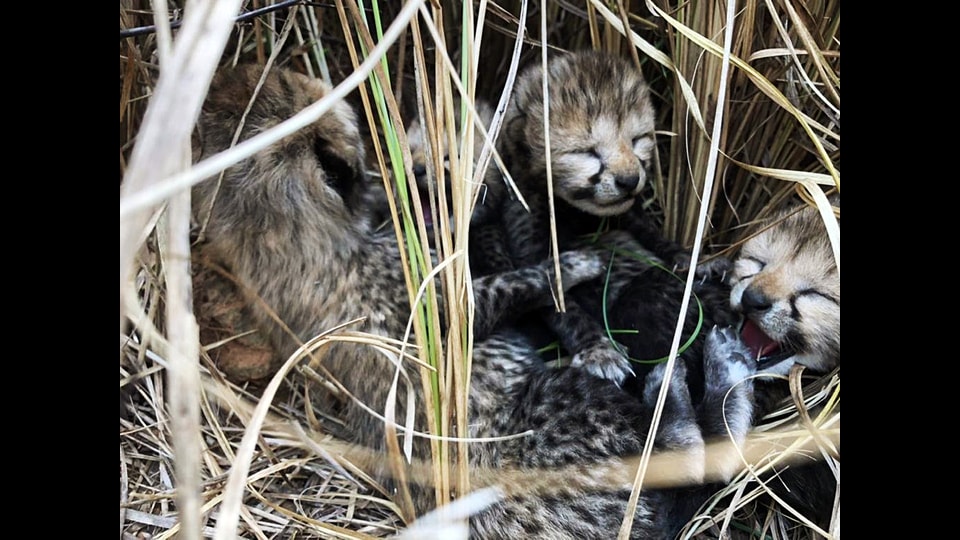
One of the cubs born to a cheetah at the Kuno National Park in Madhya Pradesh’s Sheopur died on Tuesday, with officials suspecting that it was a case of dehydration and weakness.
While experts called the death “unfortunate”, they said it was “within expected mortality rates”.
“When the monitoring team visited the park, the cub looked weak, so the team called veterinary doctors and took the cub to the hospital but after 5-10 minutes, the cub died,” JS Chouhan, the MP chief conservator of forests, said.
The cheetah was born to Namibian cheetah Jwala, who was earlier named Siyaya, in the last week of March.
“The cause of death is due to immense weakness. Further details of the cause can be given after post-mortem will be done,” Chouhan said.
Experts said the mortality rate of cheetah cubs is very high.
“Whilst the loss of one of Siyaya’s cubs is unfortunate, the loss is well within expected mortality rates for cheetah cubs,” Vincent Van Der Merwe, South Africa metapopulation project head, said.
“Cub mortality is particularly high for wild cheetahs. For this reason, cheetahs have evolved to give birth to large litters compared to other wild cats. This enables them to compensate for high cub mortality rate. Weaker cheetah cubs in a litter will typically survive less than their stronger siblings. This death should be viewed within the context of ‘survival of the fittest’,” he added.
South African cheetah expert Adrian Tordiffe said this is the “process of natural selection”.
“Mortality rate of cheetah cub varies tremendously from place to place. In general cheetah cub mortalities are high. The fittest survive and the weaker ones don’t. Many also get killed by competing predators. This was just a process of natural selection,” he said.
The latest fatality took the death toll of cheetahs in KNP to four in the last two months, including three felines translocated from African countries.
Cheetahs Sasha and Uday, who were shifted to KNP from Namibia and South Africa in separate batches along with other cheetahs, died on March 27 and April 23, respectively, while female cheetah Daksha died on May 9.
In the first inter-continental translocation project, eight cheetahs were shifted to Kuno National Park from Namibia on September 17, 2022. On February 18, 12 cheetahs were translocated from South Africa.
Now, 20 cheetahs including three cubs are left in Kuno National Park. Six of them have been released in wild and 14 including three cubs are in bigger enclosure of 6 sq km.
Meanwhile, the state government is in the process of preparing the Gandhisagar Wildlife Sanctuary as an alternate site for the cheetahs as Kuno lacks space to house all 20.
On Tuesday, forest minister Vijay Shah held a review meeting of cheetah project with top forest department officials.