
 E-Paper



Chhattisgarh HC directs state government to modify vaccination distribution plan
Chhattisgarh government’s order on April 30 created a priority list for the third phase of Covid vaccination with the members of the Antyodaya Group (poorest among the poor) at the top, followed by persons below the poverty line (BPL group), who in turn preceded those above it.


Chhattisgarh high court has set aside the state government’s decision to first vaccinate poor people of the state in the third phase of Covid inoculation drive by ruling that a division according to financial status alone was unconstitutional. The court said other groups were entitled to equal treatment with regard to the right to life. However, it asked the government to extend special facilities to the underprivileged to ensure they are not pushed out of the vaccination queue by people with resources.
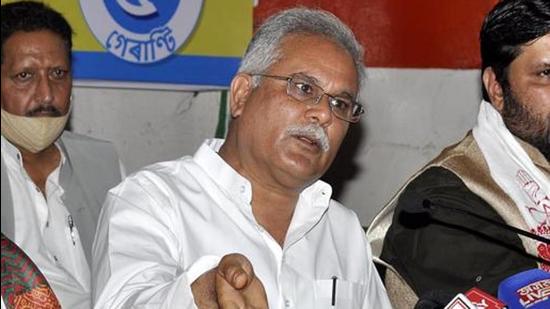
“But such a step has necessarily to be in conformity with the constitutional mandate and in tune with the guidelines issued by the Central Government at the national level. Prima facie, sub-classification with reference to the ‘financial status’ alone as now ordered, is not correct or sustainable,” the court order stated.
Chhattisgarh government’s order on April 30 created a priority list for the third phase of Covid vaccination with the members of the Antyodaya Group (poorest among the poor) at the top, followed by persons below the poverty line (BPL group), who in turn preceded those above it. The government reasoned that due to limited availability, vaccines will be administered in the state following this sub categorisation of all beneficiaries in the age group of 18 to 45 years.
The order was challenged in the high court by Janata Congress (Jogi) chief, Amit Jogi and two other petitioners, who argued that the sub-classification was beyond the constitutional mandate and amounted to a violation of the law of equality and was discriminatory since all citizens had equal right to life.
“In so far as the vaccination is the only life saving measure against Covid-19 and since the ‘right to life’ is common to any citizen, denial of vaccine to some groups, fixing a priority with reference to the ‘financial status’ is absolutely illegal, illogical and violative of the constitutional provisions and also the vaccination policy of the Central government,” the petitioners had pleaded.
Chhattisgarh advocate general Satish Chandra Verma defended the state saying sub-classification was necessary since the members of the Antyodaya group were more vulnerable and less resourceful, therefore meriting special treatment.
The HC agreed with Verma’s contention in so much that poverty, lack of education, access, smart phones and other resources were likely to make it very difficult for the poor to get their due in vaccine and it therefore asked the state to institute special facilities like ‘help desks’, ‘spot registrations’ to vaccinate them without compromising the other segments’ right to equal treatment with regard to the right to life.
“ ...We are of the view that the State Government shall fix a reasonable ratio of allotment of vaccines to the Antyodaya group, ... the BPL group and the persons... above poverty line, with reference to all the relevant aspects including the vulnerability, chance to spread the disease and the number of eligible persons in the group,” the court order said. It directed the state government to fix the ratio of vaccine in the light of the order for equitable distribution in the third phase.
-kW0H-U20214218012MgB-250x250%40HT-Web.jpg)


