
 E-Paper



Chhattisgarh: Police open libraries for tribal youths in Maoist-hit Bastar
Handing books to the tribal youths in the region has become the goal of the area’s superintendent of police, Shalabh Kumar Sinha

 Prefer HTon Google


Chhattisgarh’s Maoist-hit Bastar region is infamous for its criminal activities hampering people’s welfare in the area but now it is about to change for the better.
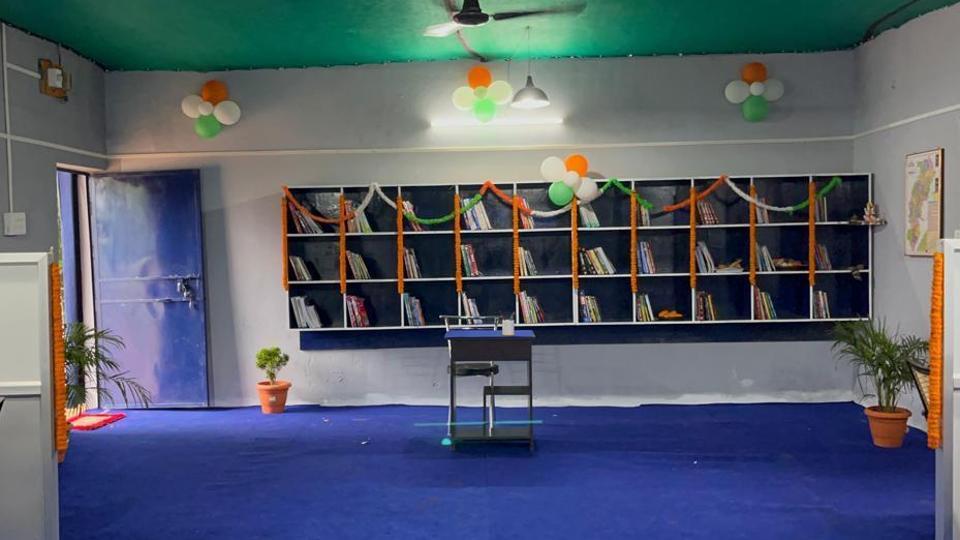
Handing books to the tribal youths in the region has become the goal of the area’s superintendent of police, Shalabh Kumar Sinha.
On a spree to open libraries, SP Sinha, with the help of locals, is focusing on imparting education in Maoist-affected villages of Kanker district.
Till now, two libraries are functional in Kanker district and three more will open in the next 15 days.
“The concept of opening library is to provide guidance, study material and a community study centre to the youth of Maoist-affected interior areas so that they don’t have the limitations when it comes to preparing for competitive exams and get the required guidance,” said Sinha, SP Kanker, who studied mechanical engineering from Raipur Institute of Technology.
Also Read:Chhattisgarh police induct 9 transgender people in ‘Bastar Fighters’ special unit
The SP further said the district police started these libraries with the help of local panchayats and he is hopeful that more agencies will come forward and join him
Presently, two libraries are functional- one in Tadoki village and another in Koylibeda—both in Antahgarh tehsil.
“Three more libraries will be functional by next month,” the SP added.
Sihna claimed the aim is to connect with the youth of Maoist-affected areas and to support them for getting a better future.
Speaking about the source of funds for the libraries, the SP said, “There is a fund for Gram Raksha Samiti in Maoist villages where we can build community halls to conduct discussions and discourse with villagers and youth. The halls have been constructed with this fund and books have been purchased with community policing funds. Also, we have got support from local Panchayat bodies and donations from local villagers.”
Around 100 students visiting these libraries daily in the Maoist-hit Antahgarh tehsil.
“Since it has just started, we are expecting more people to join through word-of-mouth publicity. Initially we provided 100 books each in both the libraries. These were purchased by us. We have asked the local panchayat, Border Security Force (BSF) and businessmen to donate books. We are also contacting the mining companies to donate some books. Whoever wishes to donate books is most welcome,” SP said.
Both the libraries are supervised by sub-divisional officer of police (SDOP) Antahgarh.
The officials are in the process of forming samities for both the libraries and they will take over the running of the libraries.
“We have named the libraries as “Poona Vesh” (Nava Anjor), a free library-study room. The library is proving to be a milestone for children for whom pursuing coaching beyond the city has been a distant dream due to low income and lack of mentors. Once a week, guidance sessions are also conducted for children by officers themselves for the proper selection of books and subjects,” said SDOP Antahgarh , Amar Sidar.
A local doctor who is volunteering for guidance session said this is a welcome step started by local police.
“This is a great step by local police because it is helping to bridge a gap between tribals and police. The students are very curious to learn and appear in competitive examinations and the libraries will be very helpful for them,” said Dhruv, a doctor posted in Kolibeda.
The local youths also find the libraries a better place to study, preparing for competitive examinations and guidance.
“I come here at around 10am and spend over six hours here. This is a better place to study. We can read any competitive examination book without purchasing it,” said Guarav Pishda, a resident of Koylibeda , who is preparing for central government exams.
-kW0H-U20214218012MgB-250x250%40HT-Web.jpg)


