
 E-Paper



SC’s nine-judge bench verdict today on what constitutes an ‘industry’
The ruling had far-reaching consequences, bringing several activities outside the conventional commercial or industrial sphere within the ambit of the Industrial Disputes Act

 Prefer HTon Google


The Supreme Court will on Thursday deliver its verdict on one of the most consequential questions in labour jurisprudence - what constitutes an “industry” under the Industrial Disputes Act, as a nine-judge Constitution bench considers whether to retain, modify or overturn the expansive test laid down by a seven-judge bench nearly five decades ago.
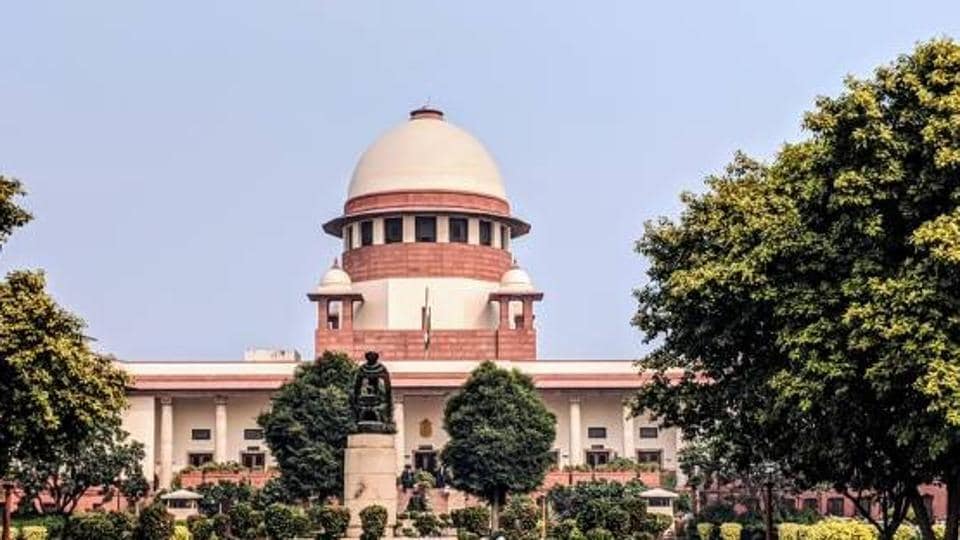
The judgment in State of Uttar Pradesh Vs Jai Bir Singh comes after the nine-judge bench, headed by Chief Justice of India Surya Kant, concluded its hearing on March 19 on a reference that could redraw the boundaries of industrial law and determine the extent to which employees of educational institutions, charitable organisations, research bodies and government departments can invoke the machinery of industrial dispute resolution.
At the heart of the dispute is the 1978 judgment in Bangalore Water Supply & Sewerage Board Vs A Rajappa, in which a seven-judge bench gave the word “industry” occurring in Section 2(j) of the Industrial Disputes Act a wide interpretation.
The court evolved what came to be known as the “triple test”: an activity would ordinarily fall within the definition if it involved a systematic and organised activity, cooperation between employer and employee, and production or distribution of goods or services to satisfy human wants and wishes.
Also Read: SC ruling puts prime Panchkula land under fresh scrutiny
The ruling had far-reaching consequences, bringing several activities outside the conventional commercial or industrial sphere within the ambit of the Act. Educational institutions, charitable and non-profit organisations and autonomous bodies could, depending on the nature of their activities, become subject to industrial dispute mechanisms.
Governments and employers have, over the years, criticised the interpretation, arguing that the judgment blurred the distinction between genuinely industrial activities and sovereign, welfare or public functions performed by the State.
The question eventually reached a seven-judge bench, which in 2017 considered whether the 1978 verdict required reconsideration and referred the issue to a larger bench.
The nine-judge bench was subsequently called upon to decide whether the Bangalore Water Supply test represents the correct interpretation of the law; whether the Industrial Disputes (Amendment) Act, 1982, which was never notified, has any bearing on the issue; and whether the subsequent Industrial Relations Code, 2020 alters the legal position.
Another significant question before the court is whether social welfare activities undertaken by government departments can be treated as “industrial activities” under the Act.
The nine-judge bench comprises CJI Surya Kant and justices BV Nagarathna, PS Narasimha, Dipankar Datta, Ujjal Bhuyan, SC Sharma, Joymalya Bagchi, Alok Aradhe and Vipul M Pancholi.
The Centre and several states, along with public-sector and other entities, have opposed an unqualified application of the 1978 formula. Attorney General R Venkataramani, appearing for the Centre, stressed that the government should not be viewed as being opposed to labour welfare but cautioned against consequences of treating departments such as forests and irrigation, as well as research bodies, as “industries”.
The Centre’s concern is that applying the triple test mechanically could bring a vast range of government and public functions within the industrial dispute regime, despite their fundamentally different character from commercial enterprises.
The workers’ side, however, has defended the 1978 ruling as a landmark worker-oriented precedent that has governed labour relations for more than four decades. Senior advocates Indira Jaising, CU Singh, Vijay Hansaria and Gopal Sankaranarayanan, among others, argued that employees need an effective and specialised mechanism to address victimisation and unfair labour practices, which industrial tribunals are better placed to provide than ordinary civil courts.
Their argument is that the Industrial Disputes Act is not simply a piece of legislation conferring benefits on workers but a statutory framework intended to balance competing interests and secure industrial peace through an effective dispute-resolution mechanism.
The two amici curiae assisting the bench have also taken divergent positions.
Senior advocate JP Cama submitted that the seven-judge bench in 1978 went beyond the statutory language by bringing charitable institutions and non-profit undertakings within the definition of “industry”. Senior advocate PS Sengupta, on the other hand, defended the correctness of the judgment, including in the context of the Constitution’s socialist orientation following the insertion of the word “socialist” in the Preamble in 1976.
During the final hearing, the bench also examined the larger implications of adopting a restrictive interpretation. While reserving judgment, it observed that a narrow definition could effectively “hive out” the entire private sector from the scope of the law.
The bench also noted that the Preamble to the Industrial Disputes Act could not simply be characterised as either pro-worker or pro-employer, pointing instead to its broader objective of facilitating settlement of industrial disputes and maintaining industrial peace.
The outcome, therefore, could have consequences extending well beyond the immediate parties. A narrower definition could take educational, charitable, research and several quasi-governmental institutions outside the industrial dispute framework, potentially restricting the remedies available to their employees. An expansive interpretation, conversely, would preserve the broad reach of labour adjudication into sectors that do not traditionally resemble factories or commercial enterprises.



