
 E-Paper



Chhattisgarh’s plan to contain human-elephant conflicts raises eyebrows
Chhattisgarh forest officials claimed that since elephants enter villages following the smell of stored paddy or mahua (a juicy fruit with strong smell) in houses, the department will dump paddy, a few kilometers away from these villages, distracting the elephants away from the villages.


Chhattisgarh’s forest department has mooted a plan to purchase paddy from the state government’s food and civil supplies department ostensibly to lure elephants away from human habitation to prevent human-elephant conflicts in the state that have resulted in loss of 204 lives in the last three years.
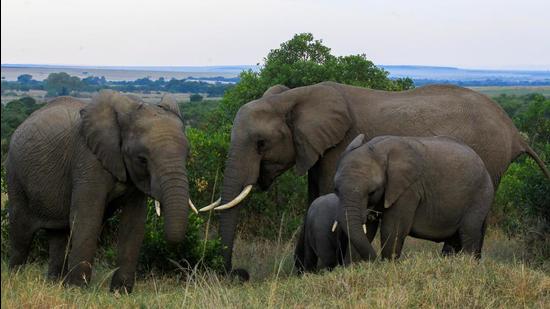
However, activists and political opponents are accusing the department of conjuring an unscientific plan which they say in reality aims to help the state government cut its losses incurred in additional procurement of paddy in 2019-2020.
Forest officials claimed that since elephants enter villages following the smell of stored paddy or mahua (a juicy fruit with strong smell) in houses, the department will dump paddy, a few kilometers away from these villages, distracting the elephants away from the villages.
“We will start this drive as [a] pilot project in some villages of Chhattisgarh and will see how it works. Till now we have not decided the rate at which paddy will be purchased for the drive. The aim is to contain human-elephant conflicts,” said Narsimbha Rao PV, the principal chief conservator of forest (wildlife).
As per government records, 204 humans were killed in elephant attacks across the state in the last three years and 66,582 cases of damage to crops and 5,047 cases of damage to houses were reported in this period. The state government spent nearly ₹58 crores in paying compensation to the victims of elephant attacks in the last three years.
A senior officer of the forest department, said the decision to buy paddy as a means to contain human-animal conflicts was taken in the last review meeting of the department.
“The Chhattisgarh State Cooperative Marketing Federation (MARKFED) has offered to sell paddy at ₹2095.83 per quintal to us. Further decision regarding the purchase of paddy is yet to be taken,” the official mentioned above added.
Chhattisgarh MARKFED wrote to the forest department on July 22, offering rates to sell paddy procured in 2019-20. As per state government figures, 8.394 million metric tonnes of paddy were purchased from 1,838 million farmers in Chhattisgarh.
The activists and political rivals in the state have questioned the move’s rationale and alleged it was an attempt to compensate the losses incurred in procuring surplus paddy in 2019-20 by the state.
Leader of Opposition in Chhattisgarh assembly and senior Bharatiya Janata Party (BJP) leader Dharmlal Kaushik said the party has several questions for the state government over the scheme.
“First of all, the state government had deliberately not done the custom milling of paddy procured in 2019-20 due to which wastage of paddy took place. The milling can't be done now and the food department and MARKFED are responsible for it. Secondly, a large part of this paddy procured in 2019-20 is rotten, which the forest department may purchase for ₹2,095 per quintal. When good paddy is auctioned by the department for ₹1,400 per quintal, then what is the obligation to buy rotten paddy [at a higher price],” Kaushik asked.
The BJP leader alleged that the forest department’s scheme was meant to misuse the public exchequer.
“We are suspicious that they may use the Compensatory Afforestation Fund Management and Planning Authority (CAMPA) fund. We will write a letter and ask these questions from the government,” Kaushik added.
Activists too have questioned the forest department’s idea as “weird” and “unscientific”.
“Instead of safeguarding the habitat and corridor of elephants like Hasdeo Arand, where the state government is permitting mining, this is a weird attempt to mitigate man-elephant conflicts. The efficacy of this drive is doubtful considering the nomadic nature of the elephants. This appears more to be an exercise to compensate for the loss incurred in surplus paddy purchase through forest department’s funds like CAMPA,” said Sudeip Shrivastava, an environmental lawyer.
North Chhattisgarh is home to around 240 wild elephants. In the last decade, the state recorded an increase in its wildlife population including elephants, whose numbers rose from 225 to 290, as per the state forest department.
Meetu Gupta, a member of state wildlife board, said, “There is no case study behind this drive. The forest department should stop experimenting with wildlife management and should instead focus on habitats of elephants,” said Gupta.
-kW0H-U20214218012MgB-250x250%40HT-Web.jpg)


