
 E-Paper



China claims situation on LAC de-escalated, says border standoff should be set aside
Chinese foreign minister said both the countries must “refrain from taking unilateral actions in sensitive and controversial areas...”


China has said the overall situation in the border areas with India has de-escalated and both countries should set aside the standoff on the Line of Actual Control (LAC) to expand bilateral cooperation, reflecting the differences between the two sides on the issue.
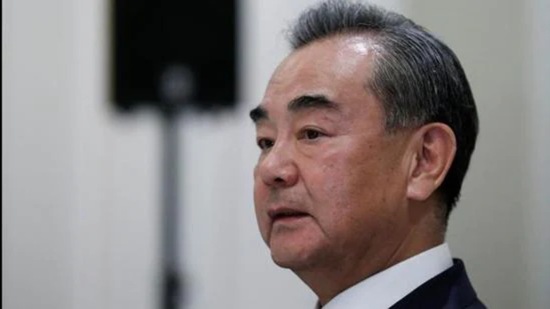
The Chinese position was articulated on Thursday in a statement on the meeting between external affairs minister S Jaishankar and his Chinese counterpart Wang Yi in Dushanbe. Jaishankar has said after the meeting on Wednesday that both sides should speedily resolve the remaining issues on the LAC since the standoff was negatively impacting bilateral ties.
According to the Chinese foreign ministry’s statement, Wang said that after his meeting with Jaishankar in Moscow last September, frontier troops of both countries disengaged in Galwan Valley and Pangong Lake areas, and the “overall situation in the border area was de-escalated”.
Wang reiterated Beijing’s contention that the Chinese side wasn’t responsible for the standoff and said, “The two sides must place the border issue in an appropriate position in bilateral relations, expand the positive momentum of bilateral cooperation and create favourable conditions for resolving differences through negotiation.”
The Chinese stance is completely contrary to the position taken by the Indian side, as Jaishankar had bluntly told Wang on Wednesday that normalisation of bilateral relations depends on restoring peace and tranquillity in the border areas. Jaishankar had also told Wang that the remaining issues in other friction points on the LAC were “still unresolved” despite the successful disengagement in the Pangong Lake area.
According to the Chinese statement, Wang said China-India relations were at a “low level, which is not in the interest of either side”. China’s strategic assessment of bilateral relations has not changed, and the two countries “pose no threat but offer development opportunities to each other”, he said.
The two countries are partners rather than rivals or enemies, and they should pursue healthy competition and avoid confrontation, with cooperation as the main theme, Wang said.
Wang also “pointed out that the rights and wrongs of what happened in the China-India border area last year are very clear and the responsibility does not lie with the Chinese side”. He added, “China is ready to find a solution acceptable to both sides on the issue that needs emergency response through negotiation and consultation.”
The principles of China-India relations, Wang said, “should still be mutual respect for sovereignty and territorial integrity, mutual non-aggression, non-interference in each other’s internal affairs, and mutual respect for each other’s core interests”.
Referring to the situation on the LAC, Wang said the two sides “must consolidate the results of disengagement that have been achieved” and “refrain from taking unilateral actions in sensitive and controversial areas, in order to avoid any recurrence of tensions due to misunderstanding and miscalculation”.
Wang further said the two sides “must take a long-term perspective and gradually move from emergency response toward regular management and control” to ensure bilateral relations aren’t prone to interruptions because of border-related issues.
The Chinese statement quoted Jaishankar as saying that “India is willing to work with China to push bilateral relations out of a slump”.
The Indian side has maintained that there has been a lack of progress in disengagement and de-escalation of frontline troops following a limited drawdown on the north and south banks of Pangong Lake in February. Last month, India again blamed China’s actions of amassing troops in border areas and attempting to alter the status quo on the LAC for the standoff.
Former ambassador Vishnu Prakash, who closely tracks regional developments, believes the Chinese side is pushing a narrative that is clearly at variance with the Indian position. “It is almost like two boats moving in parallel with slightly different trajectories. At no stage has the Chinese side agreed to restore status quo ante and they’ve always talked about the boundary issue not being allowed to stand in the way of overall relations,” he said.
“A solution, as and when it happens, will require interventions at the top political level after the broad contours have been hammered out by officials,” Prakash said.


